
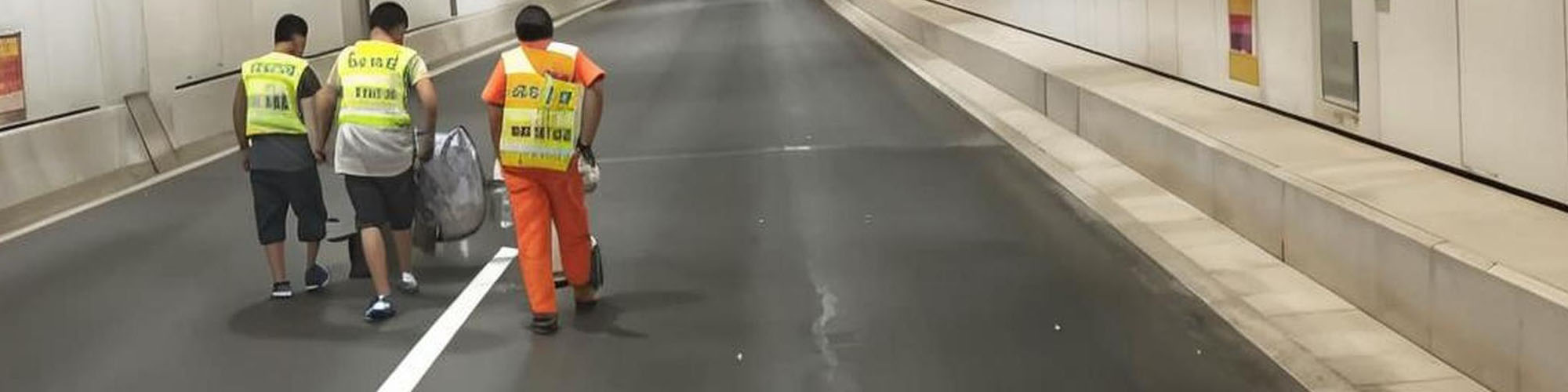
How Vibrating Road Markings Work
Vibrating road markings, also known as rumble strip road markings or convex line road markings, are specialized thermoplastic markings featuring a surface with regular raised profiles. These convex profiles typically have a height of 5–7 mm and spacing of 30–50 mm, formed using convex line thermoplastic road marking paint applied by a convex line thermoplastic road marking machine.

When vehicle tires roll over these ridges, they generate sustained vibration and audible noise. This effect relies on mechanical resonance and multisensory warning mechanisms. Rapid compression and release of air between the tire and ridges produce a distinctive low-frequency “rumbling” sound transmitted through the vehicle body to the driver.
This design delivers simultaneous tactile and auditory stimuli, effectively alerting drivers—particularly those fatigued or distracted—and prompting immediate corrective driving actions.
Core Functions and Typical Applications
The primary function of vibrating road markings is active warning, not forced deceleration. They are widely deployed in high-risk and high-visibility areas, including:
- Sharp curves and downhill sections
- Highway ramps and overpasses
- Bridges and tunnels
- Toll plazas and construction zones
- Lane edge and centerline warnings
During rainy nights or low-visibility conditions, the raised structure allows rapid drainage of rainwater, helping reflective elements remain exposed to headlight illumination. This significantly enhances nighttime retroreflectivity and wet-weather visibility, improving overall road safety.
How to Improve Vibrating Road Marking Visibility
To maintain excellent visibility during rainy, foggy, and nighttime driving conditions, improvements should focus on four key areas: materials, design, structure, and maintenance.
1. Material Upgrades: Rain-Night Reflectivity is Critical
High-performance thermoplastic materials form the foundation for durable, highly visible vibrating road markings.
Rain-Night Reflective Thermoplastic Paint
Premium formulations (such as advanced rain-night reflective thermoplastics) maintain robust retroreflectivity across diverse conditions—dry, damp, foggy, and rainy. Even when road surfaces are covered by a water film, these materials ensure lane boundaries remain clearly visible.
Optimized Glass Bead System
A multi-layer glass bead design significantly enhances light reflection efficiency:
- Inner layer glass beads: Refractive index 1.5
- Outer layer glass beads: Refractive index 1.9–2.4
This combination enhances long-distance visibility and improves wet-night performance of convex line thermoplastic road marking paint.
2. Structural Design Optimization: Contrast and Geometry Matter
- Line Width and Color Selection
Appropriate line width and high-contrast colors (white or high-visibility yellow) increase recognition distance and reduce driver reaction time. - Convex Profile Design
Uniform convex height and spacing ensure consistent vibration, audible feedback, and light reflection across the entire vibrating road marking. - Supplementary Night Visibility Measures
In critical zones, vibrating road markings can integrate with LED warning signs, luminous traffic studs, or active guidance systems to further elevate visibility during extreme weather.
3. Construction Quality: Precision Determines Performance
High-quality construction using a professional convex line thermoplastic road marking machine is essential for long-term visibility.
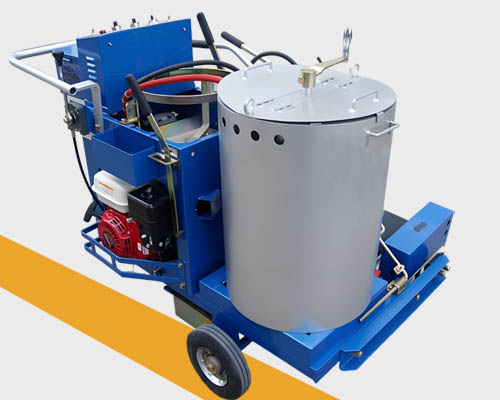
Thermoplastic Viscosity Control
Proper temperature and viscosity ensure uniform thickness, strong adhesion to the pavement, and stable raised profile structure.
Glass Bead Application Rate
Laboratory testing indicates optimal retroreflectivity occurs around 168 g/m², though 300–400 g/m² is typically applied during actual construction. Excess glass beads should be manually or mechanically removed to prevent waste and surface irregularities.
Construction Conditions
Markings may only be applied to dry, clean, dust-free road surfaces. Skilled operators must precisely control machine speed, extrusion rate, and raised profile formation to ensure consistent marking geometry.
4. Maintenance and Lifecycle Management
Even the highest-quality vibrating road markings require regular inspection and maintenance.
- Routine Inspection and Repair
Road authorities should establish periodic inspection schedules to identify wear, fading, or mechanical damage, particularly in high-traffic zones. - Cleaning and Surface Care
Prompt removal of dirt, oil, and debris from the marking surface helps preserve retroreflectivity and vibratory effects. - Reapplication and Overcoating
Regular inspections should be conducted when maintenance is required. When marking performance degrades below safety standards, reapplying thermoplastic material and glass beads restores functionality and extends service life.
Professional Road Marking Equipment Solutions
Founded in 2001, Huayuan is China’s leading manufacturer of road marking equipment. We specialize in the R&D, production, and sales of advanced road marking machinery. Beyond marking equipment, we offer comprehensive solutions including high-pressure water cleaning, pavement washing, line removal, and automated unmanned road construction systems. For any needs or inquiries regarding vibrating road marking, thermoplastic marking paint, or professional road marking equipment, please contact us. We provide detailed consultations and customized solutions to meet your project requirements.