
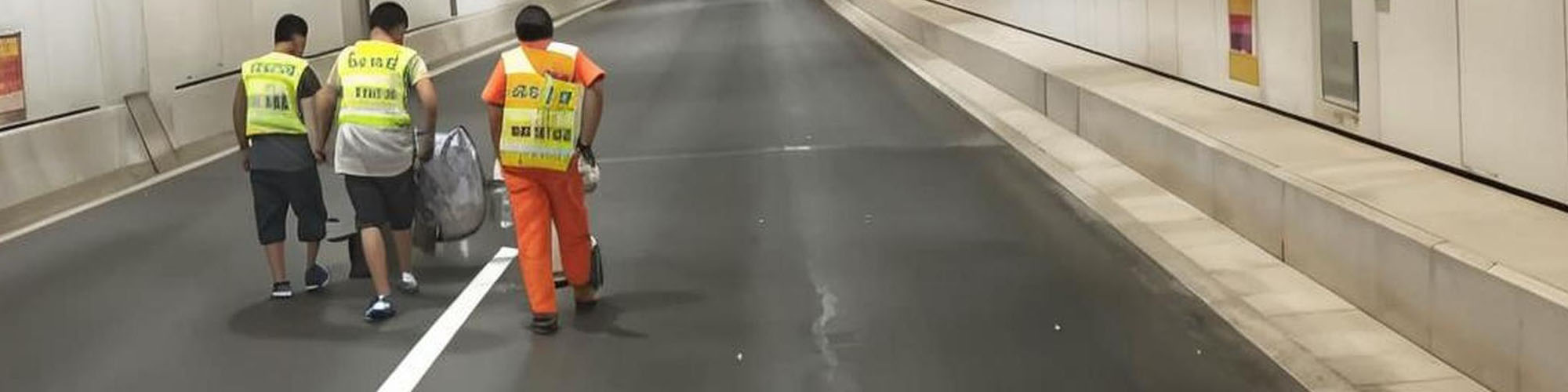
The quality and longevity of road markings depend largely on proper procedures—from surface preparation to machine operation—helping you achieve exceptional results with your road marking machine.
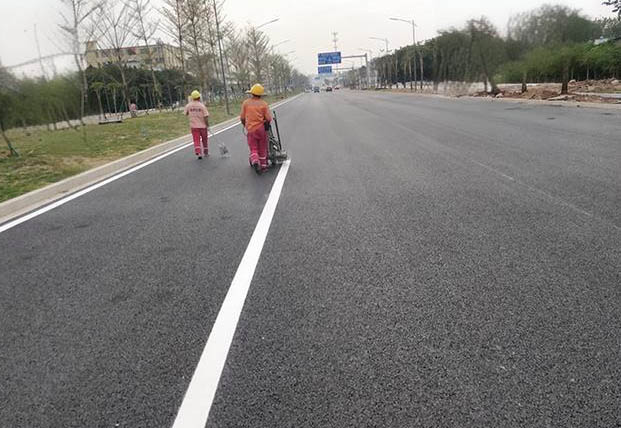
Optimizing Road Marking Construction
1. Road Surface Preparation: The Foundation of Long-Lasting Markings
Before starting any road marking construction project, thoroughly inspect the road surface. Ensure the surface is free of standing water, oil stains, or unevenness. Remove loose particles, dust, oil stains, asphalt residue, and other contaminants. For stubborn oil stains, use a high-pressure water jet or a specialized cleaner. If a primer is required, apply it in a pattern slightly wider than the intended line width, using approximately 8 square meters per kilogram of paint. Be sure to wait for the solvent to fully evaporate before spraying thermoplastic paint with a road marking machine.
Pro Tip: In damp or cold conditions, using a road dryer or blower can accelerate surface drying—a step often overlooked but effective in preventing reduced paint adhesion.
2. Pre-Construction Planning and Layout
Precise line marking begins with careful measurement and layout. Use chalk lines or laser guides to mark centerlines and reference points. Employ auxiliary tools such as glass bead spreaders or line marking tape to enhance the visibility and reflectivity of the lines. For large-scale projects, it is recommended to use a road marking machine equipped with a GPS or laser guidance system to ensure consistent line positioning.
3. Pre-Operation Checks for Road Marking Machines
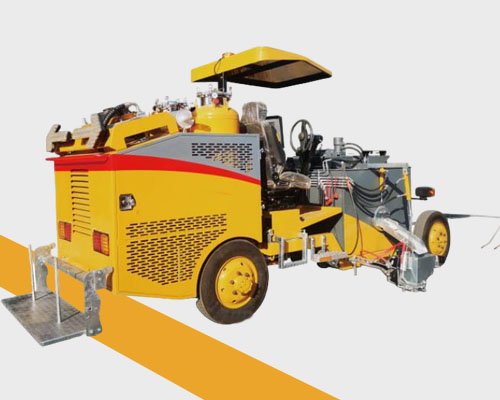
A well-maintained road marking machine can prevent costly downtime and defects. Please inspect the following items daily:
- Diesel Engine: Coolant level, oil level, fuel level.
- Spray System: For thermoplastic coatings, check the squeegee or spray gun. Adjust the squeegee or spray method according to the required line thickness and width.
- Glass Bead System: Check that the glass bead hopper is sufficiently filled, that the beads flow freely, and that distribution is uniform. Clogged nozzles can lead to reduced retroreflective performance.
Additionally, if using self-propelled or vehicle-mounted equipment, inspect hydraulic hoses and electrical connections.
4. Pavement and Ambient Temperature Control
Temperature significantly affects adhesion and curing. Continuously monitor the pavement temperature. Typically, the pavement temperature should be at least 3°C higher than the ambient temperature.
Note: Stop road marking operations when the pavement temperature is below 9°C—cold pavement causes thermoplastic materials to cool rapidly, leading to poor adhesion and cracking.
Adjust the preheater’s output power based on weather conditions: increase the temperature in cold weather and decrease it in hot weather to prevent the adhesive from overheating.
5. Thermoplastic Melt Temperature & Kettle Management
The thermoplastic melting kettle is the heart of a thermoplastic road marking machine. Improper heating ruins material and shortens equipment life.
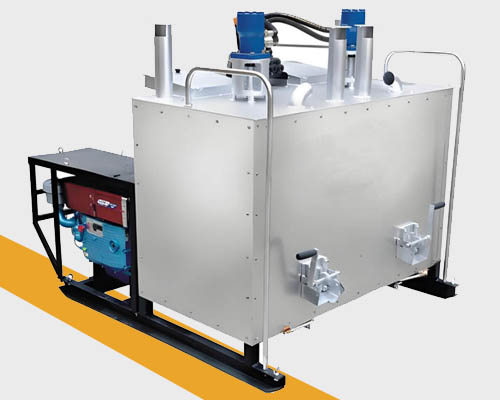
- Heat thermoplastic paint to 180–220 °C.
- Do not keep the material in a molten state for more than 6 hours.
- Never exceed 220 °C. Overheating degrades the binder, causing brittle lines and smoke hazards.
- If the thermometer malfunctions, stop operations immediately. Use a handheld infrared thermometer as a backup.
For large or remote jobs, consider a kettle with automatic temperature regulation and digital monitoring to ensure consistent melt quality.
6. Scraper/Module Blade Adjustment to Ensure Clear Lines
The blades on the road marking machine’s scraper (module) determine the clarity and edge definition of the markings.
- Rear blade: Controls the smoothness of the marking surface.
- Side blades: Determine edge sharpness and prevent bleeding.
Adjusting Marking Width
- Move the rear blade closer to the pavement → thinner line.
- Raise the rear blade → thicker line.
Use a gauge to check that the line width is consistent on both sides. Regularly clean dried paint from the bottom of the rear blade to prevent seepage and surface roughness—common causes of premature line failure.
7. Application Speed and Paint Film Thickness
The forward speed of the road marking machine directly affects the durability of the lines.
- Faster speed → Thinner paint film → Faster drying, but potentially lower durability.
- Slower speed → Thicker paint film → Longer service life, but higher material consumption.
The optimal speed should balance material consumption with expected traffic wear. Typical paint film thickness for highways is 1.5–2.5 mm; for city streets, a thickness of 2–3 mm may be more appropriate. Be sure to consult the paint manufacturer’s recommendations.
8. Glass Bead Embedding to Improve Nighttime Visibility
Reflectivity is critical for safety. Glass beads should be applied immediately while the thermoplastic material is still hot. Use a synchronized bead dispenser to release beads at a controlled rate (typically 200–400 g/m²). The beads should be partially embedded—neither completely submerged nor lying flat on the surface. Before each shift, check for clogged nozzles or uneven distribution. For high-traffic or rainy areas, consider using pre-mixed beads or anti-skid aggregates to improve visibility at night and in wet conditions.
9. Post-Application and Curing
Allow new markings to cool and cure before opening to traffic. Thermoplastic markings typically cool within 3–5 minutes at 20°C. Vehicles must not drive over the new markings until the surface temperature has dropped below 60°C.
Henan Huayuan is a globally trusted supplier of professional road marking machinery systems and road marking construction equipment. Whether you need compact equipment for urban parking lots or vehicle-mounted systems for highways, Huayuan provides reliable, cost-effective solutions to enhance your road marking application efficiency.