
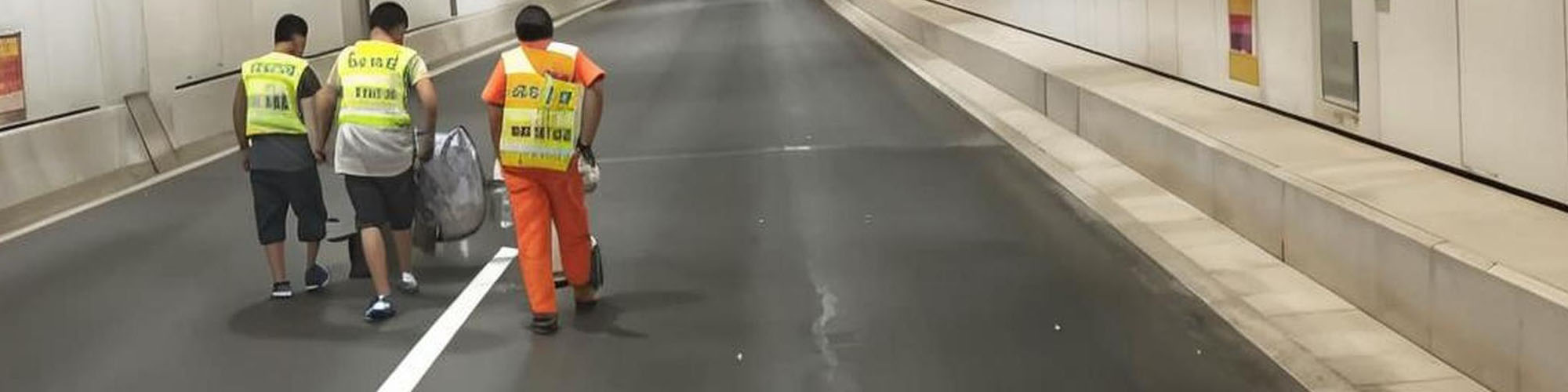
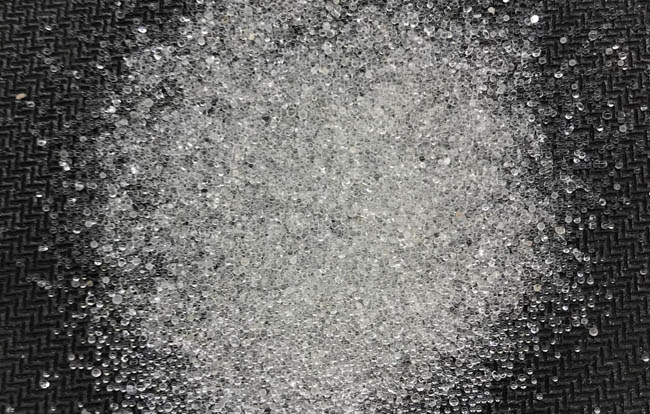
Glass beads are the optical core of modern road marking systems. When applied to thermoplastic, cold paint, or two-component markings, they function as microscopic retroreflectors that return vehicle headlight beams back to the driver. However, retroreflectivity is not determined by bead presence alone. Glass bead size, grading distribution, refractive index, and embedment depth must be engineered together.
The Relationship Between Bead Diameter and Embedment Depth
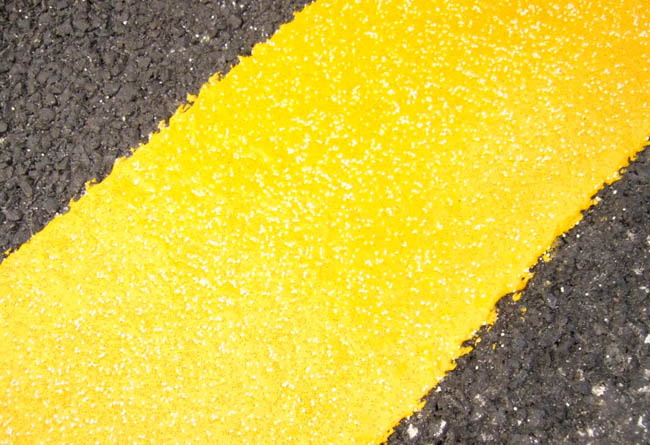
Larger glass beads can deliver higher retroreflectivity because their exposed surface provides a greater optical aperture. However, larger beads also require sufficient marking thickness and controlled embedment. If the road marking material is applied too thick, or if beads sink too deeply during drop-on application, the exposed optical surface becomes insufficient and retroreflectivity drops sharply.
Industry practice typically targets 50–70% of each bead protruding above the binder surface. For a 1.5 mm bead, this means roughly 0.75–1.0 mm of exposed sphere. Smaller beads, such as 0.3–0.6 mm, offer different optical and application characteristics and are often used in thinner films, aggregate-filled markings, or as a secondary grading to improve initial brightness and wet-weather performance.
Key Technical Factors Beyond Size
- Refractive index (RI): Standard beads use RI 1.5; high-index beads (RI 1.6–1.9) significantly improve retroreflectivity, especially at high observation angles.
- Grading and particle size distribution: A narrow, well-controlled distribution ensures uniform bead spacing and consistent RL values.
- Bead coating: Moisture-resistant or adhesion-promoting coatings reduce bead loss and improve bonding with the binder.
- Drop-on rate: Typical application rates range from 300–500 g/m² depending on bead size and marking type.
- Retroreflectivity (RL): Measured in mcd/m²/lx, this is the standard performance metric for nighttime visibility.
Choosing the Right Equipment
Achieving the correct bead embedment depends on precise synchronization between the road marking machine and the bead dispenser. Modern road marking machines with automated bead drop systems, adjustable spray pressure, and controlled forward speed help maintain consistent bead distribution and embedment across the full line width.
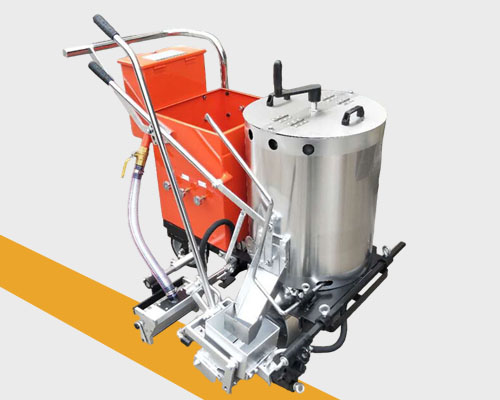
Founded in 2001 in Anyang City, Henan Province, Henan HuaYuan Transportation Technology Co., Ltd. is a modern enterprise integrating road marking, high-pressure water cleaning, road de-lining and de-gumming, and automated unmanned road construction. As a professional China road marking machine manufacturer, we provide core products and services including thermoplastic marking machines, cold paint marking machines, and two-component marking machines—suitable for a wide range of road marking needs.