
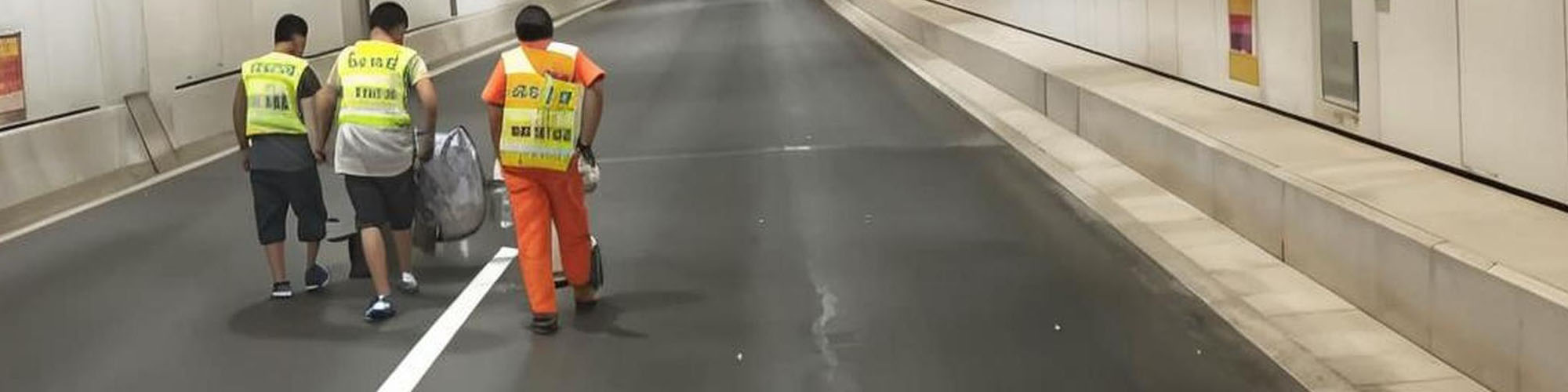
In the road marking industry, a thermoplastic melting kettle is not just an accessory—it is a core component of the production line. A road marking machine is typically paired with a thermoplastic melting kettle. The road marking machine is responsible for applying the lines, while the thermoplastic melting kettle melts large quantities of thermoplastic road marking paint before application.
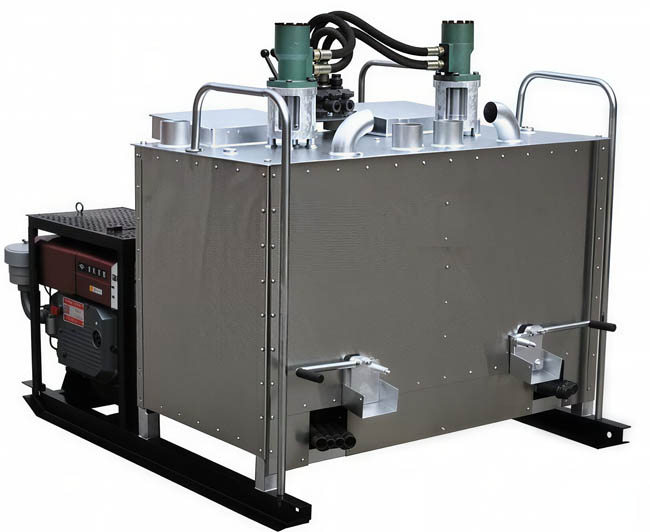
In continuous road marking projects, the thermoplastic melting kettle allows the next batch of paint to be prepared while the current batch is being applied. This helps reduce downtime and improve overall construction efficiency. In high-volume projects such as highway striping, urban road marking, and airport runway marking, this continuous batch processing capability directly affects daily output and project timelines.
How to Choose a Thermoplastic Melting Kettle
Heating Method: Thermal oil indirect heating offers fast temperature rise and uniform heat distribution, making it suitable for frequent start-stop operations. Electric heating is compact and oil-free, ideal for indoor use or areas with strict environmental requirements. Gas-fired models are easily affected in windy areas, while diesel models are more stable. In regions with large temperature differences, a diesel-gas dual-purpose model provides greater reliability.
Temperature Control Accuracy: An independent temperature control module is essential, with an error margin within ±3°C. A digital PID controller and multi-point temperature sensors are recommended. Models relying only on pointer-type thermometers or single-point thermocouples can experience temperature deviations exceeding ±8°C, which may cause paint degradation, scorching, or inconsistent line quality.
Stirring System: Choose hydraulic drive with forward and reverse stepless speed regulation, equipped with propeller or frame-type agitators. This prevents paint sedimentation and caking, especially for materials containing glass beads or titanium dioxide. Proper agitation ensures uniform consistency and consistent line thickness.
Kettle Body Material: The inner tank should be made of stainless steel (304 or 316L) for corrosion resistance and easy cleaning. The bottom should use high-carbon steel or an arc-stamped design to resist scorching. The outer shell should include insulation to minimize heat loss and improve energy efficiency.
Applications and Benefits
Thermoplastic melting kettles are widely used in urban road marking and other thermoplastic road marking projects. Whether for new road construction or road maintenance, a thermoplastic melting kettle provides an efficient and reliable solution. By ensuring consistent melting temperature, uniform paint composition, and continuous batch preparation, it directly contributes to higher line quality, reduced material waste, and lower labor costs.
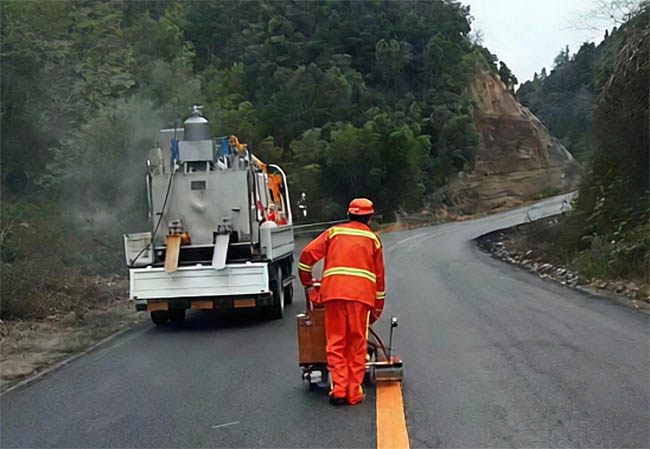
For contractors using a road marking machine, investing in a high-quality thermoplastic melting kettle is a practical step toward faster project completion and better long-term performance.