
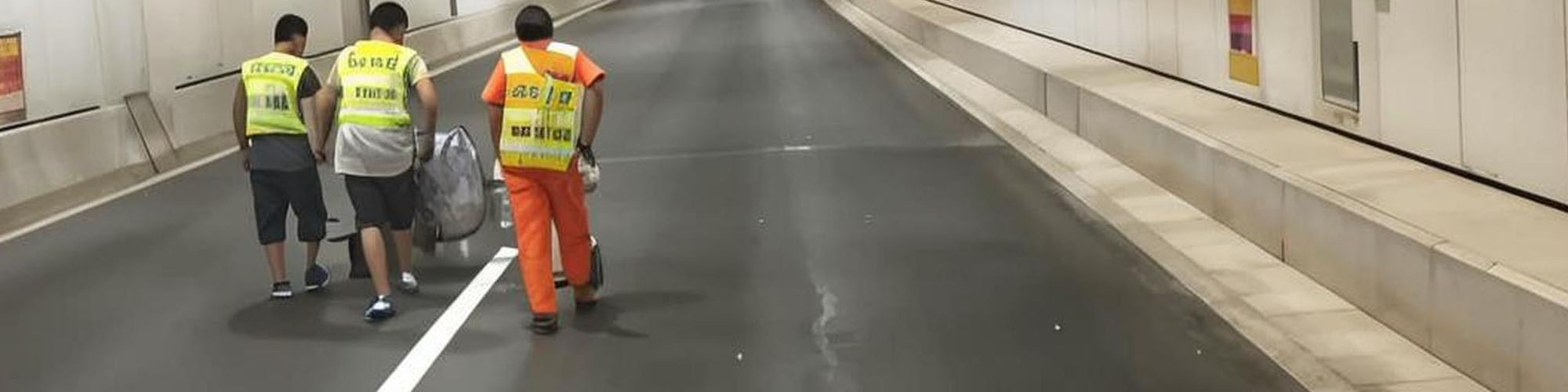
Surface preparation is the foundation of every successful road marking job. Even the highest-quality marking materials cannot perform as intended if the pavement surface is contaminated or improperly prepared. A professional road blower is therefore not an optional accessory — it is a core component of any serious road marking equipment lineup.
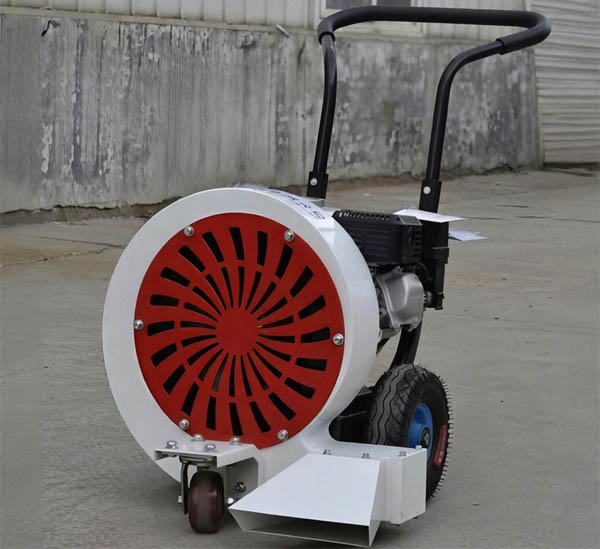
The Role of a Road Blower in Pavement Preparation
Before any thermoplastic, cold paint, or epoxy marking material is applied, the substrate must be clean, dry, and free of loose debris. A dedicated road blowing machine removes dust, sand, and other loose particles that would otherwise compromise the bond between the marking material and the pavement surface.
Professional pavement-cleaning blowers help solve several common problems encountered on job sites:
- Reducing surface contamination: Removing loose dust, sand grains, and debris that could interfere with marking adhesion.
- Improving bonding conditions: Exposing a cleaner pavement surface so marking materials can achieve proper contact with the substrate.
- Enhancing marking consistency: Preventing loose particles from becoming trapped beneath newly applied markings, which can cause premature failure.
- Increasing productivity: Completing surface preparation far faster than manual sweeping on large-scale projects.
- Lowering labor requirements: Reducing the need for crew members to perform repetitive manual cleaning tasks.
Key Technical Considerations for Road Blowers
When selecting a hand-push road blower for road marking operations, several technical factors directly affect performance and results:
- Airflow velocity and volume: Effective debris removal depends on sufficient air speed at the nozzle. A road blowing machine must generate enough force to dislodge compacted dust and sand from pavement pores and surface texture, not merely push debris across the surface.
- Nozzle design and adjustability: Wide, adjustable nozzle configurations allow operators to direct airflow precisely — whether cleaning a narrow crack prior to crack sealing or clearing a full lane width ahead of a striping machine.
- Surface adaptability: A hand-push road blower should perform consistently across asphalt, concrete, and sealed surfaces. Adjustable airflow settings help prevent damage to delicate surfaces while maintaining cleaning power on rough pavements.
- Mobility and maneuverability: For road marking crews working around cones, striping equipment, and traffic control zones, a compact, hand-push design offers superior maneuverability compared with tow-behind or truck-mounted units.
- Dust control compatibility: In urban environments and sensitive areas, blowers that integrate with dust suppression systems help crews comply with local air quality regulations.
How Surface Cleanliness Affects Marking Durability
The adhesion mechanism of road marking materials depends on direct contact between the marking compound and the pavement surface. Loose particles act as a barrier layer, preventing proper wetting and bonding. When markings are applied over debris:
- Adhesion strength drops significantly, accelerating wear under traffic.
- Markings may chip or peel prematurely, requiring costly rework.
- Retroreflective performance degrades faster, reducing nighttime visibility and safety.
A road blowing machine eliminates these risks at the preparation stage — a small investment in equipment that protects the larger investment in marking materials and labor.
Recommended Applications for the RB-360 Road Blower
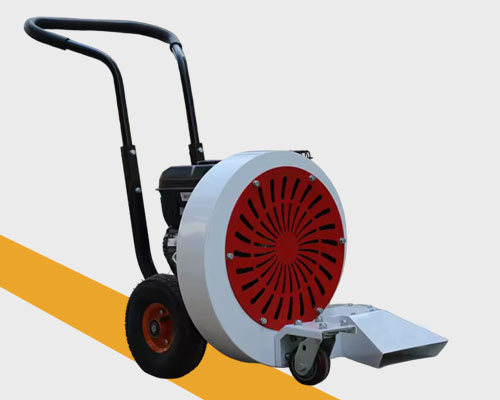
The RB-360 is engineered specifically for removing loose debris from pavement surfaces prior to marking. By improving contact between marking material and pavement, it supports more uniform application and better adhesion conditions.
It is particularly suited to:
- Pre-marking preparation on highways and urban roads.
- Parking lot marking and re-striping projects.
- Pavement crack cleaning before crack sealing operations.
- Surface cleaning before slurry sealing and joint treatment.
- Routine road maintenance and pavement preparation programs.
For situations involving oil contamination, moisture, firmly bonded soil, or deeply embedded contaminants, additional cleaning or surface treatment methods may be required.
For optimal results, position the road blower as the final step in surface preparation — after sweeping or mechanical cleaning and immediately before marking application. This sequencing prevents recontamination of the prepared surface and ensures the marking crew applies material to a consistently clean substrate.
Crews using a hand-push road blower alongside their road marking equipment report faster cycle times, reduced rework, and improved long-term marking performance — especially on high-traffic roads where durability directly affects safety and maintenance costs.
Contact us to obtain detailed specifications, quotations, and shipping information for your road blower requirements.