
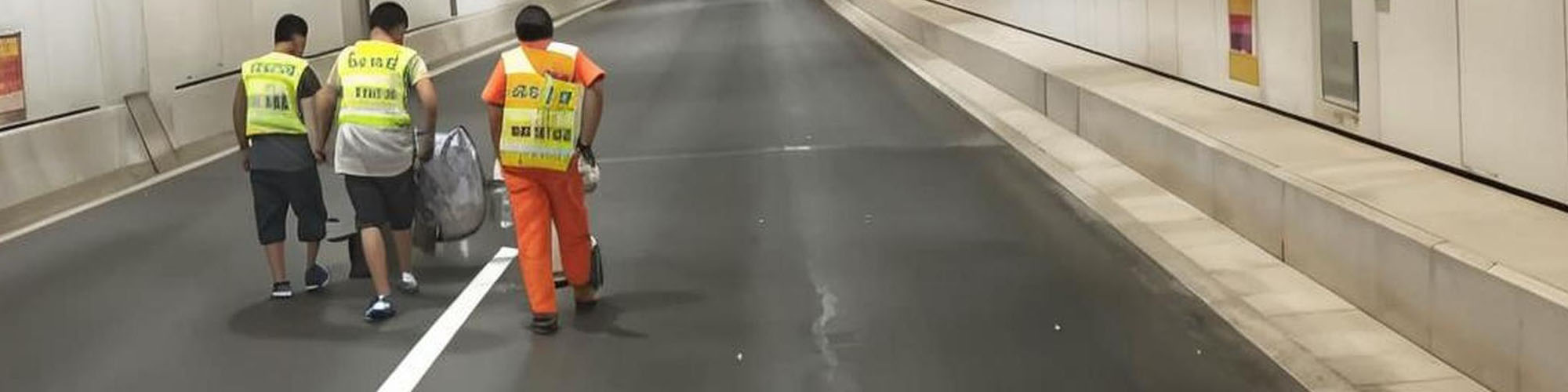
Road markings are a vital component of global traffic management systems. These clearly visible guide lines, painted using specialized road marking paint, help direct vehicle and pedestrian flow, improve road safety, and support efficient traffic. But what exactly do these critical markings contain? What types of traffic paint are used on different road surfaces? How do you choose the right paint?
What is Road Marking Paint?
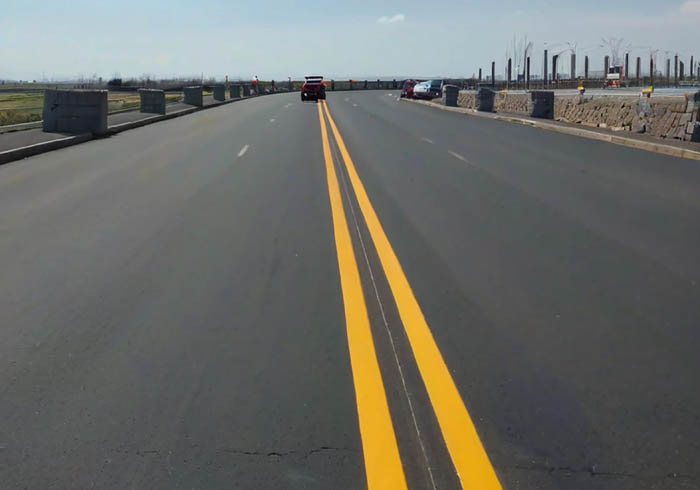
Road marking paint is a specialized coating applied to road surfaces to delineate lanes, crosswalks, stop lines, traffic signs, and other critical traffic indicators. It combines durability with high visibility, must adhere firmly to the pavement, withstand continuous traffic wear, and remain clearly visible under varying weather and light conditions. High-quality road marking materials are essential for maintaining orderly and safe roadways.
Types of Road Marking Paints
There are several common types of road marking paint, each with distinct characteristics, advantages, and ideal use cases:
1. Thermoplastic Road Marking Paint
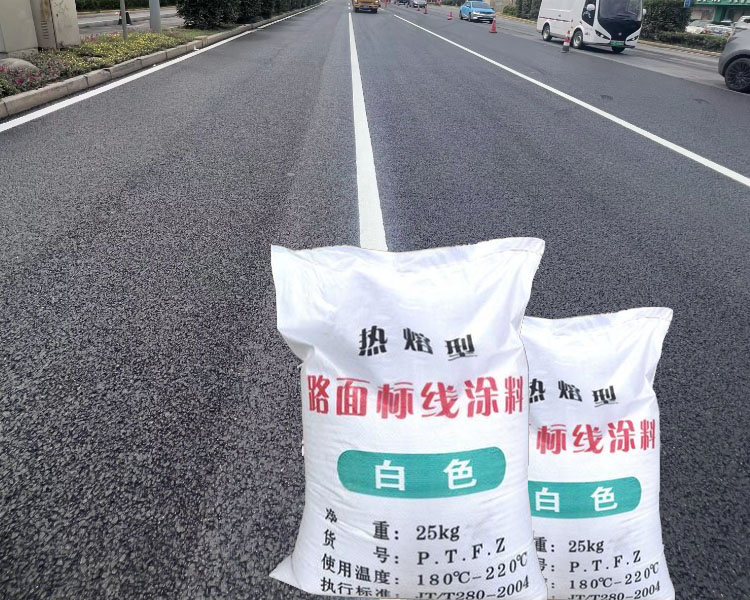
Thermoplastic road marking paint is one of the most durable and reflective materials used for permanent road markings. It is solid at ambient temperature but becomes molten when heated to approximately 200°C (392°F), allowing for easy application. Upon cooling, it solidifies quickly into a tough, long-lasting marking.
- Composition: Typically comprises synthetic resins, plasticizers, glass beads (for retroreflection), pigments (such as titanium dioxide for white or yellow chromate for yellow), and fillers.
- Benefits: Offers exceptional durability, high retroreflectivity (especially at night or in rain), fast drying/curing time (minutes after application), and resistance to wear and weathering.
- Application: Applied using specialized thermoplastic applicator equipment, such as screed boxes or spray guns. Heated in a preheater/mixer and then laid on preheated asphalt or concrete surfaces.
- Common Uses: Highways, intersections, airport runways, and other high-traffic areas where long-term performance is critical.
2. Solvent-Based Paint
Traditionally one of the most common types of traffic paint, solvent-based coatings use organic solvents as the carrier for the paint resins and pigments.
- Benefits: Fast drying time (typically 15–30 minutes), good adhesion, and proven performance history.
- Drawbacks: Contains volatile organic compounds (VOCs), which can be harmful to the environment and applicators. Generally less durable than thermoplastic markings.
- Common Uses: Lower-traffic roads, residential streets, and temporary markings where quick reopening to traffic is needed.
3. Water-Based Road Marking Paint
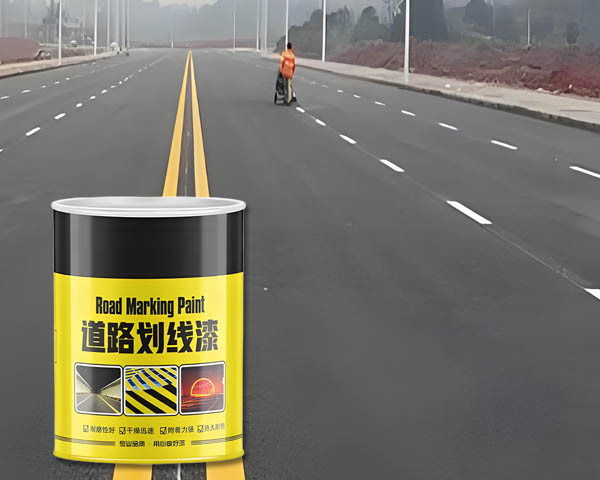
As an eco-friendly alternative, water-based road paint uses water as its primary carrier, significantly reducing VOC emissions.
- Benefits: Environmentally friendly, easy cleanup, low odor, and safer for applicators and the public.
- Drawbacks: Longer drying time (approximately 1–2 hours) compared to solvent-based paints; performance can be sensitive to application weather (humidity, temperature).
- Common Uses: Parking lots, bicycle lanes, school zones, construction sites, and other areas where environmental impact is a concern.
4. Epoxy Road Marking Paint
Epoxy paint is a two-component coating known for exceptional durability and chemical resistance.
- Benefits: Excellent adhesion, high resistance to fuels, oils, and chemicals, and very long service life.
- Drawbacks: Requires precise mixing of two components, has a longer curing time (several hours to overnight), and often demands specialized application equipment.
- Common Uses: Industrial floors, warehouse aisles, airport hangars, and parking garages where exposure to chemicals, heavy loads, or abrasion is expected.
Key Performance Characteristics of Road Marking Paint
High-performance road marking materials must meet several critical requirements:
- High Visibility and Color Retention: Must contrast sharply with the pavement and resist fading from UV exposure and weather changes.
- Retroreflectivity: The ability to reflect vehicle headlights back to the driver’s eyes, essential for nighttime visibility. This is typically achieved by embedding glass beads into the paint surface.
- Short Drying Time: Minimizes traffic disruption, especially on busy roads. Thermoplastic road marking paints excel in this regard.
- Strong Adhesion and Abrasion Resistance: Must bond firmly to the pavement and withstand wear from tires, snowplows, and weather.
- Weather Resistance: Should perform well under extreme temperatures, rain, snow, and UV exposure without cracking, peeling, or flaking.
- Skid resistance: Must provide sufficient friction to prevent slipping, especially for motorcycles and bicycles.
- Durability and lifespan: Long-lasting performance reduces maintenance frequency and lifecycle costs.
Drying Times for Different Road Marking Paints
Drying and curing times are critical for road construction scheduling and reopening traffic:
- Solvent-Based Paint: 15-30 minutes
- Water-Based Paint: 1-2 hours
- Thermoplastic Paint: Cures within 1-5 minutes upon cooling
- Epoxy Paint: Full cure takes several hours to overnight
How to Choose the Right Road Marking Paint
Choosing appropriate road safety paints depends on road type, traffic volume, budget, and environmental conditions:
- For highways and expressways (solid lines): Use thermoplastic road marking paint or high-performance two-component coatings for optimal durability and reflectivity under high-speed, heavy traffic conditions.
- For urban roads, crosswalks, and signs: Thermoplastic road marking paint is ideal due to its high reflectivity and longevity. Hot-melt thermoplastic coatings are commonly used for crosswalks.
- For curves, slopes, and high-risk areas: Use anti-skid road markings or hot-melt coatings with anti-skid aggregate to enhance safety.
- For long straight sections, bridges, and tunnels: Raised contour (rumble) lines or thermoplastic markings provide vibratory alerts and improve visibility.
- For roads without street lighting: Always use reflective road markings with high levels of embedded glass beads.
- For underground parking garages: Select low-VOC coatings such as water-based road paints or oil/two-component paint resistant to oil and gasoline.
- For old or renovated pavement: Choose marking materials with a lifespan matching the expected timing of the next road renovation.
From bustling interstates to quiet parking lots, road marking paints play a vital role in guiding traffic and saving lives. Thermoplastic road marking paint stands out as the preferred choice for high-traffic and permanent applications due to its exceptional durability, reflectivity, and rapid cure time. By understanding the characteristics and optimal uses of each type of traffic paint—whether thermoplastic, solvent-based, water-based, or epoxy—city planners, contractors, and safety officials can make informed decisions to create safer, more efficient, and longer-lasting road markings.