
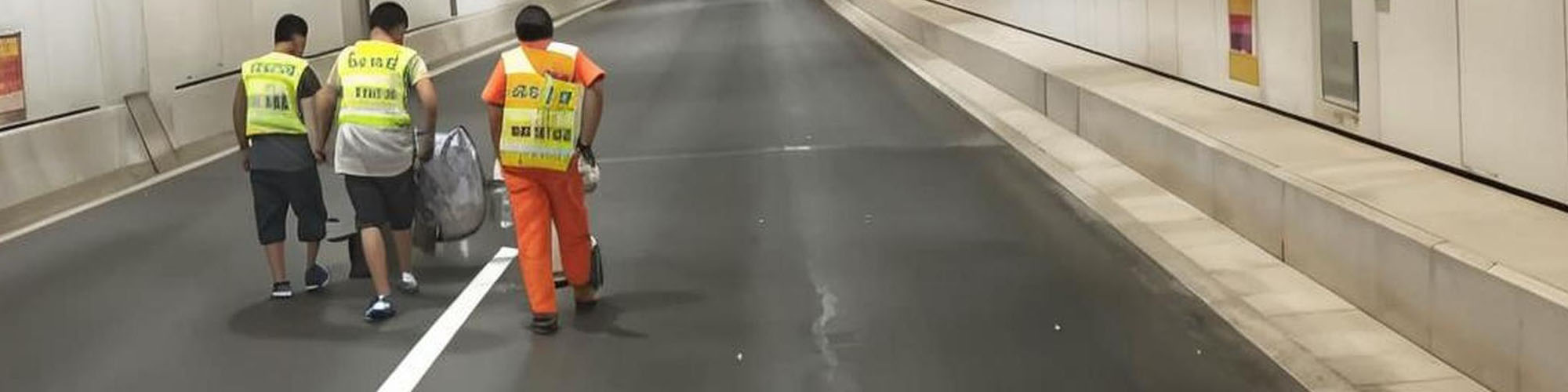
Selecting the right road marking machine for plastic running tracks is much more complex than it seems. The wrong equipment can lead to uneven markings, surface damage, and frequent rework. This guide covers how the machines work, key specifications, and auxiliary tools to help you make an informed decision.
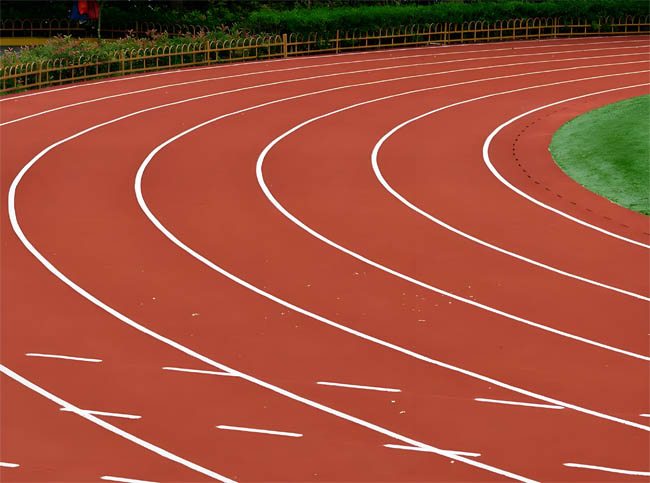
Why Do Plastic Tracks Require Specialized Road Marking Machines?
Plastic track surfaces are highly sensitive to heat and pressure. Unlike asphalt or concrete, they require low-temperature application to prevent melting or deformation. Most applications involve small to medium-sized areas but demand high precision. Hand-pushed cold paint road marking machines are typically the best choice for these scenarios.
Key Features of Road Marking Machines for Synthetic Tracks:
- Paint Type: Uses room-temperature coatings (no heating required)
- Application Method: High-pressure airless spraying or air-assisted spraying
- Advantages: Lightweight, ready-to-use, safe for heat-sensitive substrates
- Disadvantages: Lower adhesion compared to thermoplastic hot-melt coatings; requires a suitable primer or compatible coating
Special Features of Road Marking Machines
When selecting a road marking machine for plastic tracks, especially for school playgrounds or sports venues, the following points should be prioritized:
- Anti-spatter design: Splash guards or deflectors prevent excessive paint overspray onto the track surface.
- Polyurethane spraying technology: Ensures an even coating without causing chemical damage to the track material.
- Swivel casters or swivel wheels: Enable precise marking of standard 5-centimeter lane lines on curves.
- Line width adjustability: Common requirements include 5 cm, 8 cm, 10 cm, or 12 cm, suitable for different sports areas.
- Compatibility with quick-drying paint: Compatible with water-based acrylic paint with a drying time of ≤30 minutes to avoid track closures.
✅ Recommended configuration: Hand-pushed cold-applied line marking machine equipped with an adjustable nozzle, swivel casters, and an anti-drip system.

Essential Accessories After Buying a Road Marking Machine
To maximize efficiency and line quality, don’t overlook these supporting tools:
| Accessory | Purpose | Recommendation |
|---|---|---|
| Paint | Waterborne acrylic marking paint | Drying time ≤30 min, non-slip, UV-resistant |
| Laser distance meter | Precise lane positioning | Accuracy ±1.5mm, with memory function |
| Marking measuring wheel | Layout straight lines and curves | Folding type for easy transport |
| Masking tape (painter’s tape) | Protect edges from overspray | Width 3–5cm, residue-free removal |
| Handheld spray gun kit | Touch-up corners and logos | 0.8–1.2mm nozzle, cup capacity 0.5–1L |
💡 Pro tip: Always test the road marking machine on a small, hidden section of the track before full application to check adhesion and color fastness.
Choosing the right line marking machine ensures your synthetic track remains undamaged, lines are clear and sharp, and maintenance costs are reduced. Prioritize cold-applied, high-precision equipment and invest in high-quality measuring tools and paint to achieve professional-grade marking results.
Frequently Asked Questions (FAQ)
Q: Can I use a hot-melt road marking machine on a plastic track?
A: No. Hot-melt machines require heating (180–220°C) and will damage plastic surfaces. Always use cold paint road marking machines.
Q: How long does cold paint last on plastic tracks?
A: With proper surface preparation and waterborne acrylic paint, markings can last 12–24 months under regular use. Recoating is straightforward.
Q: What maintenance does a hand-pushed road marking machine need?
A: Clean nozzles and filters after each use, check seals for leaks, and lubricate wheels every 3 months.