
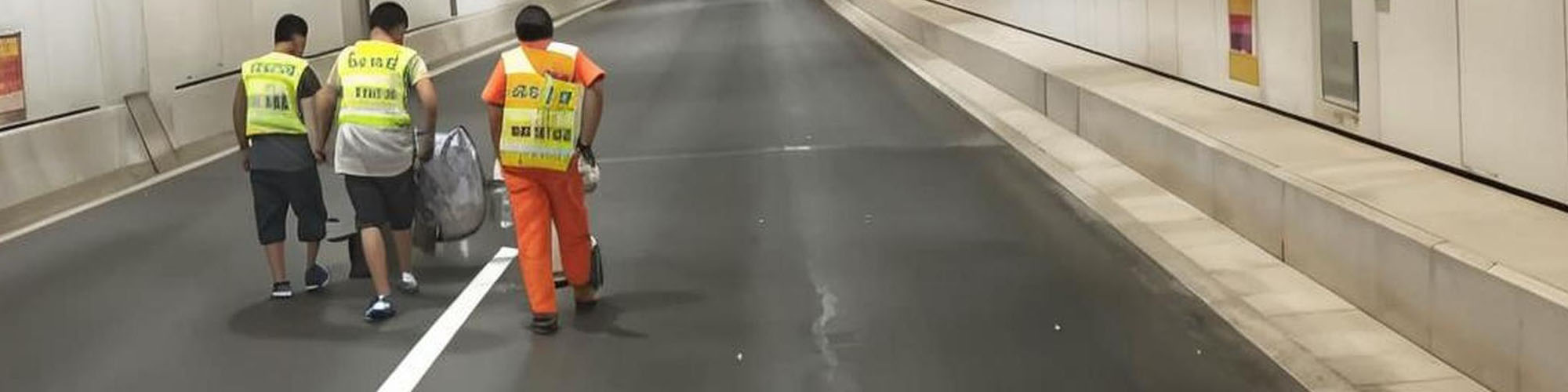
Thermoplastic road marking paint is the industry standard for durable, high-visibility lane markings on highways, urban roads, parking lots, and other locations. Selecting the right formulation requires an understanding of material composition, international standards, climate compatibility, and life-cycle costs. This guide provides technical insights and practical checklists to help contractors and procurement professionals choose the best road marking paint for their specific project needs.
What Are the Components of Thermoplastic Road Marking Paint?
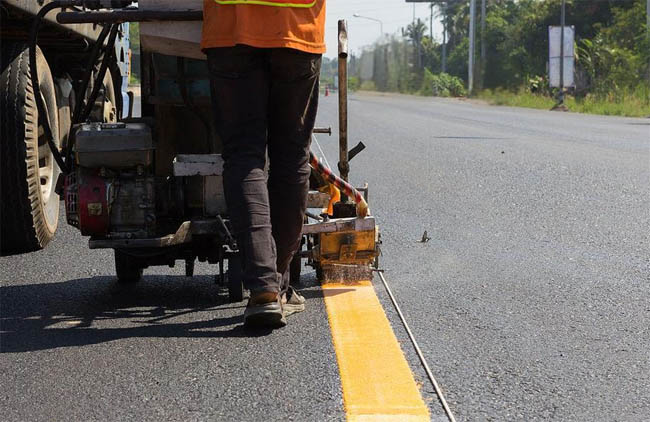
Thermoplastic road marking paint, also known as thermoplastic marking paint, is a powdered coating that melts into a liquid when heated to approximately 180–200°C. Upon cooling, it hardens to form a durable, abrasion-resistant film on the road surface. Its performance depends on the precise combination of four key components:
1. Thermoplastic Resin—The Foundation of Durability
The resin binder is the primary component that determines the paint’s adhesion, abrasion resistance, and service life. It softens when heated and bonds to the road surface, then hardens upon cooling to form a long-lasting marking. High-quality resins also offer resistance to abrasion, weathering, and corrosion from petroleum products such as oils and greases.
Key specifications to verify:
- Softening point: Typically 90–120°C; in hot climates, a higher softening point is recommended to prevent deformation under heavy traffic.
- Binder content: Typically 18–20% (by weight), which affects adhesion and flexibility.
2. Titanium Dioxide Pigment – Brightness and UV Stability
Titanium dioxide (TiO₂) provides a bright white color, which is critical for daytime visibility. This pigment also offers excellent UV resistance, preventing yellowing or fading over time. For yellow road markings, heat-resistant lead-based pigments are typically used.
Typical TiO₂ content: Approximately 10% (by weight) in standard formulations.
3. Retroreflective Glass Beads – Nighttime Visibility and Retroreflectivity
Glass beads are a key component of nighttime visibility. They reflect vehicle headlights back toward the driver, significantly improving road safety in low-light conditions. Two types of beads are used:
| Bead Type | Application Method | Function |
|---|---|---|
| Premixed beads | Mixed into the paint before application | Provide continuous reflectivity as the marking wears |
| Drop-on beads | Applied to the molten surface during application | Instant retroreflectivity upon installation |
Recommended specifications for highways:
- Premixed beads: 20–30% by weight
- Drop-on beads: 250–400 g/m², depending on traffic speed classification
- Refractive index (RI): 1.5 for standard road applications; 1.65 or higher for thermoplastics and airport markings
4. Fillers and Additives – Performance Enhancers
Calcium carbonate and other inert fillers typically make up the remaining portion (approximately 40%), providing bulk and helping to improve skid resistance. Specialized additives, such as polybutene, improve flow, adhesion, UV resistance, and low-temperature flexibility.
How to Select the Right Thermoplastic Coating for Your Project
Step 1: Determine the Required Standards and Specifications
Different countries and regions have varying regulations regarding performance standards. Ensure that the materials you select comply with the relevant specifications for your project:
Step 2: Match Paint Formula to Local Climate Conditions
Climate has a significant impact on the performance of road markings. A formulation optimized for one region may degrade prematurely in another:
Step 3: Evaluate Glass Bead Proportions to Meet Retroreflectivity Requirements
Retroreflectivity is a critical safety parameter, particularly for road markings. The combination of premixed and loose glass beads determines how long the markings remain visible throughout their service life.
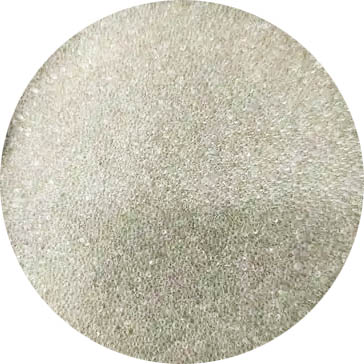
Minimum recommendations for high-traffic roads:
- At least 30% premixed glass beads to ensure nighttime visibility
- Apply glass beads using the drip-coating method at the recommended coverage rate (please refer to the supplier’s technical data sheet)
Quality indicators: Verify that the glass beads’ roundness, particle size distribution, and refractive index comply with standards such as AASHTO M247 or EN 1423.
Step 4: Consider Road Surface Type and Condition
Adhesion varies significantly between surface types:
Step 5: Determine Required Film Thickness
Film thickness directly impacts durability and material consumption:
- Standard thickness: 1.5–3.0 mm for most applications
- Coverage rate: Approximately 4.0 kg/m² for a 1.8 mm thick line on a smooth surface; thicker applications or rough surfaces require more material
Conclusion
Selecting the appropriate thermoplastic road marking paint is a technical decision that requires careful evaluation of standards, climate, road type, retroreflectivity requirements, and total project cost. By asking the right questions and verifying supplier qualifications, contractors and procurement teams can prevent premature failure, reduce maintenance costs, and ensure that road markings enhance safety and compliance for years to come.
Contact Huayuan (info@roadpaintingmachine.com) today for the latest inventory, technical specifications, and competitive pricing tailored to your project’s needs.