
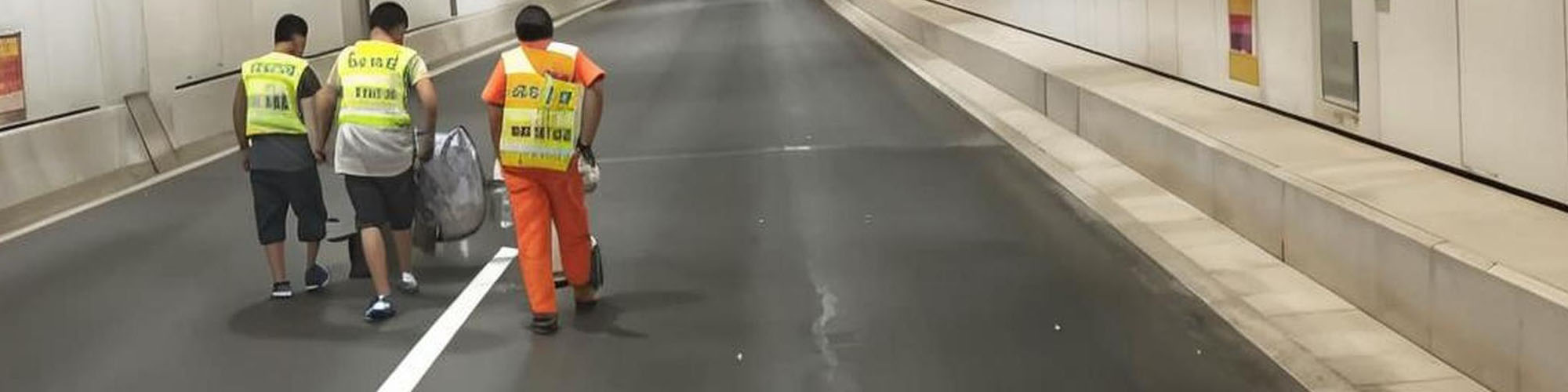
Even when using the same road marking paint and experienced applicators, the results of road marking construction in summer and winter can vary greatly. Why? Because ambient temperature, ground temperature, humidity, and drying kinetics all change with the seasons. To avoid wrinkling, cracking, poor adhesion, or incomplete curing, you must adjust the materials, application techniques, and construction schedule. The following is a detailed analysis by season, based on coating science and field experience.
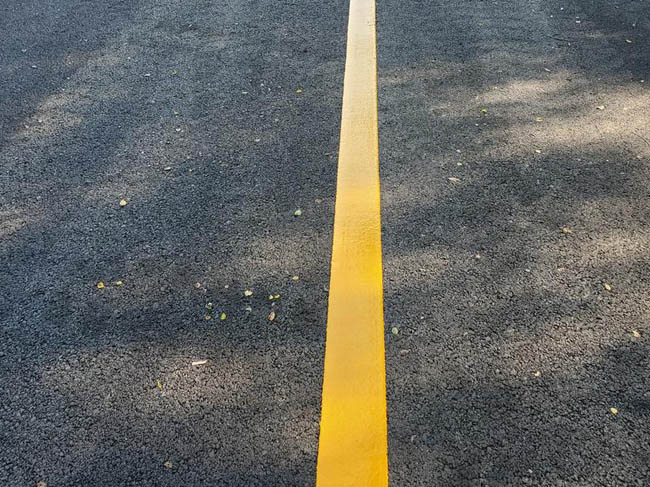
Summer Road Marking Construction: Fighting “Too Fast, Too Hot, Too Dry”
High summer temperatures accelerate solvent evaporation and chemical cross-linking, especially in thermoplastic and cold-applied systems. While rapid curing may sound efficient, if not managed properly, it often leads to coating defects.
1.Excessively High Surface Temperature → Wrinkling and Blistering
When the road surface temperature exceeds 50°C (122°F)—which is common under direct sunlight—road marking paint will skin over immediately after application. The top layer forms a film before the solvents or reaction byproducts in the underlying layer can escape, trapping volatile substances inside and causing blisters or wrinkles.
Solution: Schedule road marking construction during early morning (before 10:00 AM) or late afternoon (after 4:00 PM) when surface temperatures drop below 45°C. Use an infrared thermometer to monitor pavement temperature in real time. For emergency applications at midday, consider using a road marking machine equipped with a forced-air cooling system to accelerate curing from the bottom up.
2. Rapid Solvent Evaporation → Short Open Time and Stringiness
For both solvent-based and water-based paints, high temperatures significantly shorten their “open time”(pot life). Paint thickens, becomes stringy, and fails to level properly, producing rough textures and poor retroreflectivity.
Solution: Mix only small amounts of coating at a time (no more than 20–30 kilograms) and replenish frequently. Store unused road marking paint in a cool, insulated container. If using a road marking machine with a built-in mixer, reduce the mixing speed to minimize solvent loss.
3. Showers and High Humidity → Adhesion Failure
Summer thunderstorms are difficult to predict. Moisture on the substrate or moisture that falls during the curing process can affect adhesion, leading to delamination.
Rule of thumb: Do not apply the coating if it has rained within 2 hours prior to application, or if rain is forecast within 4 hours after application. Surface moisture content must be below 4% (test with a moisture meter). Be sure to check the dew point—if the pavement temperature is within 3°C of the dew point, the risk of condensation is high.
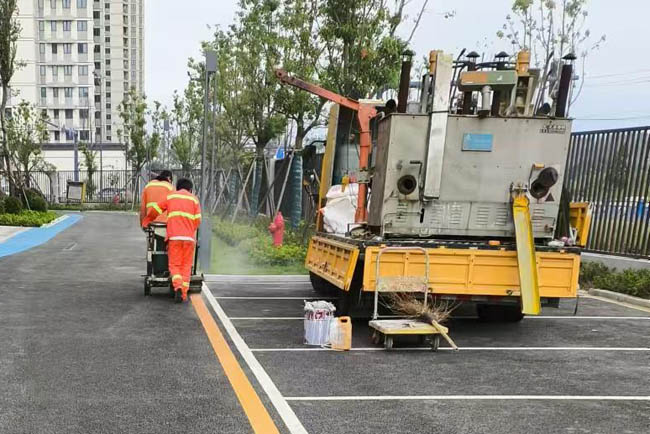
Winter Road Marking Application: Overcoming the Challenges of “Too Slow, Too Cold, Poor Curing”
Cold weather slows molecular movement, prolongs drying time, and reduces interfacial adhesion. Winter is the peak season for rework claims—but with the right adjustments, you can still achieve durable lines.
1. Low Temperatures → Significantly Extended Curing Time
At temperatures below 5°C (41°F), the curing rate of most road marking paints decreases by more than 50%. The paint remains tacky for several hours, making it prone to picking up dust, dirt, and tire marks.
Solution: Schedule application during the warmest part of the day, typically between 12:00 PM and 3:00 PM. Use a cold-cure additive (e.g., an accelerator) compatible with your coating system. For thermoplastic materials, ensure the road marking machine’s application temperature is maintained between 180–220°C to compensate for heat loss from the road surface.
2. Cold Pavement → Poor Mechanical Bond Strength
Cold asphalt shrinks, reducing microporosity and limiting paint penetration. This results in poor bond strength, leading to flaking or peeling within a few weeks.
Solution: Preheat the base course using a propane torch or an infrared pavement heater; alternatively, for large-scale projects, use a road marking machine equipped with an integrated preheating module. In addition, thoroughly sweep and blow away ice particles, dust, and loose aggregate from the pavement surface, as these materials can form a release layer.
3. Damp, Overcast Weather → Chalking and Whitening
High humidity in winter (typically above 80%) and fog can cause water in water-based paints to evaporate slowly, leading to surface whitening, reduced gloss, and decreased abrasion resistance.
Solution: Avoid road marking construction on continuous overcast days or when morning dew is heavy. Use a psychrometer to measure relative humidity—if above 85%, postpone. For solvent-based coatings, add an anti-whitening agent to prevent haze caused by moisture.
4. Thick Coats → Trap Solvents & Under-Cure
In winter, workers often apply thicker coats to compensate for slow drying times, but this can backfire. The top layer forms a skin while the underlying layer remains liquid, resulting in soft spots on the road surface that eventually crack under vehicle traffic.
Best Practice: Apply thin coats (wet film thickness ≤ 0.6–0.8 mm per pass) and allow sufficient drying time between coats (at least 20–30 minutes longer than in summer). Use road marking machines equipped with precise flow control valves to maintain consistent coating thickness.
Quick Reference: Summer vs. Winter Road Marking Construction
| Factor | Summer Focus | Winter Focus |
|---|---|---|
| Temperature | Avoid surface >50°C; shade storage | Ensure ambient ≥5°C; pre-heat pavement |
| Humidity | Avoid rain ±2–4 hrs; check dew point | Avoid >85% RH; prevent blush/whitening |
| Application | Smaller batches; faster crew rhythm | Thinner passes; longer interlayer waits |
| Paint additive | Use retarders to slow flash-off | Use accelerators to boost cure speed |
| Machine setting | Reduce agitator speed; cool hopper | Maintain hot-melt temp; pre-heat nozzles |
Regardless of the season, investing in high-performance road marking paint and reliable road marking machines ensures consistent marking quality. For large-scale projects, we recommend using thermoplastic marking systems with built-in glass beads to achieve immediate reflectivity, and calibrating the road marking machine daily to adapt to prevailing environmental conditions.
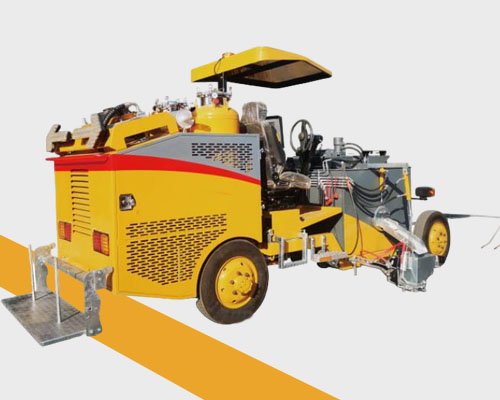
Henan Huayuan is a globally renowned supplier of professional road marking equipment. All equipment is engineered for seasonal adaptability—ensuring your road marking construction stays on schedule, rain or shine, heat or frost. Welcome to inquire!