

Road marking glass beads are classified by application method into two types: premixed (internal mixing) and drop-on (surface-applied) . What, then, are the differences between them? For agencies and contractors that must specify materials when selecting road marking machines, understanding the distinction between premix (intermix) and drop-on (surface-applied) glass beads is essential for meeting performance requirements under EN 1423, AASHTO M247, or local highway specifications.
Premix (Intermix) Glass Beads:

Premix glass beads are compounded directly into the marking material—typically thermoplastic, cold plastic, or two-component systems—during manufacture. The standard addition rate for premix beads in thermoplastic formulations generally falls within the 18%–25% by weight range, though this varies with binder viscosity and bead gradation. Smaller bead sizes are usually selected for premix applications to prevent settling during storage and to minimize wear on spray nozzles and pumping systems within the road marking machine.
The functional advantage of premix beads is durability of retroreflectivity over the service life of the marking. As the binder surface wears under traffic—thermoplastic markings typically lose approximately 0.25 mm per year under normal conditions—fresh bead surfaces become exposed, renewing the retroreflective layer. This makes premix beads particularly valuable in high-traffic corridors where restriping intervals are extended and where the marking must maintain wet-night visibility as the profile wears.
A critical technical consideration for premix beads is refractive index. Standard beads with an index of approximately 1.5 are common, but premium high-index beads (1.6–1.9) deliver significantly greater retroreflective efficiency. However, research has shown that beads optimized for dry retroreflectance (index ~1.9) actually perform poorly under wet conditions because the water film alters the optical path; a mixed bead population or beads specifically engineered for wet performance may be required in regions with frequent rainfall. This nuance is often overlooked in specifications that treat “glass beads” as a single performance category.
Drop-On (Surface-Applied) Glass Beads:
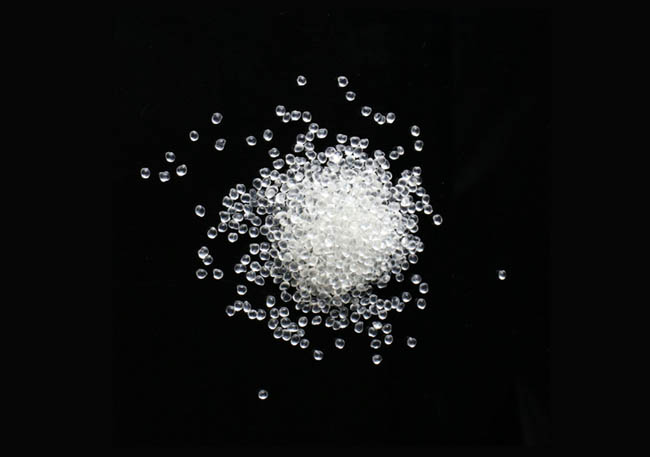
Drop-on glass beads are broadcast onto the freshly applied, still-wet marking material immediately downstream of the road marking machine applicator—whether that is a thermoplastic screed, a spray gun, or a two-component mixing head. The beads partially embed into the binder, with roughly 50%–60% of the bead diameter remaining exposed to receive and retroreflect headlight beams back toward the driver.
The primary performance benefit is immediate retroreflectivity. Unlike premix-only systems, which exhibit poor initial reflectivity until sufficient surface wear exposes embedded beads, drop-on application produces a functional marking as soon as the binder cures. For thermoplastic and cold-applied markings where nighttime visibility must be available on day one, drop-on beads are effectively mandatory.
Drop-on bead application rates are typically specified in the range of 6 lb/gal (approximately 0.7 kg/L) for conventional paint systems, though rates as low as 4 lb/gal have been reported as effective depending on bead gradation and film thickness. The road marking machine must be equipped with a calibrated bead dispenser—either gravity-fed or pressurized—that maintains consistent broadcast density across the marking width. Fluctuations in bead flow directly translate to visible striping in the retroreflective performance of the finished line.
Practical Selection Criteria for Specifiers
When writing specifications or selecting materials for a project, the following technical parameters should guide the choice between premix and drop-on glass beads:
| Parameter | Premix Beads | Drop-On Beads |
|---|---|---|
| Primary function | Long-term retroreflectivity reserve | Immediate nighttime visibility |
| Typical addition rate | 18–25% by weight in thermoplastic | 4–6 lb/gal (0.5–0.7 kg/L) |
| Bead size tendency | Smaller gradations to avoid settling | Matched to film thickness and traffic |
| Key standard reference | EN 1424 (intermix) | EN 1423 (drop-on materials) |
| Road marking machine requirement | Homogeneous dispersion in binder | Calibrated, consistent broadcast system |
In practice, high-performance marking systems employ both bead types in a complementary strategy. The premix beads serve as a “reserve” of retroreflective material that becomes active as the marking wears, while the drop-on beads provide the initial and immediately visible retroreflective layer. This dual approach is standard in thermoplastic road marking specifications and is increasingly common in two-component systems where durability requirements are stringent.
As a manufacturer of road marking machine systems and related consumables, we offer premixed and drop-on glass beads. These products are optimized to meet the specific requirements of thermoplastic, cold-applied, and two-component road marking applications, and are suitable for a wide range of road marking needs. We invite you to shop with us.
FAQ
Q: Can I use only drop-on glass beads without premix beads?
A: Yes, for short-service or low-traffic applications. However, when the drop-on beads wear away, retroreflectivity drops sharply because no reserve beads exist in the binder. For markings expected to maintain nighttime visibility beyond 1–2 years, a combined premix + drop-on system is recommended.
Q: What refractive index should I specify for wet-night performance?
A: Standard 1.5-index beads perform adequately in dry conditions. For wet-night visibility, higher-index beads (1.65–1.9) or a blended bead population may be specified, but note that beads optimized for dry retroreflectance may underperform in wet conditions—consult bead suppliers for wet-specific gradations.
Q: How does road marking machine speed affect bead embedding?
A: Higher application speeds reduce the dwell time between binder placement and bead drop-on, which can cause beads to sit too shallowly on the surface and be dislodged by traffic. Most machine manufacturers publish speed ranges for optimal bead retention; exceeding these ranges typically requires adjustment of bead flow rate or drop height.