
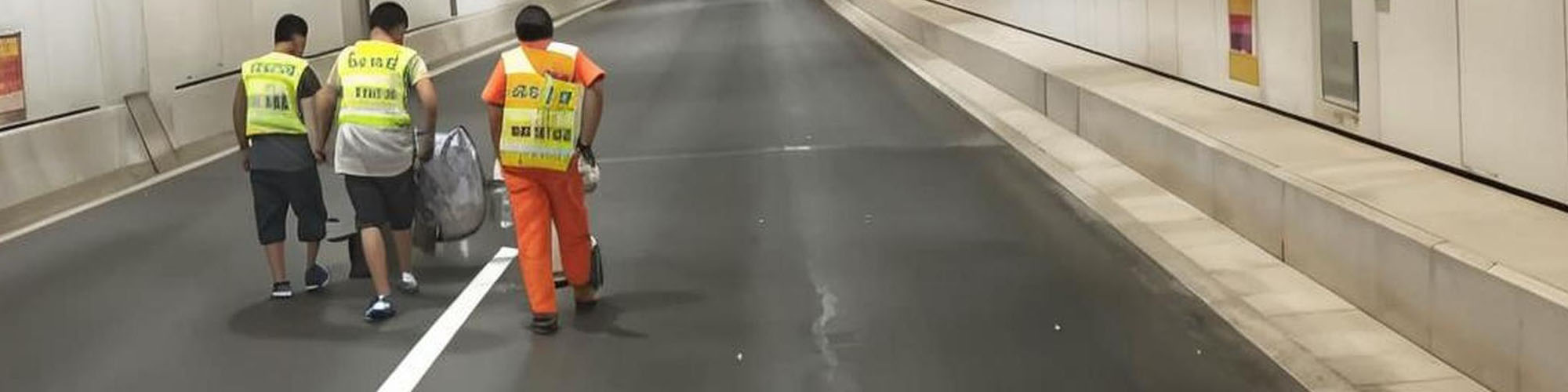
In road safety construction, road marking machines play an indispensable role. They are widely used to create road markings and warning signs in accordance with various standards and specifications. Thanks to their high efficiency and precision, road marking machines have long been the cornerstone of urban planning and road infrastructure development.
However, as modern large-scale construction projects demand ever-higher levels of productivity and durability, the importance of auxiliary road marking equipment has become increasingly evident. These auxiliary tools not only improve marking quality but also extend the service life of road markings. Below, we introduce four essential types of auxiliary equipment: blowers, cleaning machines, primer applicators, and water line marking machines (pre-markers).
1. Road Marking Blower
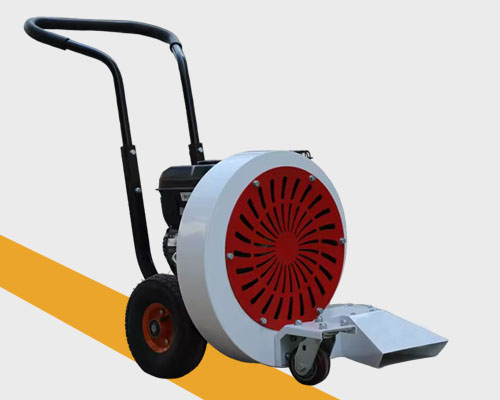
Road marking blowers use an engine to drive an impeller, generating a powerful airflow that effectively removes debris, dust, and small stones from the road surface. Using a blower before marking significantly improves the adhesion of the marking paint to the road surface. This equipment is particularly suitable for efficiently and conveniently removing old markings and repainting new ones.
2. Road Marking Cleaning Machine
The road marking cleaning machine is an auxiliary tool for thermoplastic and cold-applied marking operations. It is used to clean the road surface prior to marking and is particularly suitable for removing dirt, cement slurry, and old cold-applied markings from concrete surfaces to enhance adhesion.
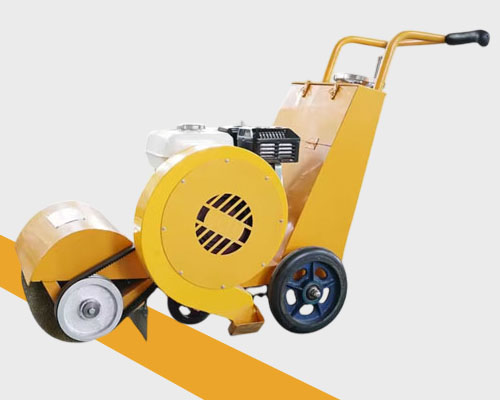
This machine is engine-driven and features a high-speed rotating wire brush. It offers excellent cleaning performance, high efficiency, simple operation, and easy maintenance. Designed to meet the high standards of modern road construction, this product is specifically intended for professional teams.
3. Primer Applicator
Primer is a bonding agent used in thermoplastic road marking operations. It helps prevent the marking film from peeling and enhances the bond strength between the marking material and the road surface. This is particularly important for concrete and aged asphalt surfaces.
The primer sprayer is engine-driven and equipped with an automatic air compressor, making it easy to operate. A pointer at the front of the machine helps the operator precisely adjust the spray width. Renowned for its high efficiency, ease of maintenance, long service life, low pollution, and quiet operation, this primer sprayer is widely used in road marking projects worldwide.
4. Water Line Marking Machine (Pre-Marker)
The water line marking machine, also known as a pre-marking machine, is used to draw water-based guide lines. These guide lines serve as reference boundaries for the final road markings. The operator adjusts the machine’s direction by controlling the locking wheels to draw straight or irregular lines. The number of guide lines and their width can be adjusted via the control arm.
This machine can replace most manual layout work, significantly reducing labor intensity and improving work efficiency. It is particularly useful for complex intersections, roundabouts, and custom marking patterns.
In summary, road marking construction requires not only professional qualifications and technical expertise but also a range of mechanical equipment to assist in the process. These machines play a crucial role in marking operations; they enhance construction efficiency, ensure marking quality, and provide a strong guarantee for road traffic safety. With the continuous advancement of smart technology, we look forward to seeing more automated and intelligent auxiliary equipment—such as laser-guided pre-marking machines and AI-driven cleaning equipment—which will further revolutionize civil engineering and road safety infrastructure.
Frequently Asked Questions (FAQ)
Q: Do I always need a primer applicator?
A: For concrete or old asphalt surfaces, the use of a primer applicator is strongly recommended to prevent the markings from peeling off. For new asphalt surfaces, however, it may not always be necessary.
Q: Can I use a blower instead of a cleaning machine?
A: A blower can remove loose dust and debris, while a cleaner can scrub away stubborn dirt and old paint. For best results, it is recommended to use both when repainting worn markings.