
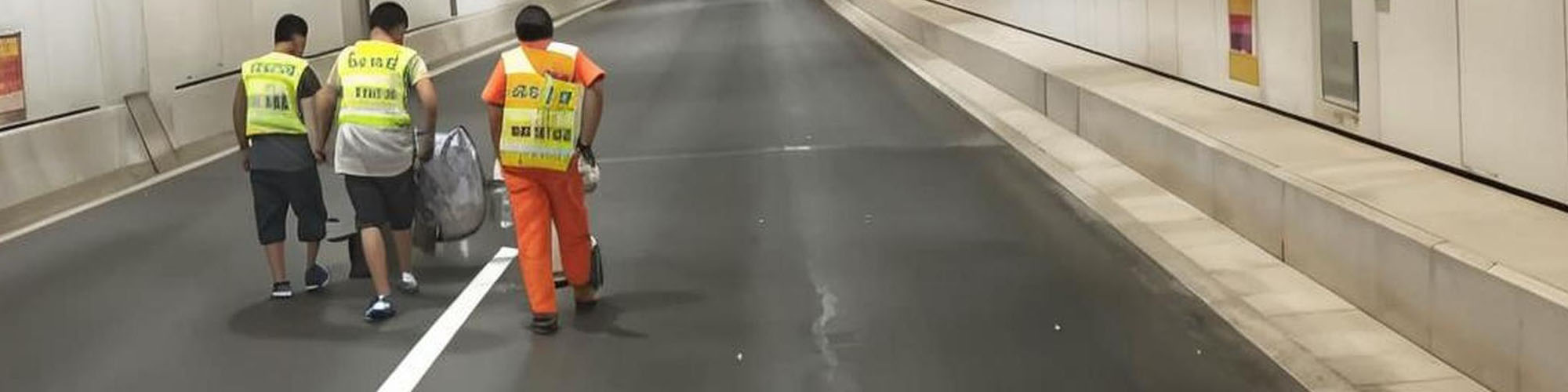
Understanding Line Width Adjustment in Road Marking Machines
Although the international standard width for road markings is typically 15 cm (6 inches), marking widths vary significantly in practical applications. In locations such as residential areas, parking lots, bike lanes, or crosswalks, required widths can range from 5 cm to 50 cm or more. So, how exactly do road marking machines adapt to such a wide range of marking widths without compromising accuracy, edge sharpness, or material utilization?
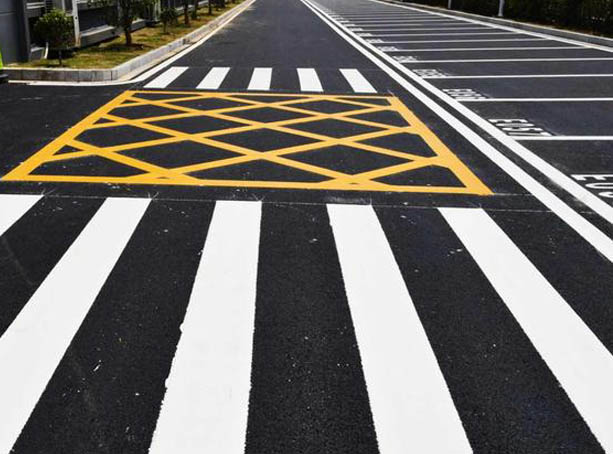
The answer lies in the combination of mechanical interchangeability, hydraulic pressure adjustment, and material rheology control. Below, we will elaborate on the technical mechanisms in detail.
1. Spray Gun Nozzle Selection and Orifice Control
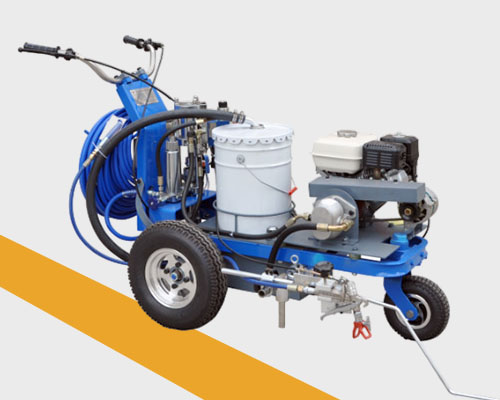
In cold paint road marking machines (using solvent-based or water-based coatings), the primary factor controlling line width is the spray gun nozzle.
- Interchangeable nozzle heads are available in a variety of sizes (for example, with orifices ranging from 0.015 inches to 0.045 inches). At the same pressure, a larger orifice diameter provides a wider spray fan.
- Fan pattern air caps shape the paint into a flat, uniform spray. By rotating or replacing the nozzle cap, the operator can adjust the fan angle from 10° to 65°, which directly affects the line width.
- Fluid pressure adjustment (typically 150–300 psi) also affects line width: higher pressure increases paint flow and fan spread, but excessively high pressure can cause overspray and edge feathering—so operators must balance pressure and nozzle size.
Pro Tip: For markings wider than 30 centimeters, most cold-spray machines use a dual-gun system or a swinging spray head to maintain uniform coating thickness without sacrificing travel speed.
2. Die/Extrusion Mold Interchangeability (Thermoplastic Marking Machines)
Width adjustment on thermoplastic road marking machines differs significantly from that of traditional marking machines. Thermoplastic material is heated to 180–220 °C until it melts, then extruded through a die (mold) mounted on the screed.
- Each die has a fixed internal channel width (e.g., 10 cm, 15 cm, 20 cm, 30 cm, 45 cm) .
- To change the marking width, the operator must manually replace the die head—a process that takes less than 2 minutes on modern machines thanks to quick-release mounting systems.
- Some advanced machines are equipped with adjustable die heads featuring a sliding gate mechanism, allowing for stepless width adjustment within a range of 10–40 centimeters without replacing the die.
Key material considerations: The viscosity of thermoplastic materials (measured in poise) must match the die gap. If the material viscosity is too high, the edges of the die gap cannot be filled, resulting in jagged edges. The temperature stability of the preheater (±3 °C) is critical for ensuring consistent coating width and thickness.
3. Pressure and Flow Rate Calibration
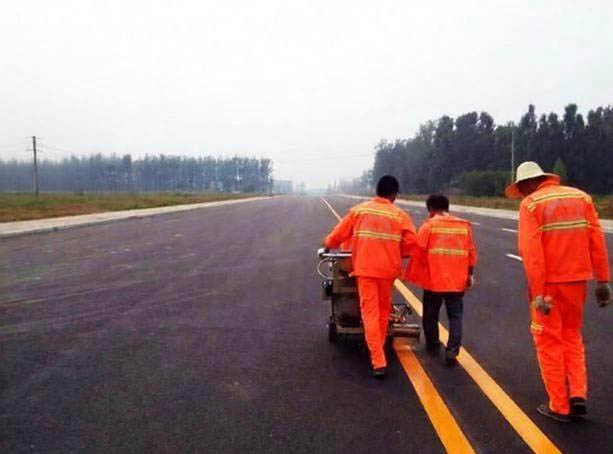
Regardless of paint type, the pump system (piston or diaphragm) delivers a controlled flow rate (liters per minute). Width is a function of:
Line Width = (Flow Rate × Coating Efficiency) / (Travel Speed × Film Thickness)
For example, to increase width while keeping film thickness (e.g., 400 µm for cold paint) constant, the operator must either:
- Increase flow rate (by raising pump pressure or using a larger nozzle), or
- Reduce travel speed (m/min) to allow more material deposition per meter.
Modern road marking machines integrate digital flow meters and speed sensors to automatically adjust pressure and speed, ensuring width consistency even on sloping or uneven pavement.
4. Application-Specific Width Ranges and Standards
| Application | Typical Width (cm) | Recommended Machine Type |
|---|---|---|
| Parking lot stalls | 5–10 | Cold paint spray (fine-tip) |
| Bicycle lanes | 10–15 | Thermoplastic die (fixed) |
| Standard road lanes | 15 (ISO 8513) | Both types |
| Bus lanes / loading zones | 20–25 | Thermoplastic with adjustable die |
| Pedestrian crossings | 30–50 | Dual-gun cold spray or wide extrusion die |
Note: For widths >40 cm, glass bead application (retroreflectivity) becomes critical—machines must have dual bead dispensers to cover the entire width uniformly.
Huayuan is a specialized supplier of road marking machinery and materials; our equipment has been exported to over 100 countries and has withstood the test of various climatic conditions. Whether you need a 5-centimeter compact parking line or a 50-centimeter heavy-duty crosswalk, Huayuan provides customized configuration guides, on-site calibration support, and spare parts kits to minimize downtime.
For technical specifications, nozzle/mold compatibility charts, or customized recommendations for your project, please contact Huayuan directly—our engineering team will respond within 24 hours.