
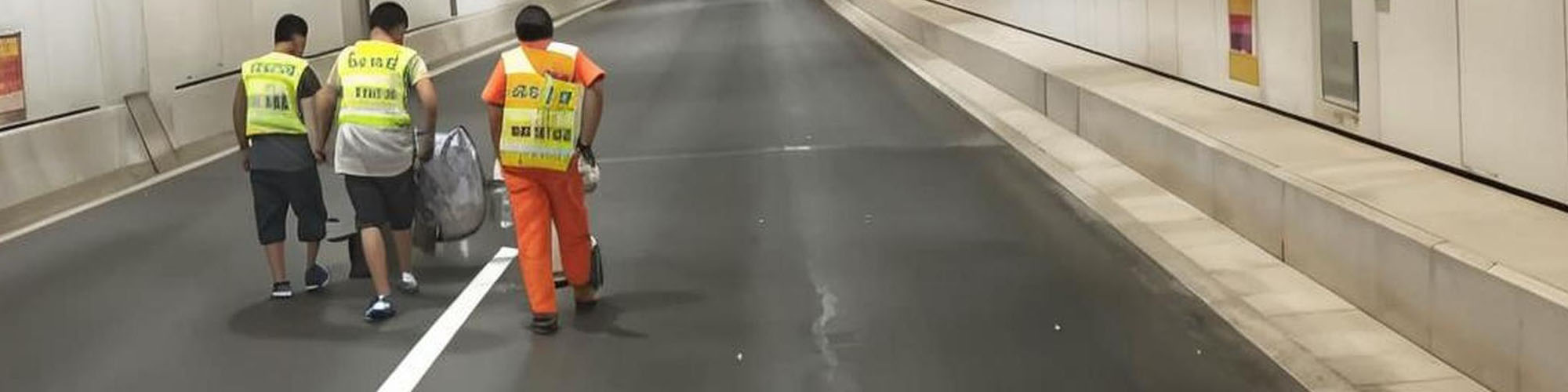
Color plays a dual role in road marking paints: it conveys critical traffic instructions and significantly influences the paint’s physical and chemical properties. Understanding the relationship between color and performance is essential for selecting the appropriate road marking paint for specific environments.
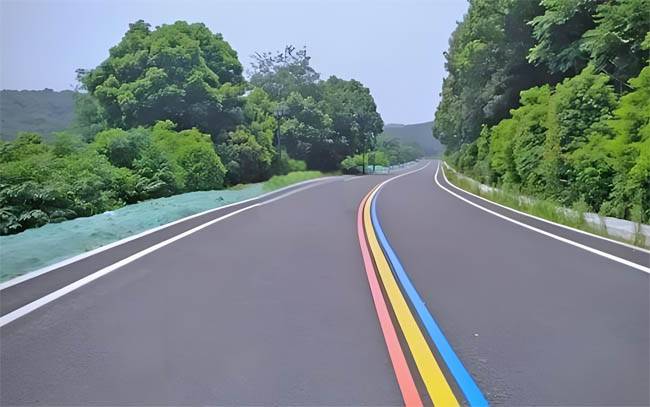
1. Weather Resistance and Color Retention
Road markings are constantly exposed to ultraviolet (UV) radiation, high temperatures, and humid conditions. The lightfastness of pigments directly determines the rate at which road marking paints fade.
- Inorganic pigments such as titanium dioxide and iron oxide yellow offer excellent UV resistance. They are commonly used in white and yellow road marking paints to minimize fading after prolonged sun exposure.
- While organic pigments can produce more vibrant colors, they fade more easily under intense sunlight and are therefore less suitable for areas with high UV intensity.
Modern durable traffic marking paint formulations typically combine inorganic pigments with UV stabilizers, which can extend color life by up to 30%, thereby reducing maintenance frequency and costs.
2. Reflectivity and Nighttime Visibility
Under adverse conditions such as low light or rainy weather, reflectivity is critical for traffic safety. Reflective glass beads are typically added to white and yellow road marking paints.
- Light-colored paints (white, yellow) reflect more light, thereby improving visibility.
- Dark-colored paints (blue, green, red) absorb more light and require higher-quality or larger glass beads to achieve a similar reflective effect.
Pro Tip: For highways, using pre-mixed thermoplastic road marking paint with drop-coated glass beads can increase retroreflectivity by over 50%, ensuring nighttime driving safety.
3. Thermal Stability and Climate Adaptability
In hot climates, road marking paints must resist softening, deformation, and discoloration.
- Thermoplastic marking paints with high thermal stability maintain their shape and adhesion even when surface temperatures exceed 60°C (140°F).
- Cold-applied paints are another option, offering excellent thermal stability without the need for heating equipment, making them ideal for remote areas.
Studies show that adding anti-skid aggregates and thermal stabilizers to thermoplastic road marking coatings can reduce heat-induced deformation by 40%, thereby maintaining the integrity and skid resistance of the markings.
4. Environmental Adaptability: Rain, Humidity, and Abrasion
In damp or high-humidity areas, a coating’s water resistance and abrasion resistance directly affect the visibility and durability of the markings.
- Quick-drying road marking paints minimize damage caused by rain during application.
- Epoxy-based road marking paints offer exceptional moisture resistance and adhesion, making them suitable for tunnels and coastal roads.
Eco-Friendly Road Marking Solutions:
With growing environmental concerns, waterborne road marking paint is gaining traction. These coatings emit lower levels of volatile organic compounds (VOCs), dry quickly, and offer excellent color retention. They are an ideal choice for urban areas with strict emissions regulations.
5. Case Study: Selection of Road Marking Paint in Malaysia
Malaysia’s tropical climate presents unique challenges for road marking paint:
- High temperatures (year-round): Extreme heat can soften thermoplastic marking paint, reducing its adhesion, skid resistance, and nighttime reflectivity. Recommended solution: Use thermoplastic marking paint formulated with heat stabilizers, anti-skid additives, and high-quality glass beads to maintain performance under high temperatures.
- Intense UV Exposure: Strong sunlight accelerates pigment degradation. White pigments (such as titanium dioxide) and certain organic yellow pigments fade rapidly. Manufacturers tend to use UV-resistant inorganic pigments (e.g., titanium white, iron oxide yellow) to enhance durability and maintain reflectivity.
- Frequent Heavy Rain: Quick-drying, highly drainable road marking paints minimize construction delays and ensure high-quality results. Methyl methacrylate (MMA) paints are particularly effective in humid environments due to their rapid curing and excellent adhesion.
New Recommendation for Malaysia: For high-traffic roads, a two-coat application system is recommended: a thermoplastic marking paint base for durability and a cold plastic topcoat for enhanced reflectivity and UV protection.
Conclusion
The color of road marking paint is not merely a visual choice; it directly impacts safety, durability, and lifecycle costs. By selecting the appropriate pigment types, reflective materials, and binder systems based on specific climatic conditions, the performance of road marking paint can be significantly improved. By taking weather and traffic conditions into account, you can significantly enhance the performance of road markings. Whether selecting coatings for tropical countries like Malaysia or temperate regions, formulations with UV resistance, good thermal stability, and strong environmental adaptability should be prioritized.