
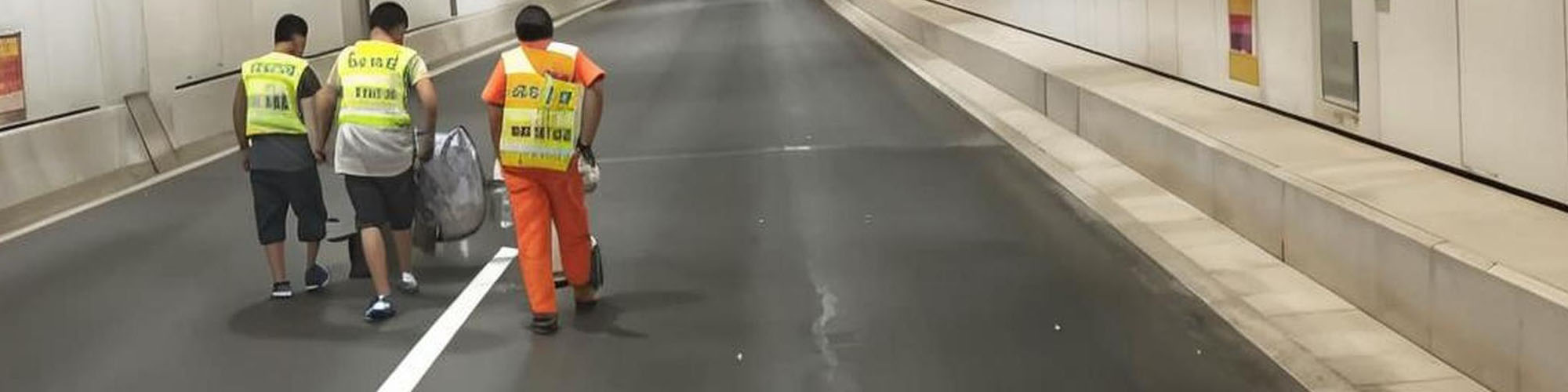
Generally, the consumption rate for thermoplastic road marking paint is 2–5 kilograms per square meter, with the exact amount depending on the line width, line type, paint density, and application conditions.
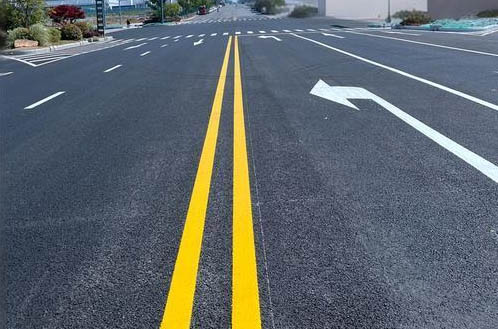
What is thermoplastic road marking paint?
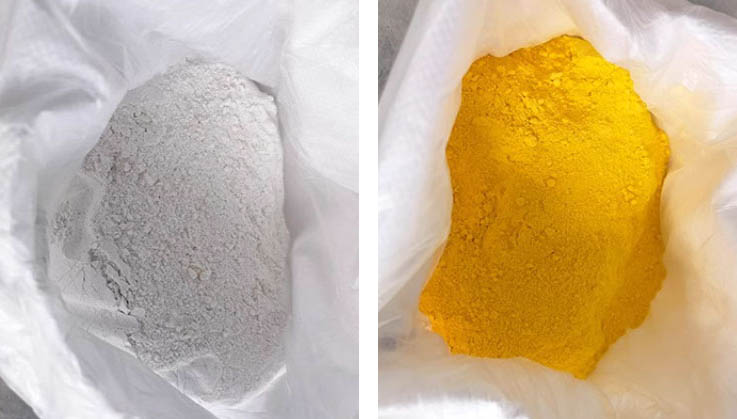
Thermoplastic road marking paint, also known as hot melt road marking paint, is a solid powder coating made from synthetic resins, glass beads, pigments, fillers, and additives. During application, the material is heated to approximately 180–220°C and then applied to the road surface using a thermoplastic road marking machine. Upon cooling, the coating forms a durable and highly reflective traffic marking layer.
Formula for Calculating Thermoplastic Paint Consumption
The basic calculation formula is:Paint Consumption (kg)=Length (m)×Width (m)×Thickness (mm)×Density
For practical road marking projects, the simplified calculation per square meter is commonly used:Consumption per m²≈Thickness×Density
The density of most road marking paint materials is generally between 1.8–2.3 g/cm³.
Average Consumption of Thermoplastic Road Marking Paint
The actual paint usage varies according to the marking type and coating thickness.
| Marking Type | Thickness | Average Consumption |
|---|---|---|
| Standard thermoplastic line | 1.5 mm | 2.5–3.0 kg/m² |
| Reflective road marking paint | 1.8 mm | 3.0–4.0 kg/m² |
| Heavy-duty highway marking | 2.0–2.5 mm | 4.0–5.0 kg/m² |
| Raised profile marking | 3–5 mm | 5.0 kg/m² or more |
These values are commonly used in highway engineering and municipal road construction projects.
Factors Affecting Thermoplastic Coating Consumption
1. Type of Road Marking
Different marking configurations require varying amounts of paint.
For example:
- Standard flat markings consume less material
- Retroreflective markings require the addition of glass beads
- Vibrating or raised markings require a thicker coating
Therefore, the consumption of reflective thermoplastic road marking paint is typically higher than that of standard thermoplastic paint.
2. Coating Thickness
Thickness is the most significant factor affecting material consumption.
Typical thickness standards include:
- Urban roads: 1.5–1.8 mm
- Highways: 2.0–2.5 mm
- Airport markings: 2.5 mm or more
Thicker coatings offer better durability but also incur higher material costs.
3. Road Surface Conditions
Rough or porous road surfaces absorb more coating.
Road surface conditions that increase coating consumption include:
- Old asphalt pavement
- Cracked concrete surfaces
- Uneven surfaces
- Dusty or inadequately cleaned surfaces
Proper surface cleaning prior to application can reduce unnecessary coating waste.
4. Paint Density and Quality
Different manufacturers use varying resin formulations and fillers, resulting in differences in paint density and coverage.
High-quality thermoplastic road marking paint typically offers:
- Better flow
- Stronger adhesion
- Less material waste
- Longer service life
Although the initial cost of high-quality paint may be higher, it often reduces long-term maintenance costs.
5. Application Equipment and Techniques
Professional application equipment improves paint utilization efficiency.
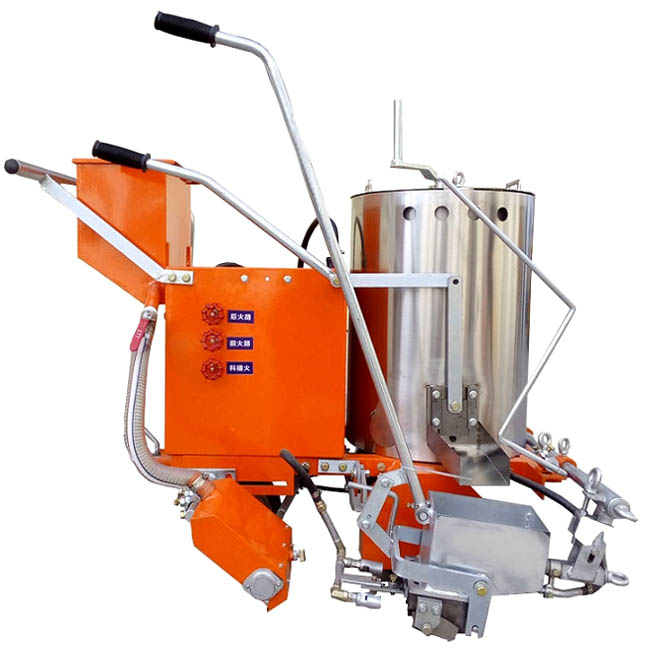
Using advanced thermoplastic road marking machines helps ensure:
- Uniform coating thickness
- Stable paint flow
- Reduced overspray and waste
- Increased application speed
Experienced operators can also significantly reduce unnecessary paint consumption.
Conclusion
The average consumption of thermoplastic road marking paint generally ranges from 2 to 5 kilograms per square meter, depending on coating thickness, marking type, road conditions, and application techniques.
Accurate calculation of paint consumption is critical for controlling project costs, improving construction efficiency, and ensuring the long-term performance of road markings. By selecting high-quality road marking materials and using professional thermoplastic road marking equipment, contractors can achieve better durability, higher reflectivity, and more cost-effective road marking solutions.
Frequently Asked Questions (FAQ)
Q1: How thick should thermoplastic road markings be?
For most roads: 1.5–2.5 mm dry film thickness. High-traffic areas: up to 3 mm.
Q2: Does thermoplastic paint weigh more than cold paint?
Yes. Thermoplastic road marking paint is a solid powder that melts into a thick paste, while cold paint (water/solvent-based) has lower density.
Q3: How many square meters can 25 kg of thermoplastic paint cover?
At 3 kg/m², 25 kg covers about 8.3 m². At 2.5 kg/m², covers 10 m².
Q4: Is thicker always better?
No. Excess thickness increases cost and drying/cooling time without extra safety benefit.
Q5: Can I use thermoplastic paint on concrete?
Yes, but concrete requires a primer or higher application rate due to lower porosity.