
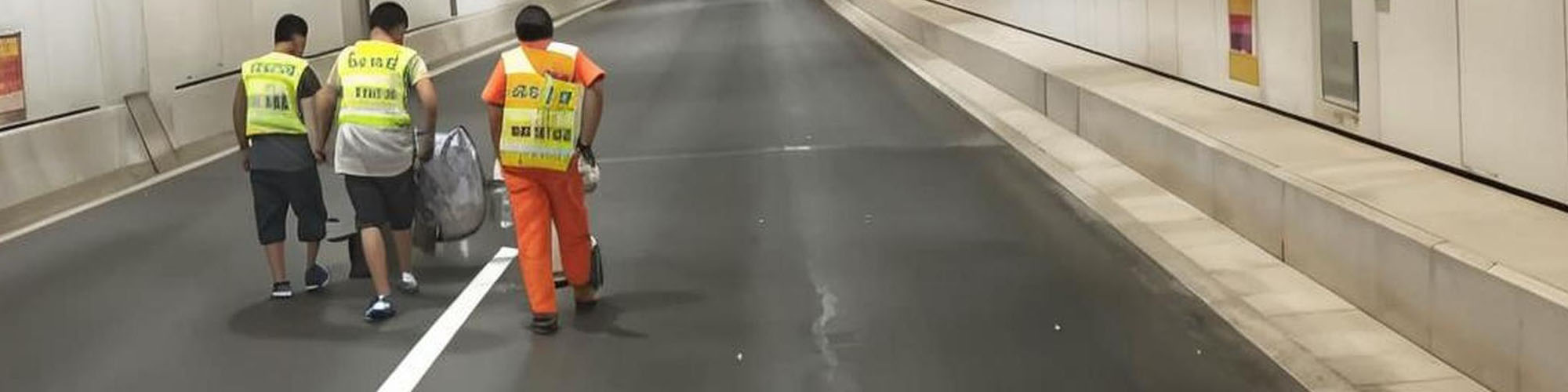
Selecting the right road marking paint is a critical decision that impacts traffic safety, project costs, and environmental compliance. The differences between water-based, solvent-based, and fast-curing acrylic paints go far beyond environmental metrics—they directly affect the construction window, the final performance of road markings, and long-term maintenance plans.
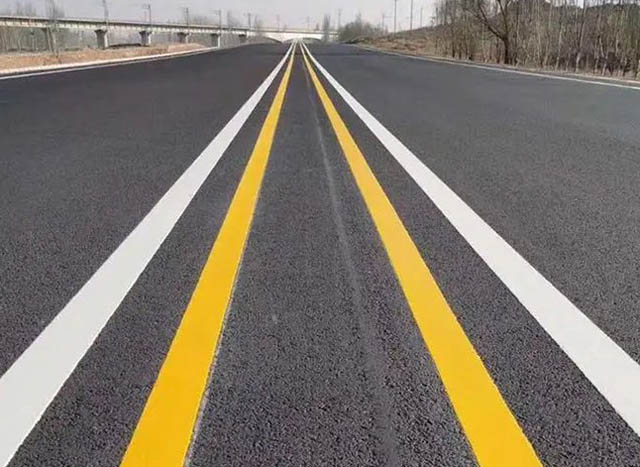
The Three Main Types of Road Marking Paint
1. Waterborne Road Marking Paint
Waterborne paints use water as the primary solvent, making them the most environmentally friendly option among traditional traffic paints. These coatings rely on water evaporation and a pH-driven curing mechanism to form a durable film.
Key Characteristics:
- Drying Mechanism: Water evaporates while ammonia (added for stability) evaporates upon application, causing a pH drop that triggers curing
- Ideal Conditions: Temperatures above 50°F (10°C); performs best in spring and autumn with controlled temperature and humidity
- Environmental Impact: Low VOC emissions; considered the most sustainable option among traditional paints
- Durability: Service life of 3 to 36 months depending on traffic volume
- Cost: Most affordable option for pavement marking projects
Best Applications: Low-volume roads, residential streets, parking lots, and urban side streets where environmental considerations are prioritized
Limitations: Temperature-sensitive (can freeze and break down); high humidity significantly increases drying time; not recommended for high-traffic roadways
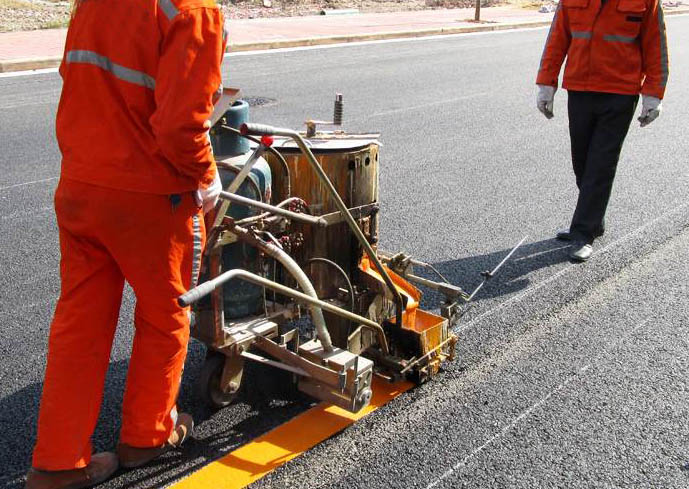
2. Solventborne Road Marking Paint
Solventborne paints rely on organic solvents like toluene, butyl acetate, and methyl ethyl ketone to carry solid components including binders, pigments, and additives.
Key Characteristics:
- Drying Mechanism: Solvent evaporation—faster than water-based systems
- Cold Weather Performance: More adaptable to lower temperatures; won’t freeze in cold climates
- Humidity Tolerance: Generally unaffected by humidity during application
- Environmental Drawbacks: High VOC content; many state DOTs (e.g., Texas DOT) have banned their use
- Safety Concerns: Flammable; hazardous waste disposal requirements; unpleasant odor
- Concrete Adhesion: Poor adhesion to concrete surfaces
Best Applications: Cold climate regions where freeze-thaw cycles are common; situations where humidity control is challenging
Limitations: Declining in popularity due to environmental regulations; increasingly restricted by government agencies
3. Rapid-Curing (Two-Component) Acrylic Road Marking Paint
Two-component systems, including epoxy, polyurea, and MMA (methyl methacrylate), use reactive groups that crosslink upon mixing the base resin and hardener.
Key Characteristics:
- Curing Mechanism: Chemical crosslinking between base material and hardener (or catalyst for 3-component systems)
- Application Temperature: Can be applied in temperatures as low as 0°F (-18°C) for MMA systems
- Durability: Service life of 24-48 months or longer; superior abrasion resistance
- Retroreflectivity: Excellent glass bead retention for enhanced nighttime visibility
- Cost: Higher initial material cost; lower lifecycle cost due to extended service life
Precision Requirement: Mix proportions must be carefully controlled during application to achieve proper curing
Best Applications: High-traffic highways, pedestrian crossings, bicycle lanes, bus lanes, and areas where minimizing lane closure time is critical
Comparison Table: Road Marking Paint Types
| Property | Waterborne Paint | Solventborne Paint | Two-Component (MMA/Epoxy) |
|---|---|---|---|
| Minimum Application Temperature | 50°F (10°C) | 50°F (10°C) | 0°F (-18°C) for MMA |
| Service Life | 3-36 months | 3-36 months | 24-48+ months |
| VOC Content | Low | High | Low (Solvent-free MMA) |
| Humidity Sensitivity | High | Low | Low |
| Cost | Low | Moderate | High initial, low lifecycle |
| Concrete Adhesion | Poor | Poor | Excellent |
| Environmental Compliance | Excellent | Restricted | Excellent |
Conclusion
Choosing the right road marking paint requires balancing environmental compliance, project timelines, traffic management needs, and long-term durability. Water-based coatings are the most cost-effective solution for small-scale applications, while fast-curing two-component coating systems offer superior life-cycle value for heavily trafficked roads where lane closures are costly. With increasingly stringent environmental regulations and technological advancements, the performance gap between water-based acrylic coatings and solvent-based coatings is narrowing, making water-based acrylics a more advantageous choice for a wider range of applications.