
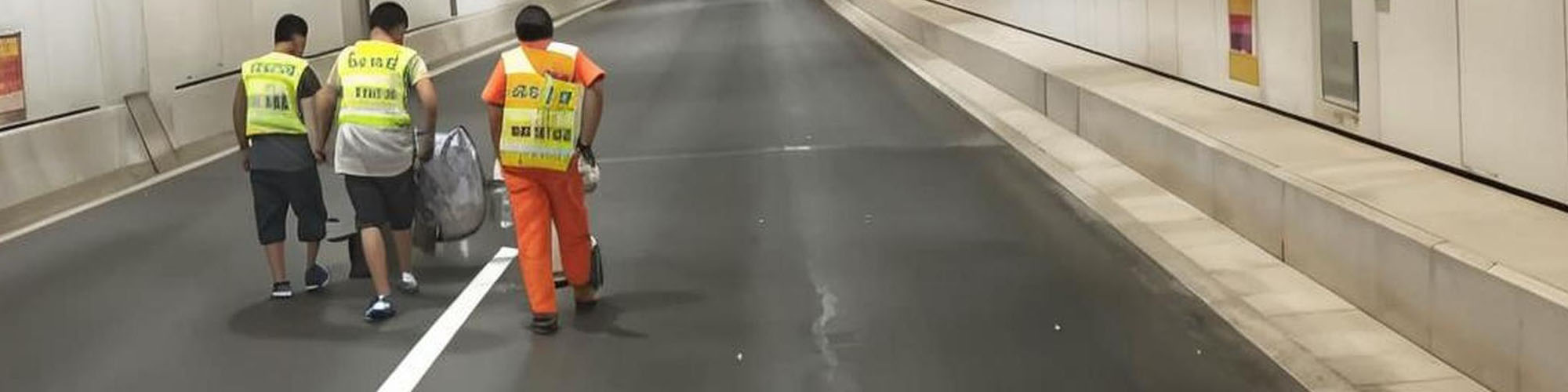
Durable road markings are crucial for traffic safety, lane discipline, and nighttime visibility. However, many markings fail prematurely—fading, cracking, or peeling within just a few months. Achieving long-lasting durability does not rely on some“magic” material, but rather on a systematic process. The core principle is: “material compatibility + precision processing + stable substrate anchorage.”
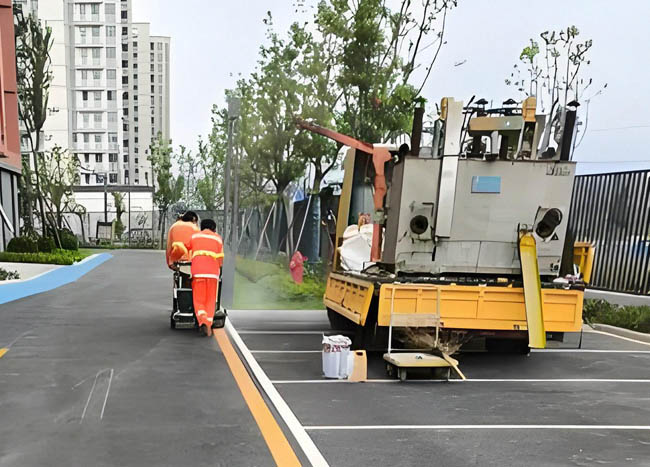
1. Select the Right Type of Paint
Choosing the appropriate binder system is a crucial first step. Not all coatings are created equal.
- Thermoplastic Road Marking Paint: Composed of hydrocarbon resins (C5/C9 petroleum resins), plasticizers (dioctyl phthalate or chlorinated paraffin), pigments, and pre-mixed glass beads. It melts at 180–220°C and forms a thick film (1.5–2.5 mm) upon cooling. Its high film build and wear resistance make it ideal for highways and urban intersections. Key durability driver: resin-to-plasticizer ratio—higher resin content (≥20%) improves adhesion and flexibility but reduces abrasion resistance; optimal balance is 18–22% resin for most climates.
- Cold Plastic (MMA/PMMA) Paint: Based on methyl methacrylate resins that cure via radical polymerization (not solvent evaporation). Offers superior adhesion to asphalt and concrete (pull-off strength > 1.5 MPa), excellent UV stability (no yellowing for ≥3 years), and rapid curing (30–60 minutes at 20°C). Best for high-skid areas (airports, roundabouts) and bridge decks where hot application is unsafe due to substrate sensitivity.
- Water-based & Solvent-based Paints: Suitable for low-traffic roads (< 3,000 AADT) but lack the film thickness (typically < 0.5 mm) and wear resistance for heavy vehicles. For durability > 2 years, always prioritize thermoplastic or cold plastic systems.
Pro Tip: For roads with > 10,000 AADT (Annual Average Daily Traffic), only thermoplastic with a minimum dry film thickness of 2.0 mm or MMA cold plastic at 1.5 mm will survive beyond 24 months without significant retroreflectivity loss.
2. Prioritize High-Quality Materials
The quality of the materials used in a coating formulation significantly impacts its durability. Investing in high-quality pigments, binders, and additives can enhance the coating’s resistance to fading, flaking, and weathering. Be sure to select coatings that comply with industry standards and regulations.
3.Optimize the Formulation (Fine-Tune for Local Climate)
Fine-tuning the formulation of road marking paint is crucial for improving its durability. Different ratios of binders, pigments, and additives result in vastly different performance characteristics.
- High-Temperature Regions (>40°C): Increase the softening point of the resin to 105–110°C and add anti-oxidants (e.g., Irganox 1010 at 0.3–0.5%) to prevent rutting and bleeding under tire heat.
- Cold/Freeze-Thaw Regions (<-10°C): Add elastomeric modifiers (SBS or EVA copolymers at 2–5%) to improve low-temperature flexibility and impact resistance, reducing brittle fracture during winter contraction.
- High-Humidity/Coastal Areas: Incorporate anti-corrosion additives (zinc phosphate) for the substrate and use hydrophobic pigments to resist moisture-driven delamination. Conduct accelerated weathering tests (QUV-A) for 1,000 hours to validate color retention (ΔE ≤ 3).
horough research and lab-scale extrusion trials (using a small twin-screw compounder) help achieve the optimal mix before full-scale production with your road marking machine.
4. Surface Preparation (The Foundation of Adhesion)
Surface preparation of the substrate is essential before application. Poor adhesion is the leading cause of premature failure, accounting for over 60% of cases.
- Cleaning: Use high-pressure water jetting (≥ 250 bar) or industrial vacuum sweepers to remove floating dust, oil stains, loose sand layers, and old marking residues. For oil-contaminated asphalt, apply a degreasing agent (alkaline detergent) followed by rinsing.
- Primer Application: For porous asphalt or newly laid surfaces, apply a special penetrating interface agent—either a solvent-based alkyd primer or a waterborne epoxy primer—at a coverage of 0.15–0.20 kg/m². Allow it to dry completely until tack-free (typically 1–2 hours at 25°C). The primer bridges the gap between the hydrophobic road surface and the polar binder, increasing pull-off strength by 40–60%.
- Critical Prohibitions: Direct construction on damp surfaces (moisture content > 4%), loose substrates (pull-off < 0.8 MPa), or uncleaned old markings with exposed wires or debris is strictly forbidden. Always perform a “tape test” (ASTM D3359) to confirm primer adhesion before hot application.
5. Application Techniques (Calibration of Road Marking Machines)
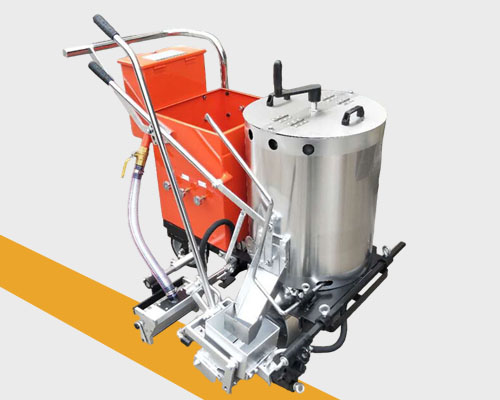
Road marking machines are the most critical tools for ensuring the durability of road markings. Precise control of thermodynamic parameters is essential.
- Hot-Melt Temperature Control: Strictly maintain the melt temperature at 180–220°C. Below 180°C, viscosity increases (> 20,000 cP), causing poor flowability and incomplete wetting of glass beads. Above 220°C, thermal decomposition of the resin occurs, releasing volatile organic compounds and reducing molecular weight—this drops flexibility by 30% and accelerates cracking.
- Coating Thickness: Maintain a wet film thickness of 1.5–2.0 mm (dry film equivalent). Thickness < 1.5 mm reduces wear life by 50% under heavy traffic; thickness > 2.5 mm increases internal stress, leading to thermal cracking during cooling cycles. Use a digital thickness gauge (Elcometer) for real-time quality assurance.
- Glass Bead Application Rate and Embedment: Drop-on glass beads should be applied immediately after extrusion at a rate of 200–300 g/m² (for standard lines) and up to 500 g/m² for high-visibility crosswalks. The critical parameter is semi-embedded state—approximately 50–60% of the bead diameter should be buried in the molten paint, with 40–50% exposed. This optimizes retroreflectivity while preventing bead loss under tire shear. Achieve this by adjusting the bead dropper height (20–30 cm above the extruder) and using compressed air-assisted spreading.
- Cooling and Opening Time: Allow the marking to cool naturally to ambient temperature (typically 5–10 minutes at 20°C). For thermoplastic, full strength develops after cooling. Opening to traffic too early (before the surface temperature drops below 60°C) can cause bead displacement and surface deformation. A simple “coin scratch test” confirms cure—if a coin leaves no indentation, it’s safe for traffic.
6. Common Causes of Failure and Prevention (Root Cause Analysis)
Understanding the causes of marking failure helps avoid recurring costs.
| Failure Mode | Primary Root Cause | Preventive Action |
|---|---|---|
| Peeling/Delamination | Unclean substrate (dust, oil), residual moisture (>4%), or skipped primer. Not simply “traffic wear.” | Always perform high-pressure cleaning + primer application. Conduct a water-break test to confirm surface cleanliness. |
| Rapid Wear / Fading | Poor weather resistance of resin (low TiO₂ or no UV stabilizers), insufficient film thickness (<1.5 mm), or glass bead drop-out due to poor embedding. | Specify ≥20% rutile TiO₂ and ≥2.0 mm thickness. Use silane-coated beads and verify embedding depth with a microscope. |
| Cracking / Fragmentation | Low-temperature construction (<5°C) causing thermal contraction stress, excessive film thickness (>2.5 mm), or reflective cracks from aging asphalt substrate. | Avoid construction below 10°C. Use flexible resins (SBS-modified) for cold climates. Apply crack-bridging fabric or stress-absorbing interlayer on distressed pavement. |
| Loss of Nighttime Visibility | Glass bead burial (fully embedded) or bead abrasion due to poor hardness (Knoop hardness < 400). | Optimize bead dropper timing and use high-hardness beads (Knoop ≥ 600). Re-apply top-coated beads during maintenance. |
Conclusion
Ensuring the durability of road marking paint requires a holistic approach—from chemical formulation (resin selection and pigment quality) to mechanical precision (calibrating road marking machines to achieve precise temperature, thickness, and glass bead embedding), and finally to rigorous surface pretreatment and regular maintenance. By following these evidence-based guidelines, traffic management authorities and road maintenance professionals can extend the service life of thermoplastic and cold-applied markings from the traditional one year to more than three years (as verified by field trials on highways with an average daily traffic volume of 25,000 vehicles), thereby reducing overall maintenance costs by 40% to 60% and helping to build safer, more efficient road systems.