
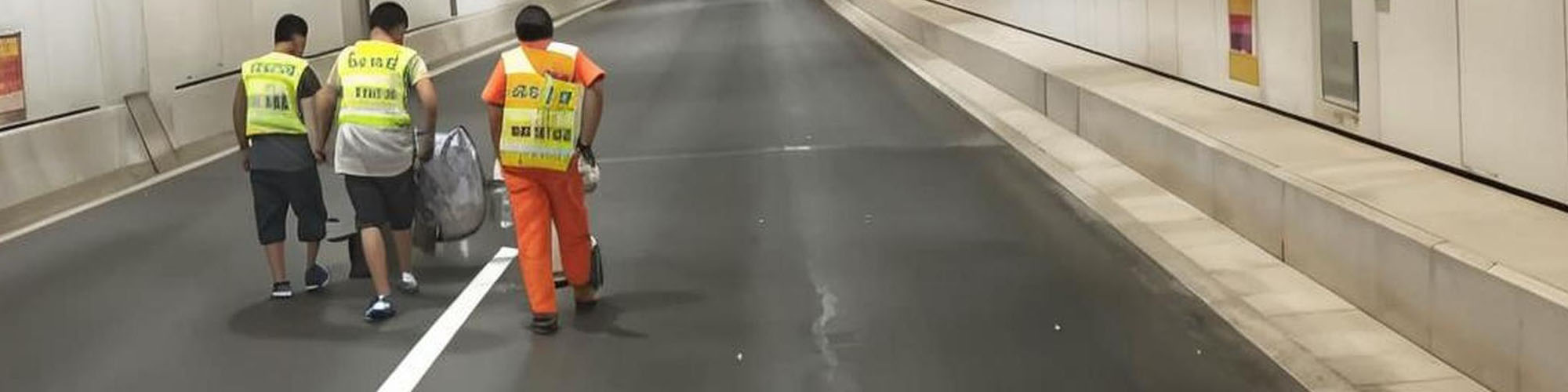
Road marking machines (also known as road line striping machines) serve as critical equipment in road traffic infrastructure construction. Their technological advancement and industry trends directly impact road safety, construction efficiency, and environmental protection. In recent years, driven by deepening smart and green concepts, the road marking machine industry has exhibited dual-track development—transitioning from traditional optimization to intelligent breakthroughs. Its application scope has expanded from ordinary urban roads to airports, tunnels, ports, and special-grade environments, accelerating the global upgrade of road marking technology.
I. Technological Development: Traditional Optimization Meets Intelligent Innovation
1. Continuous Optimization of Traditional Road Marking Equipment
Regarding fundamental performance, traditional technologies have achieved significant enhancements through meticulous refinement.
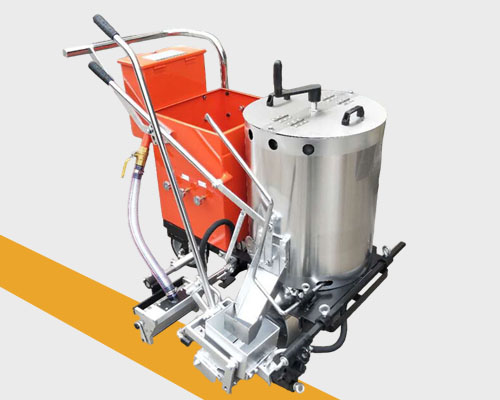
- Enhanced Thermoplastic Performance: Modern thermoplastic road marking machines feature dynamic temperature control and uniform glass bead dispersion, substantially improving reflectivity and service life.
- High-Speed Marking Capability: Self-propelled and driver-operated models achieve maximum speeds of up to 15 km/h, enabling rapid completion of marking tasks on highways, parking lots, and urban streets.
- Versatile Power Systems: Engines ranging from 2.5 to 20 horsepower accommodate projects of varying scales, from small municipal works to major national highway initiatives.
- Extended Battery Life: New electric line-marking machines operate continuously for over 7 hours, meeting urban demands for quiet, low-emission construction.
These advancements lay a robust technical foundation for more sophisticated intelligent systems.
2. Breakthroughs in Intelligent Automated Road Marking Technology
Intelligent systems represent the next generation of road line marking machine development.
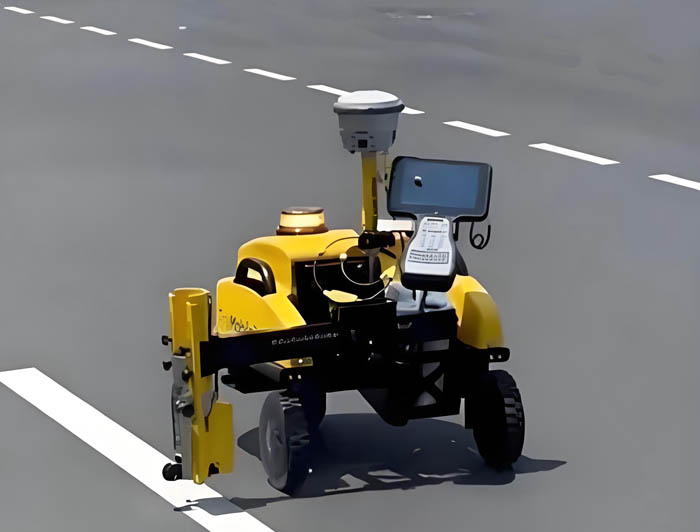
- Ultra-high navigation precision: Road marking robots utilizing BeiDou or RTK GNSS combined with inertial navigation achieve marking accuracy within 2.5 centimeters, ensuring straight lines over extended distances.
- Auto-correction and auto-navigation: Automated steering and robotic arm operations minimize human error while enhancing marking consistency.
- Dual-Component Marking Carbon Reduction: Automated robots using dual-component cold-applied markings reduce carbon emissions by over 40%, meeting green building standards.
- Cloud-Based Fleet Management: Real-time monitoring, construction data collection, digital project documentation, and remote diagnostics enable more efficient and precise project management.
Intelligent road marking machines are becoming essential tools for contractors to reduce labor input, enhance safety, and improve project outcomes.
II. Application Scenarios: From Basic Roads to Special Environments
1. Road Transportation Sector
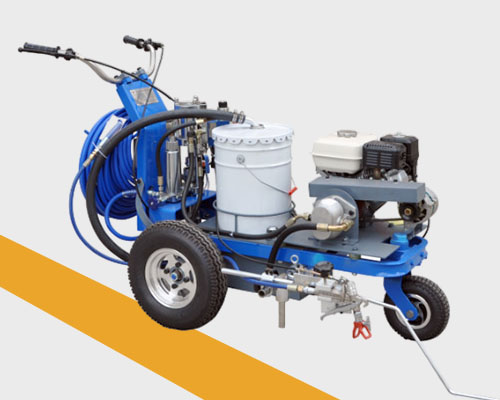
For road marking on urban streets and highways, unmanned intelligent mapping robots enable 24/7 continuous operation, cutting labor costs by 50%. Cold paint road marking machines effectively address noise pollution from traditional equipment, shorten traffic closure times, and minimize disruption to citizens’ daily lives.
2. High Precision and Special Environments
Modern road marking equipment increasingly adapts to demanding conditions:
- Airports: Precise laser positioning and multi-gun spraying ensure compliance with Federal Aviation Administration (FAA) and International Civil Aviation Organization (ICAO) standards.
- Mountain Roads: Heavy-duty overload protection, anti-skid marking, and enhanced adhesion treatments improve wet-weather driving safety.
- Ports, tunnels, and underground parking garages: Equipment engineered for confined, damp, and poorly ventilated spaces delivers stable, high-visibility markings even in adverse conditions.
This specialization significantly expands the global application scenarios for road marking machine.
III. Industry Development Trends: Convergence of Intelligence and Sustainability
1. Intelligent Road Marking Becomes the Mainstream
With the proliferation of artificial intelligence and IoT technologies, the market penetration of intelligent road marking machines has increased annually. Statistics indicate that China’s installed base of road marking equipment exceeds 120,000 units, with intelligent equipment penetration rising by 15 percentage points every five years. In the future, driverless marking vehicles and intelligent navigation systems will further drive technological innovation in the industry.
2. Green Initiatives Drive Industry Upgrades
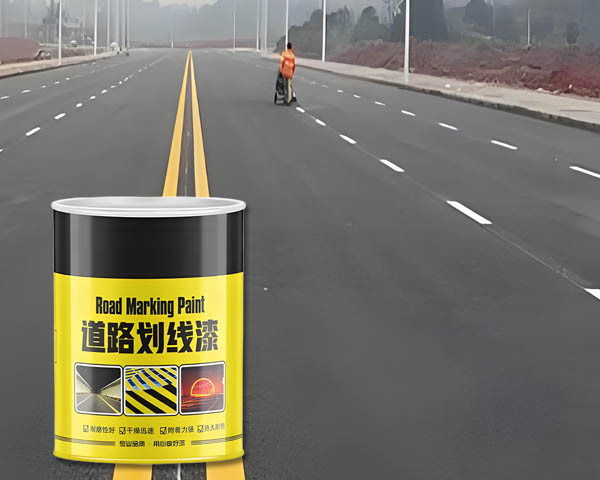
Tightening environmental policies are propelling the road marking industry toward greener practices. The usage of water-based road marking paints has significantly increased, with volatile organic compound (VOC) emissions controlled at ≤50 grams per liter. Additionally, glass bead recycling rates must exceed 90% to minimize resource waste.
Energy transition is another key industry trend. Electric road marking machines now account for over 25% of the market share. Solar-assisted systems have entered practical testing phases, while liquefied petroleum gas (LPG) heating models leverage clean energy to support carbon reduction efforts.
IV. Types of Road Marking Machines and Selection Guide
Based on power source, road marking machines can be categorized into fuel-powered, electric, and hydraulic types. By application method, they include push-type, ride-on, and vehicle-mounted models. Users should consider the following factors when selecting equipment:
- Construction Scenarios: Urban roads, highways, airports, and other environments demand varying levels of precision and power.
- Marking Materials: Thermoplastic, cold paint, and two-component materials require corresponding application equipment.
- Environmental Requirements: Select models with low VOC emissions and glass bead recycling capabilities to meet green construction standards.
- Intelligent Features: High-precision positioning, automated operation, and remote management functions significantly enhance construction efficiency.
The evolution of road marking machine technology is driving unprecedented industry transformation. Optimized traditional techniques establish a robust foundation for equipment performance, while intelligent and eco-friendly innovations inject new vitality into the sector. Looking ahead, the deep integration of emerging technologies like 5G and artificial intelligence will enable greater breakthroughs in precision, efficiency, and environmental sustainability, providing more reliable support for global road infrastructure development.
With over 20 years of industry expertise, Huayuan delivers customized road marking solutions and reliable global supply. Our products are exported to 56 countries, including the United States, Singapore, and Brazil, achieving a customer satisfaction rate of 95.5%. We provide complete road marking equipment systems—including thermoplastic machines, cold paint machines, and premium marking materials—supported by competitive factory pricing and fast delivery.