
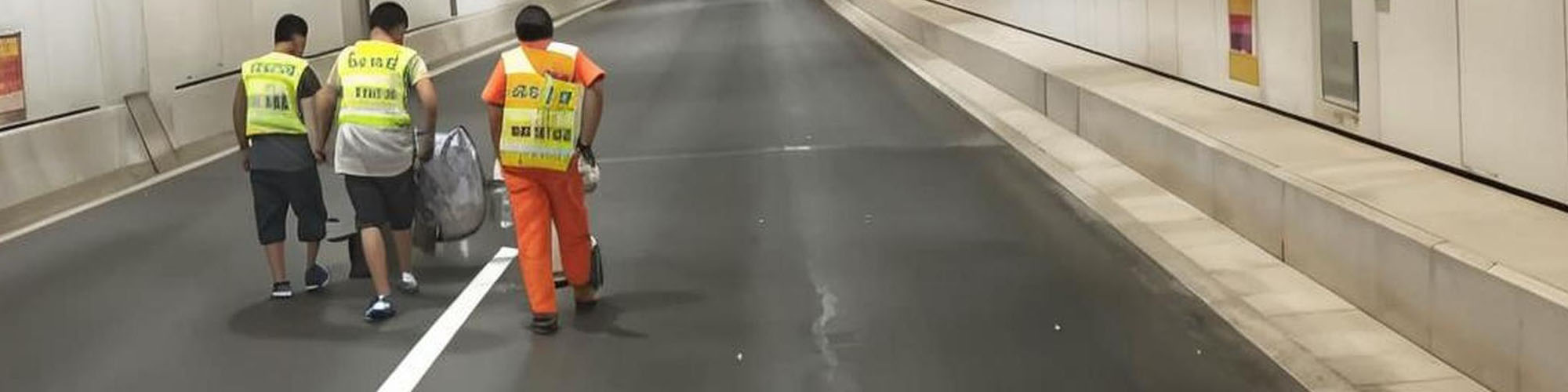
What are road markings?
Road markings, also known as pavement markings or road surface markings, are visual traffic guidance signs applied or installed on road surfaces using specialized road marking paint or pre-fabricated materials. These markings function as an all-weather, silent traffic control system, providing essential guidance for drivers and pedestrians. They regulate lane order, direct vehicle flow, delineate functional zones, and significantly enhance traffic safety and efficiency.
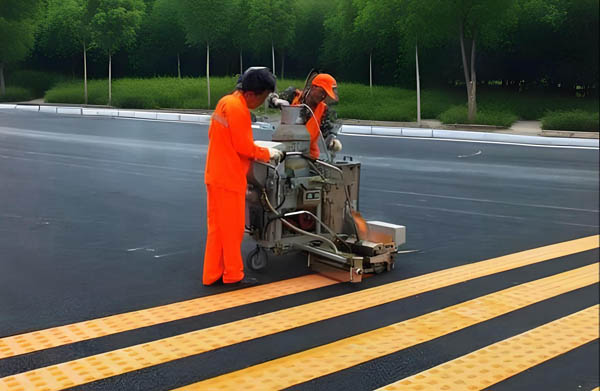
Whether produced using road marking machines, hot-melt applicators, or cold spray equipment, high-quality markings ensure better visibility, smoother traffic flow, and heightened safety.
Core Types and Applications of Road Markings
1.Road Traffic Markings: The Lifeline of Driving Safety
When driving, clear and standardized road markings are your most vital safety partner.
- Center Lines and Lane Divider Lines
Center lines are central to maintaining order in two-way traffic. Typically applied using road marking machines, they clearly delineate opposing lanes. According to traffic regulations, solid lines prohibit crossing or overtaking, while dashed lines permit lane changes or passing when safe. Beyond traditional white and yellow, some high-grade highways utilize thermoplastic rumble strips. Their raised texture creates a vibrating sensation, alerting drivers to stay within their lanes.

- Edge Lines and Curb Markings
Edge lines clearly delineate road boundaries. When combined with reflective road marking paint, they effectively prevent vehicles from veering off the roadway, especially during low-visibility conditions like nighttime or fog. Their importance is particularly pronounced on hazardous sections such as curves and bridges.
- Lane Directional Arrows and Turn Markings
These markings guide drivers to enter the correct directional lane in advance for straight-through, turning, or U-turn maneuvers. Major intersections often feature multiple sets of advance arrows combined with ground text (e.g., “Bus,” “Turn”) to achieve precise traffic guidance.
2.Parking Lot Markings: Ensuring Order and Efficiency
Professional, clear parking lot markings significantly enhance space utilization and parking safety.
- Parking Space Markings and Accessible Parking
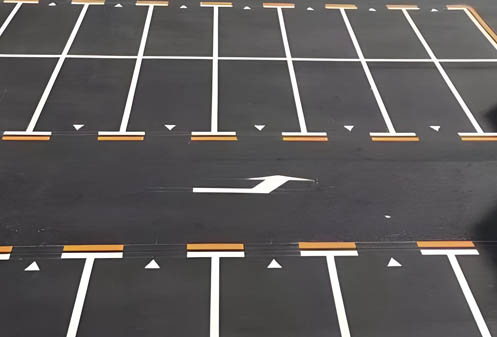
Standard parking lines precisely define vehicle parking areas. Disabled parking spaces feature prominent wheelchair symbols, distinct blue markings, clear signage, and wider dimensions to facilitate wheelchair access.
- Directional Arrows and Lane Markings
Within large parking facilities, systematic directional arrows and lane separation lines effectively organize traffic flow, creating one-way circulation patterns that reduce congestion and minimize the risk of head-on collisions.
3. Industrial and Warehouse Area Markings: The Foundation of Safe Production
In industrial settings like factories and warehouses, markings are a crucial component of 5S workplace management and safe production practices.
- Safety Zones and Hazard Warning Markings
Diagonal stripes in alternating yellow and black, or conspicuous red zones, indicate hazardous areas, fire equipment locations, or no-blocking zones. Green zones typically denote safe passageways or emergency assembly points.
- Warehouse Lane and Positioning Markings
Solid yellow or white lines demarcate forklift-only lanes, pedestrian walkways, and operational zones within warehouses. Additionally, floor positioning lines and zone markers precisely indicate storage locations for materials, tools, and finished goods—serving as critical visual tools for lean management.
In-Depth Guide to Road Marking Materials: How to Select the Best Paint?
Selecting the appropriate road marking paint is crucial for ensuring durability, reflectivity, and safety performance. Modern marking projects primarily utilize the following high-performance materials:
1. Thermoplastic Road Marking Paint (Thermoplastic Markings)
This is one of the most widely used road marking materials today. During application, solid powdered paint is heated to a molten state in a thermoplastic paving machine and then applied to the pavement. Its advantages include:
- Exceptional durability: Resistant to abrasion and pressure, typically lasting 2-3+ years. Ideal for high-traffic roads like highways and national routes.
- Superior reflectivity: Glass beads can be premixed or surface-applied to achieve instant reflectivity, ensuring excellent nighttime visibility.
- Rapid drying: Cures within 1-3 minutes after application, allowing traffic to resume quickly with minimal disruption.
2. Cold-applied road marking paint (Including MMA Two-Component Markings)
These coatings use methyl methacrylate (MMA) as the base material, curing through chemical cross-linking reactions.
- Exceptional Adhesion and Flexibility: Particularly suitable for asphalt surfaces, overlaying old markings, and regions with significant temperature fluctuations and high humidity.
- Superior Weather Resistance and Chemical Corrosion Resistance: Long service life with slow performance degradation.
- Enhanced Environmental Friendliness: Low VOC (Volatile Organic Compounds) content, representing eco-friendly high-performance road coatings.
3. Water-Based Road Marking Paint
As an environmentally upgraded product, water-based coatings use water as the dispersing medium.
- Green and Eco-Friendly: No toxic gas emissions during application, meeting increasingly stringent environmental standards.
- Relatively Simple Application: Typically applied using standard ambient-temperature line-marking machines.
- Suitable for Specific Scenarios: Primarily used on urban roads with low traffic volume, residential areas, parking lots, and other locations with high environmental standards.
Professional Line Marking Installation, Maintenance, and Removal Services
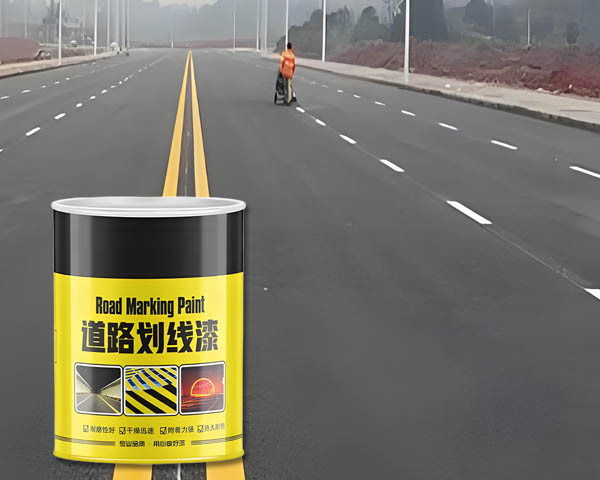
High-quality markings depend on professional installation and ongoing maintenance. Specialized road marking teams utilize precision equipment like hot-melt line marking machines and cold spray applicators to ensure accurate dimensions, uniform thickness, and compliant reflectivity values. Road markings—from lane lines to speed bumps, warehouse positioning lines to industrial safety zones—form the silent backbone of our transportation and logistics systems. Understanding marking types, materials, and application methods empowers municipal authorities, contractors, facility managers, and businesses to create safer, more efficient traffic environments.
Need road marking planning, materials, or installation services?
We offer comprehensive road marking solutions, including:
- Professional design and layout
- High-performance road marking paints (thermoplastic, MMA, water-based)
- Advanced road marking equipment
- Expert application and removal services
With 20 years of experience, Huayuan products are exported to 56 countries, supporting government agencies, contractors, and industrial users worldwide. Contact us today for a free site survey and customized marking solutions!