
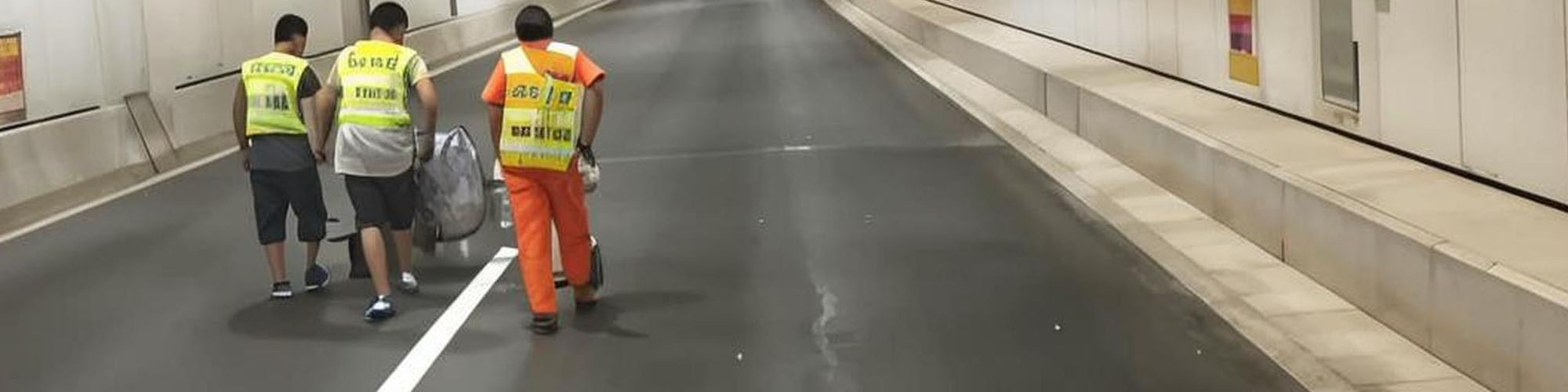
Working speed refers to the distance a road marking machine covers per unit of time during road line marking operations, typically measured in kilometers per hour (km/h) or meters per minute (m/min). This parameter is far more than a simple productivity metric—it directly governs line uniformity, coating adhesion, film thickness consistency, and edge definition. Excessive speed often produces thin, discontinuous lines with insufficient retroreflective bead embedment, while overly slow travel reduces crew efficiency, increases paint consumption per kilometer, and in the case of thermoplastic materials, can cause over-thick coatings and surface irregularities.
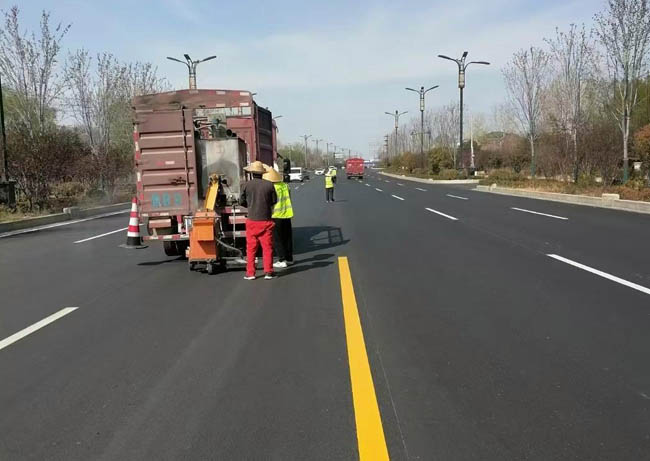
For contractors and procurement specialists evaluating road marking machine performance, understanding the speed envelope of each machine category is essential for matching equipment to project specifications, whether the application involves highway centerlines, urban intersections, parking lot striping, or airport runway markings.
Cold Paint Road Marking Machine Speed Parameters
Cold paint road line marking relies on high-pressure airless spraying of solvent-based, waterborne, or one-component acrylic traffic paints. Because these materials cure through solvent evaporation or coalescence rather than thermal phase change, the machine can maintain higher travel speeds without risking premature solidification within the spray system.
Typical Speed Ranges
| Machine Configuration | Recommended Speed | Notes |
|---|---|---|
| Hand-push cold paint striper | 2–5 km/h | Dependent on pump flow rate and line width |
| Standard self-propelled cold paint unit | 4–5 km/h | Baseline for consistent film build |
| High-capacity truck-mounted system | 6–10 km/h | Requires matched paint pump output (e.g., 15 L/min) |
| Maximum rated (equipment limit) | 12–15 km/h | Rarely sustainable in production marking |
Hand-push cold paint road marking machines with 6.5 HP gasoline engines and 12 L/min plunger pumps typically operate in the 2–3 km/h range for standard 100–150 mm lines. Truck-mounted configurations with microcomputer-controlled spray systems and 15 L/min output can achieve 6–10 km/h working speeds while maintaining adequate film thickness.

The critical constraint for cold paint systems is the relationship between travel speed, spray width, and pump flow rate. A 12 L/min pump delivering paint at 0.3 mm wet film thickness can theoretically support higher speeds, but nozzle orifice size, atomization quality, and overspray control impose practical ceilings. Operators should verify that the road marking machine‘s paint pump rated capacity matches the intended speed-width combination before mobilizing to site.
Thermoplastic Road Marking Machine Speed Constraints
Thermoplastic road line marking introduces an additional variable: the molten material must be applied at 180–220°C and begins cooling immediately upon contact with the pavement. This thermal window fundamentally limits travel speed, because the coating must flow adequately to form a proper bond with the substrate while the glass beads are still able to embed into the hot surface.
Typical Speed Ranges
| Machine Type | Working Speed | Key Limitation |
|---|---|---|
| Hand-push thermoplastic applicator | 1.2–1.5 km/h | Manual guidance and material flow control |
| Self-propelled extrusion unit | 1.5–3 km/h | Screed shoe and bead dispenser synchronization |
| Electric self-propelled (variable) | 0–15 km/h chassis | Actual marking speed governed by output rate |
Hand-push thermoplastic machines, such as the ST-150 and ST-200 models, specify marking speeds of 1.2–1.5 km/h . At these speeds, the operator can maintain consistent pressure on the applicator shoe, ensuring uniform thickness and proper glass bead coverage. Self-propelled thermoplastic units may have chassis speeds capable of 15–22 km/h in transport mode, but working road line marking speeds remain constrained by the extrusion rate and the need for the screed to level the molten material before it sets .
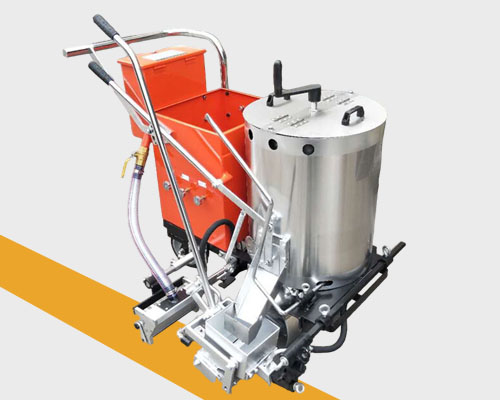
The governing principle is straightforward: travel speed must match material output rate. If the machine moves faster than the thermoplastic can flow through the die, the resulting line will be thin, porous, and prone to premature failure. Conversely, excessive slowness causes material accumulation, uneven edges, and surface waviness that compromises retroreflectivity and appearance.
Key Principles for Speed Selection in Road Line Marking
Matching Speed to Paint Output and Nozzle Configuration
Every road marking machine has a rated paint pump capacity, typically expressed in liters per minute. The relationship between speed (km/h), line width (m), film thickness (mm), and pump output (L/min) must be balanced. A cold paint system with a 12 L/min pump spraying a 150 mm line at 0.3 mm thickness cannot sustain 10 km/h without reducing film thickness below specification. Similarly, a thermoplastic unit with a 100 kg pre-heater capacity cannot maintain 3 km/h on wide lines without frequent refilling interruptions.
Line Type and Geometric Complexity
Long, straight highway centerlines permit the upper end of the speed range. Complex geometries—directional arrows, lettering, chevron markings, and dashed line patterns requiring precise gun on/off timing—demand reduced speeds to maintain edge sharpness and dimensional accuracy. Microcomputer-controlled road line marking systems with pre-programmed line patterns can manage gun actuation at moderate speeds, but operators should still reduce travel speed when transitioning between line types or executing tight curves.
Thermoplastic-Specific Thermal Constraints
The narrow thermal processing window of thermoplastic materials imposes hard limits. At speeds below 1 km/h, the material may cool excessively before the glass beads are applied, resulting in poor bead retention. Above 2 km/h (for hand-push units), the coating may not have sufficient time to wet out and bond with the asphalt surface, leading to delamination under traffic. The 1.2–1.5 km/h range represents a well-established equilibrium between material flow, bead embedment, and substrate wetting.
Practical Commissioning Procedure
Before committing to full production road line marking, conduct a trial section at reduced speed. Inspect the following parameters:
| Inspection Point | Acceptance Criterion |
|---|---|
| Wet film thickness | Within specification (typically 0.2–0.4 mm cold paint; 1.0–3.0 mm thermoplastic) |
| Line width | Consistent, no feathering or narrowing |
| Edge definition | Sharp boundaries, no overspray or ragged edges |
| Glass bead coverage | Uniform distribution, adequate embedment (thermoplastic) |
| Line continuity | No gaps, thin spots, or material surges |
Adjust speed incrementally until all parameters meet specification. Do not operate at the road marking machine‘s maximum rated speed unless the trial section confirms that film thickness, adhesion, and appearance remain within tolerance.
Conclusion
Optimal working speed for road line marking is not a single number but a function of machine type, paint chemistry, line geometry, and output rate. Cold paint systems generally operate at 4–5 km/h for standard work, with truck-mounted units capable of 6–10 km/h when pump capacity permits. Thermoplastic machines are constrained to 1.2–1.5 km/h by the thermal and rheological behavior of molten material. For procurement professionals and project engineers, specifying a road marking machine with sufficient pump capacity and variable speed control—rather than merely the highest listed maximum speed—ensures that production road line marking achieves the balance of throughput, material efficiency, and long-term durability that modern infrastructure specifications demand.