
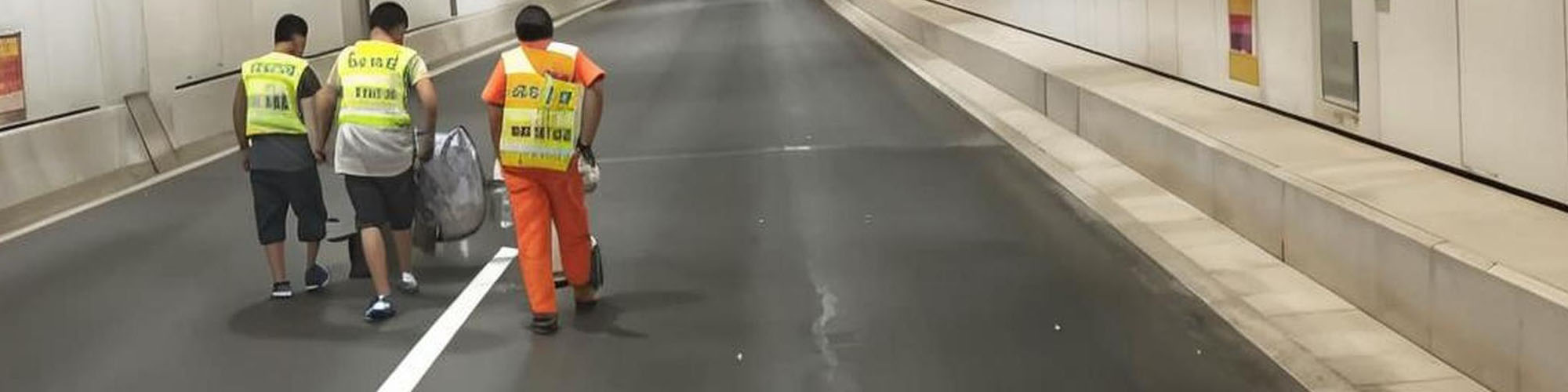
Thermoplastic road markings represent one of the most widely used pavement marking technologies globally. They are highly favored for their exceptional durability, strong adhesion, rapid drying, and outstanding nighttime reflectivity. Thermoplastic road coatings are typically applied in locations demanding high service life and visibility, such as highways, urban roads, airports, parking lots, and industrial zones.
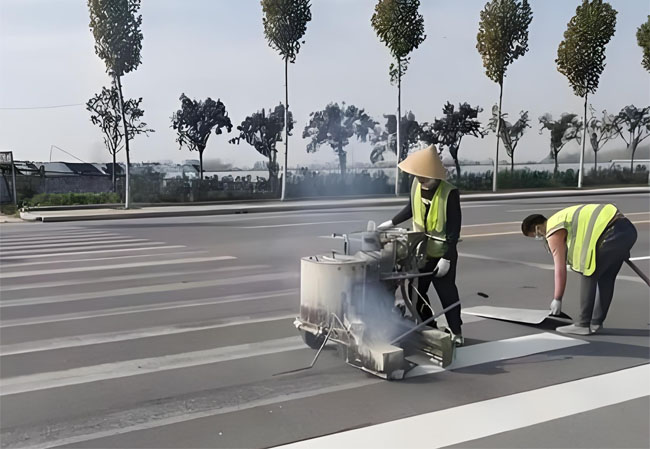
However, achieving high-quality thermoplastic road markings requires more than just premium materials. Successful application depends on material selection, temperature control, paving machine performance, surface preparation, environmental conditions, and quality inspection.
Key Factors Affecting Thermoplastic Road Marking Performance
1. Material Selection and Temperature Control
The performance of thermoplastic road marking paint hinges on proper formulation and precise temperature management. Premium thermoplastic compounds typically consist of synthetic resins, glass beads (for enhanced reflectivity), pigments, fillers, and additives to improve flexibility and adhesion.
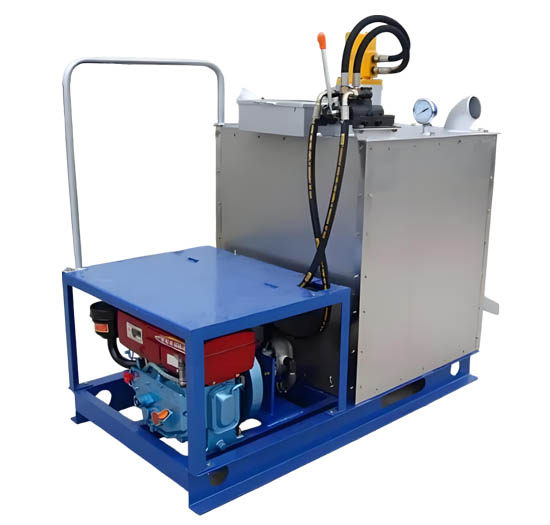
When heated in a thermoplastic melting kettle or thermoplastic melting machine, the material must be heated slowly and uniformly to the optimal application temperature, typically between 180°C and 220°C, with most formulations recommending 200°C as the target. Continuous stirring is essential to prevent sedimentation, localized overheating, or thermal degradation.
- Temperature Risks:
Temperatures exceeding 232°C cause resin decomposition, leading to discoloration, reduced adhesion, and diminished durability.
Temperatures below 180°C may result in poor flow, incomplete bonding, and surface defects such as pinholes or “orange peel” texture. - Preparation Before Use:
Always screen thermoplastic material prior to loading to remove lumps or contaminants. Precisely monitor melt temperature using a calibrated thermometer or digital sensor. - Pot Life:
Melted thermoplastic material should be used within 4-6 hours to prevent viscosity changes and performance degradation. Unused material remelted after cooling typically exhibits reduced bond strength and should be discarded.
2.Surface Preparation and Environmental Conditions
Proper surface preparation is critical for the secure adhesion and long-term durability of thermoplastic road markings.
Pavement Preparation
- The pavement must be clean, dry, and free of dust, oil, moisture, and loose particles.
- Common preparation methods include high-pressure washing, mechanical brushing, and sandblasting.
- Old or worn markings should be thoroughly removed.
- On porous or aged asphalt surfaces, applying a primer or bonding agent significantly enhances adhesion.
Weather and Temperature Requirements
- Ambient and pavement temperatures: Should exceed 10°C and be rising. Low temperatures cause rapid cooling and reduced bonding strength.
- High Temperature Considerations: Above 35°C, thermoplastic markings may remain soft for extended periods and deform under traffic loads.
- Moisture and Wind: Avoid application during rain, snow, high humidity, or strong winds, as these conditions may cause bubbling, poor adhesion, or uneven glass bead distribution.
3.Equipment Inspection and Operating Standards
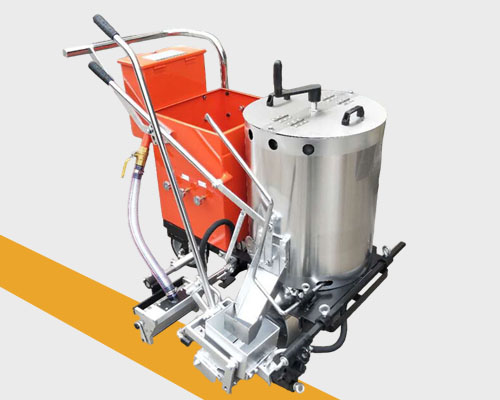
Using well-maintained and appropriate road marking equipment is critical for ensuring consistent marking quality.
- Pre-Application Inspection: Inspect the hot melt kettle, road marking machine (also called a thermoplastic applicator or striping unit), hoses, and applicator shoes or squeegees for wear, clogging, or uneven heating. Verify the glass bead dispenser is calibrated to dispense beads at the correct rate and timing for optimal nighttime visibility.
- Application Parameters:
- Line Thickness: For typical road markings, the standard wet film thickness is 1.5–3.0 mm, resulting in a final cured thickness of approximately 28–35 mm. Thicker markings may be applied in high-traffic or industrial zones.
- Glass Bead Application: Glass beads should be uniformly embedded in the thermoplastic material, comprising approximately 15–30% by weight of the thermoplastic. Beads applied during extrusion (drip-applied beads) provide immediate retroreflectivity, while surface-coated beads enhance long-term retroreflectivity.
- Machine Operation: Maintain a steady application speed to ensure consistent line width and thickness. Irregular movement may cause streaking, uneven edges, or thickness variations.
4.Safety Procedures and Quality Assurance
Safety and quality control are integral components of all road marking projects.
- Site Safety: All personnel must wear high-visibility clothing. The work area should be clearly marked with traffic cones, signs, and barriers. When performing road marking work at night or in low-light conditions, sufficient warning lights and flashing lights must be used.
- Post-Application Inspection: After the thermoplastic material has cooled, inspect for surface defects such as cracking, peeling, poor adhesion, uneven edges, or insufficient bead retention. Use a retroreflectometer to verify that the markings meet required road safety standards (e.g., ASTM or local Department of Transportation specifications).
- Documentation and compliance: Maintain records including material lot numbers, application temperatures, weather conditions, and equipment settings. This data supports quality audits and aids in troubleshooting potential future performance issues.
5.Advances in Thermoplastic Road Marking Technology
The road marking industry continues to evolve, with innovation focused on sustainability, efficiency, and performance.
- Environmentally Friendly Thermoplastic Materials: New formulations incorporate recycled materials or bio-based resins, ensuring marking strength without compromising durability or retroreflectivity.
- Preformed Thermoplastic Road Markings: Ideal for complex symbols and text, offering quick installation and consistent dimensions.
- Automated and Ride-On Line Marking Machines: Equipped with digital temperature control systems, precise glass bead metering systems, and adjustable screeds, significantly enhancing productivity and precision for highway and parking lot marking projects.
Henan Huayuan Provides Professional Thermoplastic Road Marking Solutions
Founded in 2001, Henan Huayuan specializes in manufacturing high-performance road marking machines and supplying premium thermoplastic road marking materials. Our product range includes:
- Thermoplastic melting kettles
- Thermoplastic road marking machines
- Glass bead spreaders
- Complete road marking solutions for highways, airports, and urban roads
With reliable equipment and extensive industry expertise, we help clients enhance road safety, marking durability, and regulatory compliance. Contact our sales team today for customized quotes and technical support tailored to your thermoplastic road marking projects.