
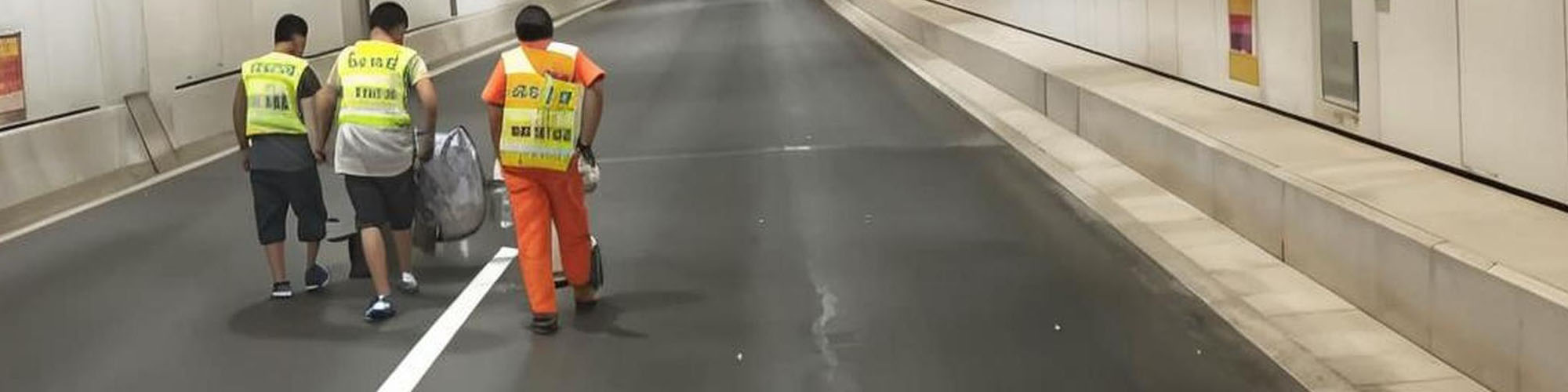
Choosing the right thermoplastic road paint (also known as hot-melt road marking paint) requires a balance between reflectivity, abrasion resistance, skid resistance, and application cost. The optimal choice depends on road grade, traffic volume, and local climate conditions.
What are the components of thermoplastic road paint?
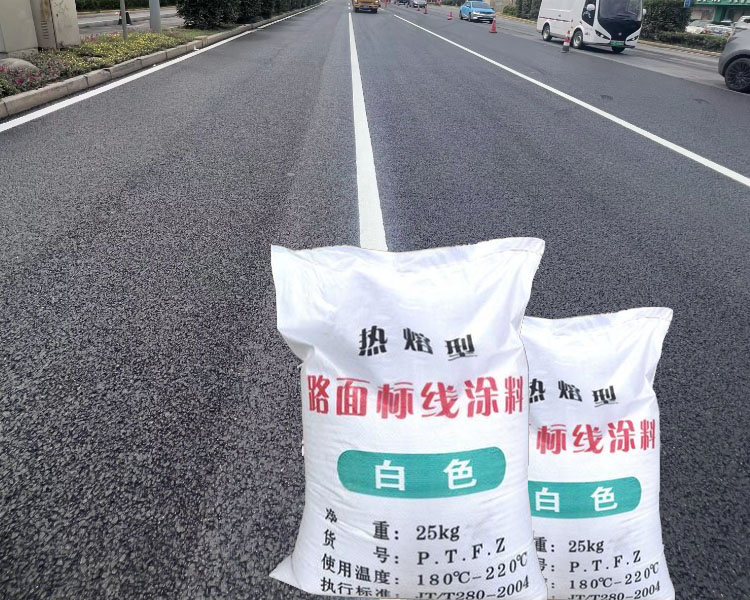
Thermoplastic road paint is a precise blend of thermoplastic resin, titanium dioxide pigment, and tiny glass beads. Specialized road marking equipment applies the paint to asphalt or concrete surfaces.
1. Thermoplastic Resin – The Foundation of Durability
Thermoplastic resin is the primary binder in road marking paint. These plastics soften when heated and harden upon cooling. During application, heating allows the resin to bond firmly to the road surface. Upon cooling, a durable, weather-resistant coating is formed, capable of withstanding high traffic volumes and environmental stresses.
Key benefits: Excellent adhesion and long-lasting abrasion resistance.
2. Titanium Dioxide Pigment – Brightness and UV Resistance
Titanium dioxide gives road markings a vibrant white color, crucial for improved visibility and safety. It resists UV degradation, preventing yellowing or fading over time. Furthermore, it is non-toxic and environmentally friendly, suitable for public road applications.
Key Advantage: Maintains clear visibility of road markings and meets environmental standards.
3. Reflective Glass Beads – Night Visibility

Embedded or sprinkled in paint, glass beads enhance retroreflective properties. They reflect vehicle headlights back to the driver, improving driving safety in low-light or rainy conditions. The size and distribution of the glass beads directly affect reflectivity.
Key Advantage: Crucial for visibility at night and in rainy conditions.
How to Choose the Best Thermoplastic Road Coating – 4 Key Steps
Step 1: Determine the Basic Type and Thickness
Choose the marking type based on road function:
| Type | Thickness | Best For |
|---|---|---|
| Standard | 1.5–2.5 mm | General roads, basic visibility |
| Reflective | 2–3 mm | Urban roads, highways with night traffic |
| Profiled (Vibrational) | 3–10 mm | Highway edges, center lines,减速 markings – produces vibration and noise to alert drowsy drivers |
Step 2: Verify Core Performance Indicators
When reviewing the technical data sheet, focus on the following key parameters:
Softening Point (°C):
Standard range: 90–125°C. Higher values (110–120°C) are needed in hot climates to prevent deformation. Lower values can be used in cold regions to avoid cracking.
Reflectivity (Glass Bead Content):
Optimal range: 18%–30% (by weight). Premium products use premixed (internal) and drop-on (surface) glass beads for superior nighttime visibility and compliance with international reflectivity standards.
Abrasion Resistance:
Critical for intersections, roundabouts, and parking lines. Choose coatings with high abrasion resistance ratings that meet standards such as JT/T 280-2004 or EN 13197.
Anti-skid performance (BPN/PSV):
Anti-skid performance requirements for pedestrian crossings and wet road sections. Target value: ≥45 BPN (AASHTO standard).
Drying time:
Thermoplastic coatings typically dry in ≤3 minutes, allowing for rapid road reopening.
Step 3: Consider environmental and road conditions
Application season:
Winter: Use a slightly lower softening point and a higher application temperature.
Summer: Avoid using low softening point materials to prevent bleeding or deformation.
Road type:
New asphalt pavements – Generally no primer required.
Old asphalt or concrete pavements – Require a specialized thermoplastic primer to enhance adhesion.
Wet environments:
In rainy areas, choose nighttime reflective road markings that maintain retroreflective properties even on wet surfaces.
Step 4: Matching Application Equipment and Requirements
Equipment Compatibility:
Thermoplastic road coatings are typically applied using extrusion, scraper, or spray road marking machines at temperatures of 180–220°C.
Primer System:
Some road surfaces require a specialized bonding layer or primer—do not omit this step.
Storage and Shelf Life:
Sealed packaging prevents moisture absorption. Typical shelf life: 6–12 months. Please always check the production date.
Customization and Global Standards
We offer customized thermoplastic road coating solutions to meet local regulations, including:
- British Standard BS EN 1871
- American Standard ASTM D4792
- Chinese Standard JT/T 280
- German Standard DIN EN 1821
Custom colors, drip rates, and anti-slip additives are available. Huayuan also provides road marking machines and complete marking solutions tailored to project needs. Need a quote or technical consultation? Please contact us for tailored advice, on-site support, and full equipment supply.