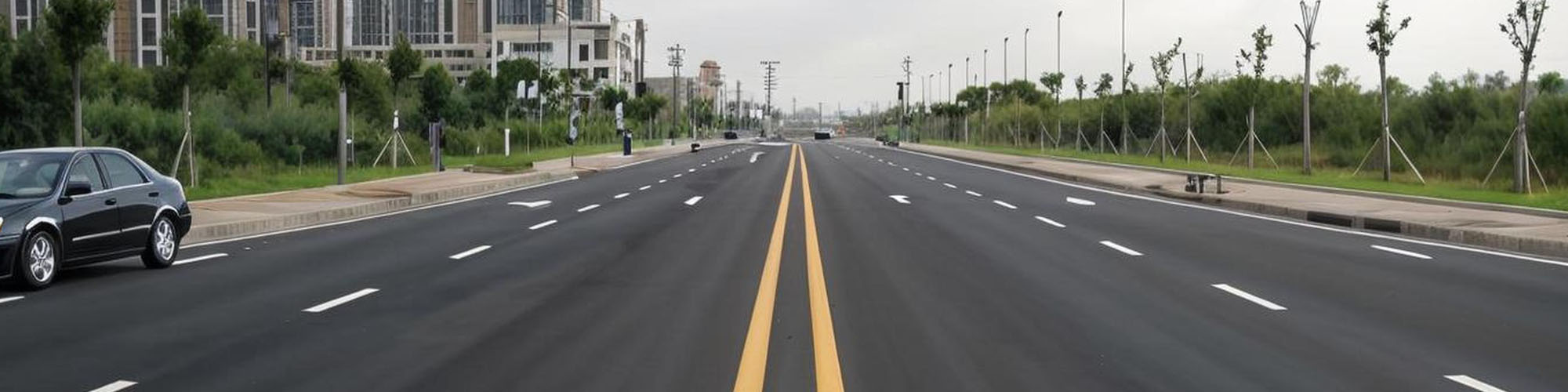
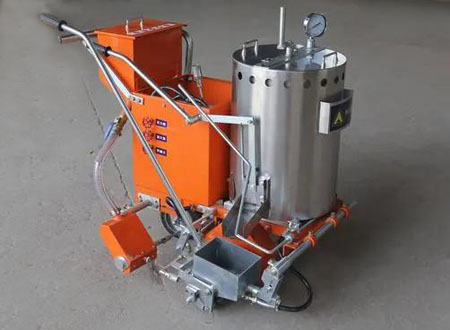
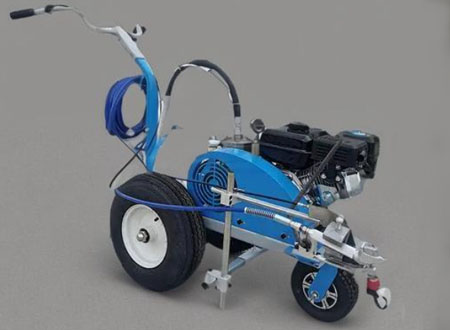
Their main difference lies in the construction process, materials, efficiency and cost.
1. Construction process and material:
Thermoplastic road marking machine uses hot melt process, the paint is heated in the hot melt machine and then reflective glass beads are added at the bottom, which has a certain thickness and is more durable. This process is suitable for marking on the main road highway, with high durability and reflectivity, and can adapt to the larger traffic flow. Instead of heating the paint, the cold paint spray road marking machine pours the diluted paint into the cold spray marking machine for marking. This marking method is simpler compared to hot melt marking. It includes parking spaces, no-parking yellow line zones, access lines, guide strips, guide arrows, etc. Although the marking effect is obvious, the The durability is relatively low and may fall off after a long time. In order to ensure the adhesion and abrasion resistance of the paint, it is necessary to choose high-quality acrylic emulsion paint as the cold plating layer. This kind of paint has wear-resistant, corrosion-resistant, good reflective properties, good weathering-resistant layer.
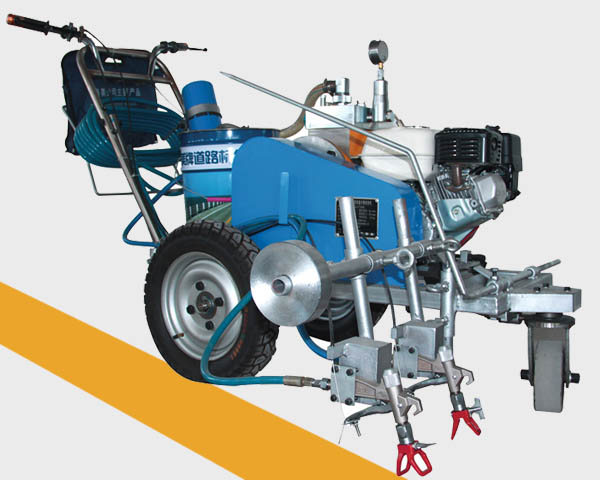
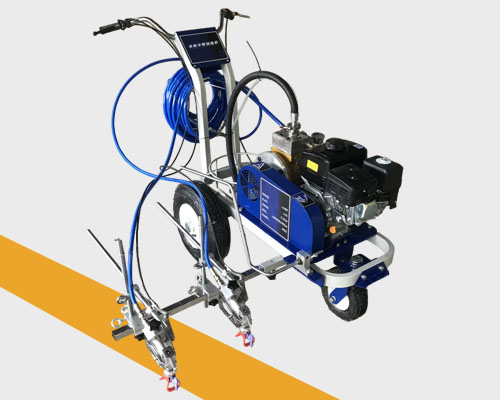
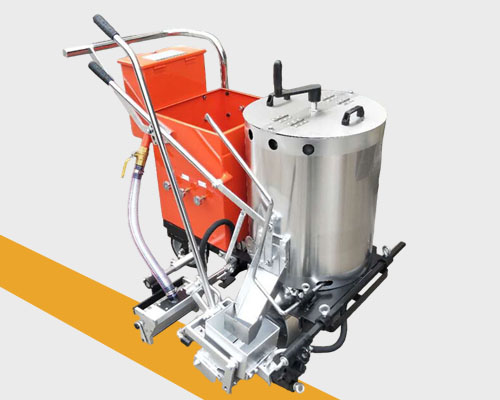
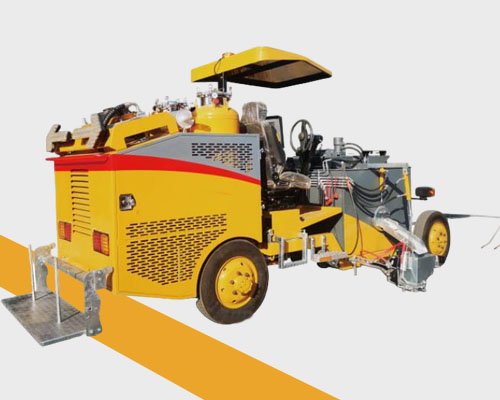
Hot melt marking equipment has hydraulic double-cylinder hot melt kettle, hand-push hot melt marking machine, self-propelled hot melt marking machine, zebra marking machine and so on. Cold spray marking equipment has hand-push cold spray marking machine, vehicle-mounted cold spray marking machine. General-purpose equipment such as road blower, road sweeper, line remover and so on.
2. Efficiency and cost:
Hot melt marking machine construction efficiency is higher, but requires a high level of technology and strict construction process, so the cost is relatively high. Cold spray marking machine has high efficiency, reduce the running time, and relatively low price, suitable for small scope or details of the marking work.
| Parameter | Thermoplastic Machine | Cold Paint Machine |
|---|---|---|
| Application Speed | 1.5–3.0 km/h (thick layer) | 4–8 km/h (thin layer) |
| Drying/Curing Time | 5–8 min (cooling to ambient) | 15–30 min (solvent flash-off) |
| Material Cost (USD/ton) | $1,200–1,800 | $800–1,200 |
| Labor Skill Required | High (temperature control, screed adjustment) | Medium (spray pressure, nozzle alignment) |
| Equipment Investment | $15,000–$80,000 (new) | $5,000–$30,000 (new) |
| Maintenance Cost/Year | $2,000–$4,000 (burner, pump seals) | $800–$1,500 (pumps, filters) |
| Cost per m² (5-year lifecycle) | $2.80–$3.50 (including reapplication) | $4.20–$5.10 (due to 2–3 reapplications) |
Key Insight: Although thermoplastic machines demand higher upfront investment and operational expertise, their total cost of ownership (TCO) over 5 years is 25–35% lower for highways with AADT (Annual Average Daily Traffic) > 20,000 vehicles. Cold spray systems excel in projects requiring rapid deployment (e.g., event parking) or frequent layout changes, where low initial cost and portability outweigh longevity.
3. Application areas:
Hot melt marking is more suitable for highways, trunk roads and other environments that need to withstand high traffic pressure due to its high durability and reflectivity. Cold spray marking, on the other hand, is more suitable for parking lots, community roads and other places where the marking requirements are not particularly high, but where the marking needs to be quickly arranged and replaced.
How to choose?
| Project Factor | Thermoplastic Machine | Cold Paint Machine |
|---|---|---|
| Traffic Volume (AADT) | > 15,000 | < 5,000 |
| Required Lifespan | ≥ 3 years | ≤ 2 years |
| Budget (Equipment) | High (> $20k) | Low (< $15k) |
| Climate Extremes | Excellent (from -20°C to +60°C) | Moderate (cracking below 5°C) |
| Reflectivity Demand | Nighttime visibility > 150 mcd/m²/lx | Nighttime visibility < 100 mcd/m²/lx |
| Substrate Type | Asphalt or concrete (clean, dry) | Asphalt, concrete, or even wood/metal |
In summary, the choice of using thermoplastic road marking machine or cold paint road marking machine needs to be decided according to the specific use of the environment, budget and construction conditions.