
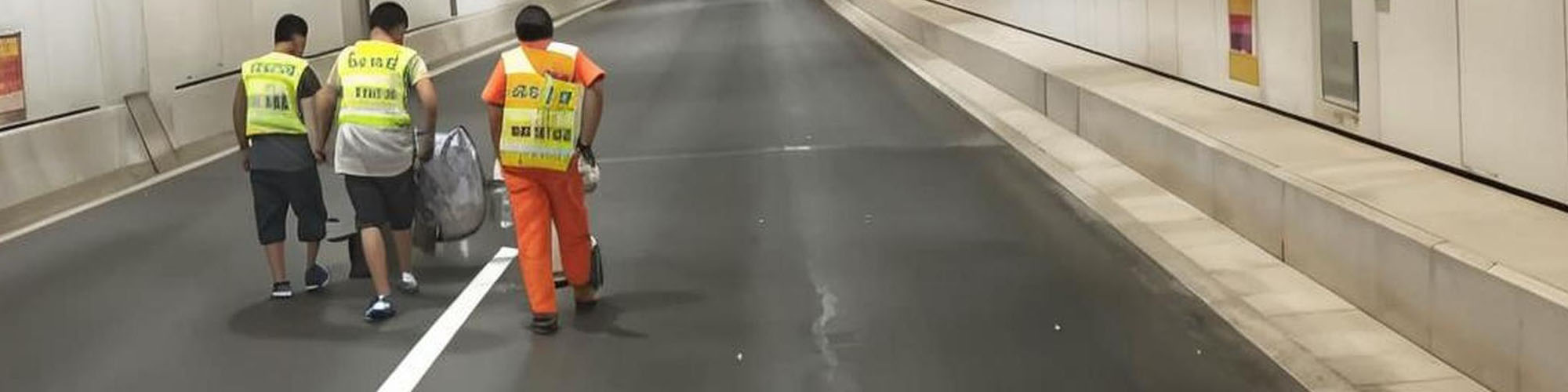
Road markings serve as the silent language of the road, guiding drivers and ensuring safety. Their most critical characteristic, especially at night or in adverse weather, is retroreflectivity—the ability to reflect vehicle headlights back to the driver. However, the reflective lifespan of road markings is not permanent. It is influenced by complex factors including material science, application techniques, and environmental stresses. Understanding these factors is crucial for contractors and government agencies aiming to reduce accidents and enhance road safety.
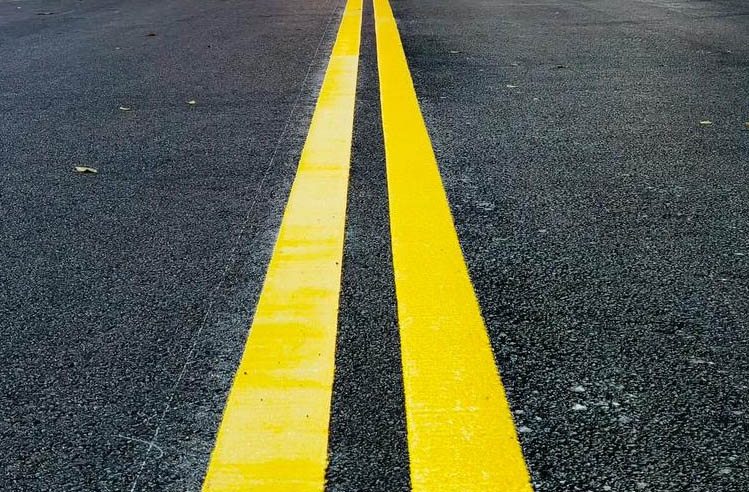
Key Factors Affecting the Retroreflectivity of Road Markings
1. Foundation: Road Marking Paint and Material Composition
The base material of markings determines its adhesion to the pavement and its capacity to embed reflective elements. Common materials include:
- Thermoplastic Materials: A durable preheated material requiring high-temperature application. It is favored for its thickness, durability, and ability to embed large quantities of glass beads.
- Cold-applied Materials (MMA): Known for rapid curing and high durability, often used in high-friction areas like intersections.
- Water-based Paints: An economical and environmentally friendly option suitable for low-traffic roads.
While each material possesses distinct properties, the combination of thermoplastic material and glass beads remains the gold standard for achieving and maintaining high reflectivity.
2. Core Components: Glass Beads and Optical Performance
Glass beads form the heart of retroreflectivity. Functioning like millions of miniature lenses, they collect light and reflect it back toward the source. Their performance hinges on three critical characteristics:
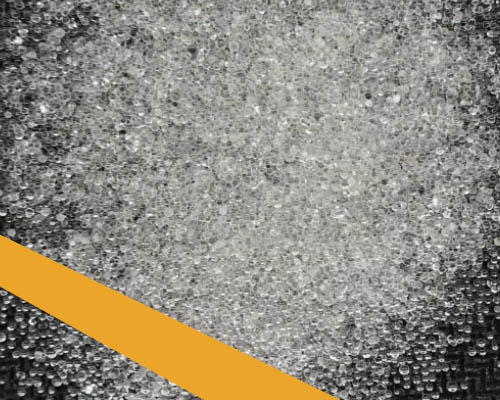
- Refractive Index (RI): This measures how much the bead bends light. A higher refractive index (typically >1.5) ensures more light is returned to the driver, creating a brighter line.
- Roundness (Sphericity): Perfectly spherical beads provide the most consistent and powerful reflection. Irregularly shaped beads scatter light, reducing visibility.
- Size and Gradation: The size of the beads must match the line type and application method. Larger beads are more durable and provide better wet-night visibility, while a mix of sizes ensures dense packing and immediate reflectivity.
Application quantity is paramount: Bead dosage requires careful balancing. Insufficient application creates gaps in the reflective area, resulting in dim markings. Conversely, excessive application causes beads to stack, creating “light traps” that actually reduce reflectivity.
3. Application Tools: The Role of Road Marking Machines
Even premium materials fail to deliver optimal performance without precise application. Road marking machines are the decisive factor in final quality. Different projects demand different equipment—from Hand Push Road Marking Machines for parking lots to heavy-duty truck-mounted units for highways.
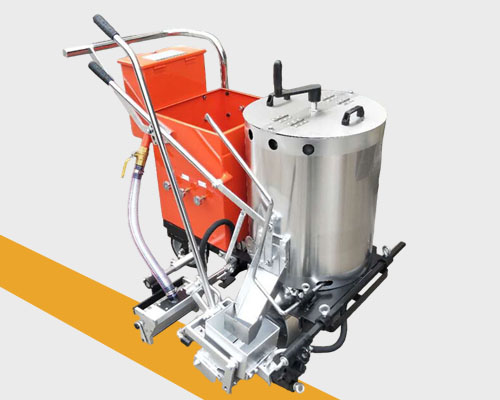
- Spray vs. Extrusion: The machine’s delivery system must match the material. Extruded markings (common with thermoplastic materials) are thicker, allowing deeper bead embedding for extended durability.
- Bead Distributor Calibration: Modern road marking machines feature synchronized bead distributors. If timing is off, beads will either embed too deeply into hot material or fail to adhere properly. Machines must ensure beads are evenly distributed across the entire line width.
- Consistency: Machines must maintain constant speed and pressure to ensure uniform coating thickness and profile, critical for long-term performance.
4. Human Factors: Construction Quality and Technical
Technical proficiency depends on the operator. Substandard construction compromises material quality and machine performance.
- Surface Preparation: Markings applied to inadequately cleaned surfaces will fail. Contaminants like dirt, oil, or moisture prevent coating adhesion, leading to premature peeling and bead loss. Priming porous surfaces is essential.
- Material Viscosity: During application, the temperature and viscosity of thermoplastic material must be precisely controlled. If the material is too thick, glass beads will merely rest on the surface, resulting in poor adhesion and easy detachment. If the material is too thin, heavier glass beads will sink to the bottom, leaving bare, non-reflective paint lines. Achieving the proper “embedment depth” (typically 50-60%) is key to ensuring line durability.
5. Environmental and External Pressure Factors
Once applied, road markings face various natural challenges.
- Weather conditions during application: High humidity or low temperatures can impair curing and bead adhesion.
Climate exposure: Ultraviolet rays from sunlight degrade the adhesive in the coating, causing fading and chalking. Freeze-thaw cycles can crack the material, allowing water ingress and compromising bonding strength. - Nighttime Rain Visibility: Standard beads lose 90% reflectivity when covered by a water film. Advanced materials like wet-reflective beads or shaped markings with drainage features have been developed to ensure the lens remains exposed.
6. Traffic Flow and Wear Patterns
Traffic is the primary wear factor. High traffic volumes, especially heavy truck traffic, wear down both the pavement and the markings themselves.
- Abrasion: Tires grind glass beads out of the paint film. Thus, durable materials like high-solids thermoplastic materials are required on high-traffic sections.
- Studded Tires and Chains: In snowy regions, chains act like sandpaper, rapidly wearing down standard markings. Special reinforced materials are necessary.
7. Inevitable: Aging and Degradation
Retroreflective materials have a finite lifespan. As markings age, factors like UV degradation, oxidation, and physical wear cause fading, loss of glass bead luster, or even detachment. This process transforms once-highly visible markings into hazardous, nearly invisible guides.
Conclusion: A Systematic Approach to Road Safety
Achieving high road marking reflectivity depends not on a single factor but on a system. It requires the synergistic use of high-quality road marking paint, precise glass beads with the correct refractive index, well-calibrated road marking machines, and skilled applicators. Regular inspections and timely maintenance are crucial for countering environmental wear and ensuring road safety for all users.
Henan Huayuan is a globally leading supplier of specialized road marking equipment. We offer comprehensive solutions for projects ranging from small community initiatives to large-scale highway construction. We are committed to providing the essential tools and technology to create safer, clearer roads worldwide.