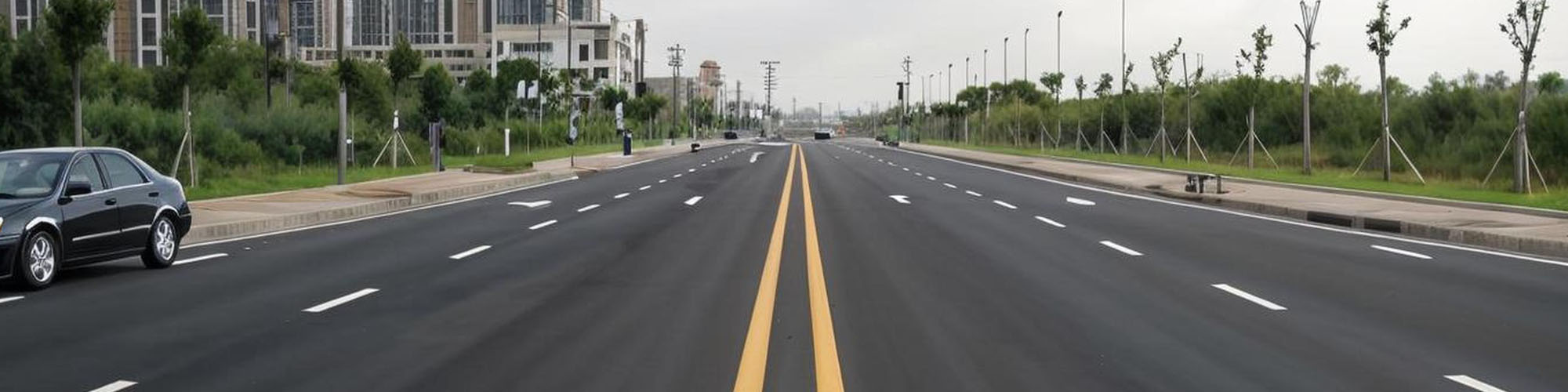
White road marking paint is essential for traffic safety, but yellowing after delineation is a common defect that reduces visibility and shortens service life. This discoloration is not merely cosmetic—it indicates chemical or physical degradation. Below are the primary technical reasons, backed by material science and construction practice, along with actionable prevention strategies.
1. Resin Quality and Purity Issues
Most thermoplastic road marking paints use petroleum-based resins (such as C5 or C9 hydrocarbon resins) as film-forming binders.
- Low-purity resins contain unsaturated bonds or aromatic impurities (such as styrene derivatives), which are prone to photooxidation when exposed to sunlight and high temperatures.
- C9 resins, in particular, have a higher aromatic content and are therefore more prone to yellowing than hydrogenated C5 resins.
- During the heating process in road marking machines (typically at 180–220°C), these impurities undergo thermal cracking, producing chromophores (such as carbonyl groups and conjugated dienes), which impart a yellow tint to the paint.
Technical Points: High-performance coatings use fully hydrogenated petroleum resins (such as Eastman™ Regalite) with a softening point of ≥100°C and a low iodine value (<5 g I₂/100 g) to minimize yellowing caused by heat and UV radiation.
2. Insufficient Titanium Dioxide (TiO₂) Content
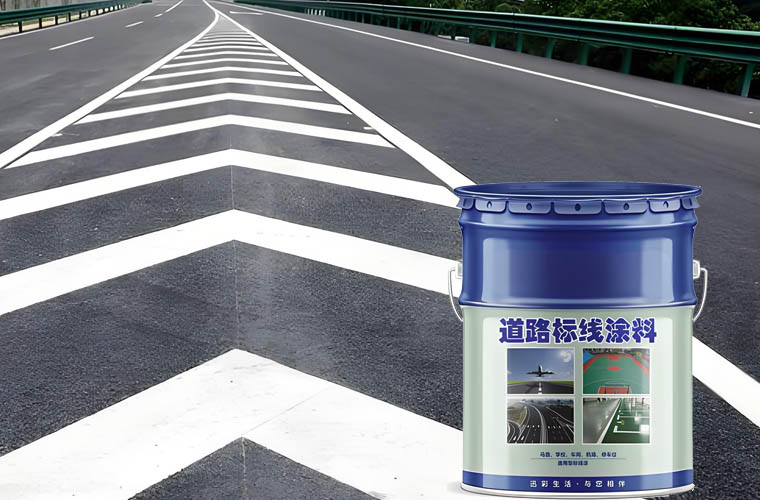
Titanium dioxide is an important pigment ingredient in road marking paint, which is vital to ensure the white color of the paint.
If the content of titanium dioxide is insufficient, then the white color of the paint cannot be effectively ensured and yellowing may occur after marking.
Industry standard: ISO 591-1 classifies TiO₂ pigments; rutile grades with surface coating (e.g., alumina/silica) are preferred for outdoor durability.
3. Incorrect construction techniques
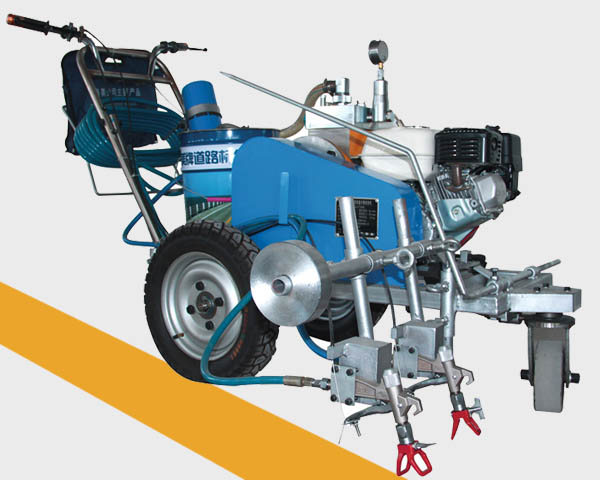
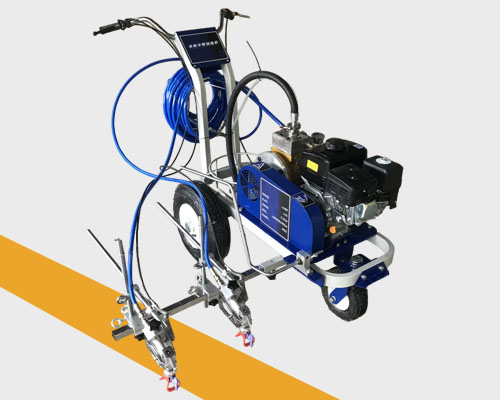
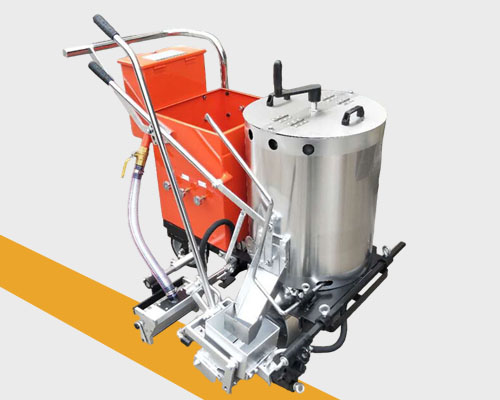
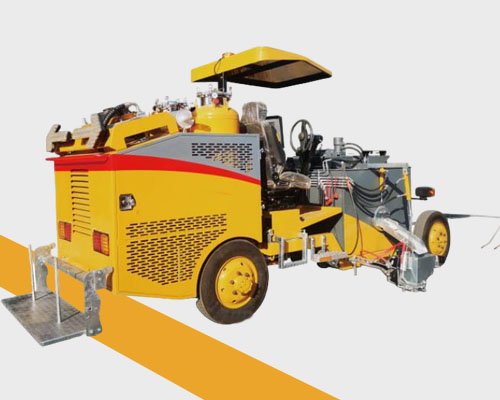
Heating is critical in thermoplastic road marking applications. However, improper setup of the road marking machine can directly cause yellowing:
- Overheating (>220°C): The resin oxidizes rapidly, forming yellowish-brown degradation products. The thermal stability threshold for most hydrocarbon resins is approximately 200°C; even exceeding this temperature for 5–10 minutes can trigger irreversible color changes.
- Excessive holding time: Even with the correct temperature setting, holding the molten coating at 190°C for more than 2 hours promotes polymer cross-linking and causes the color to darken.
- Insufficient mixing: Inadequate stirring leads to localized hot spots, accelerating resin degradation.
Best practices: Use a road marking machine equipped with precise digital temperature control (±5°C) and an automatic stirring system. Limit the holding time to 45 minutes or less before application.
4. Reaction with asphalt
- Asphalt Oil Seepage: Freshly paved asphalt can release oil (bitumen) that seeps into the paint, resulting in a yellow or brownish tint.
- Chemical interactions: paint may react chemically with the asphalt surface, changing its original color.
- This effect is more pronounced on newly laid asphalt (within 30 days) or during high ambient temperatures (>35°C).
Preventive coating: Apply a sealer coat (e.g., epoxy-based primer) before marking to block oil migration. Alternatively, use epoxy or PMMA-based cold plastic paints that are less permeable to asphalt oils.
Preventive Measures for Long-Lasting White Markings
| Strategy | Technical Implementation |
|---|---|
| Select high-stability paint | Use hydrogenated C5 resins + rutile TiO₂ (≥12%) + UV stabilizers (e.g., Tinuvin® 328). |
| Optimize machine parameters | Set heating temperature to 180–190°C; keep melt time under 1 hour; use a thermostatic road marking machine. |
| Surface treatment | Allow new asphalt to cure for ≥28 days; apply a separating primer before painting. |
| Post-application protection | Spray a transparent UV-blocking topcoat (polyurethane-based) to extend whiteness by 2–3 years. |
| Regular inspection | Monitor yellowing index (YI) per ASTM E313; recoat when YI > 5. |
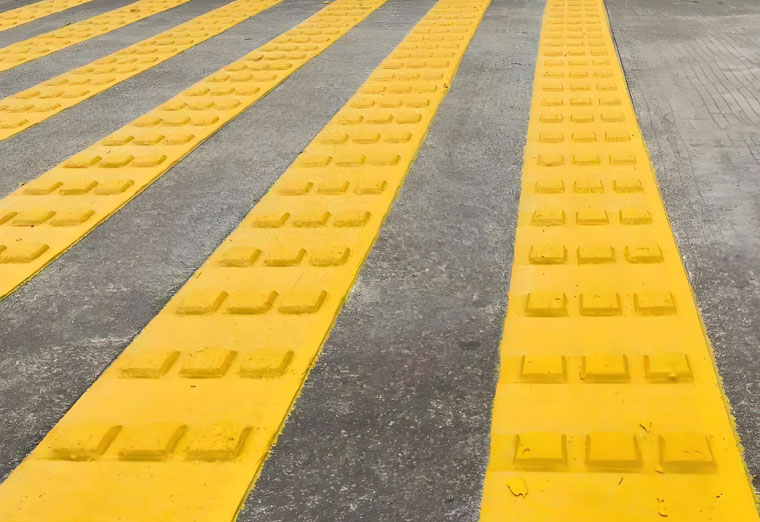
In addition, our company is committed to producing high-performance, long-life road marking paint in a variety of colors, including white, medium yellow, dark yellow, orange red, blue, etc., and can also be adjusted according to the needs of the color. All formulations use hydrogenated resins and rutile TiO₂ with ≥14% pigment content, ensuring excellent whiteness retention and UV resistance. Meanwhile, we provide road marking machine and its supporting equipment, looking forward to cooperating with you.