
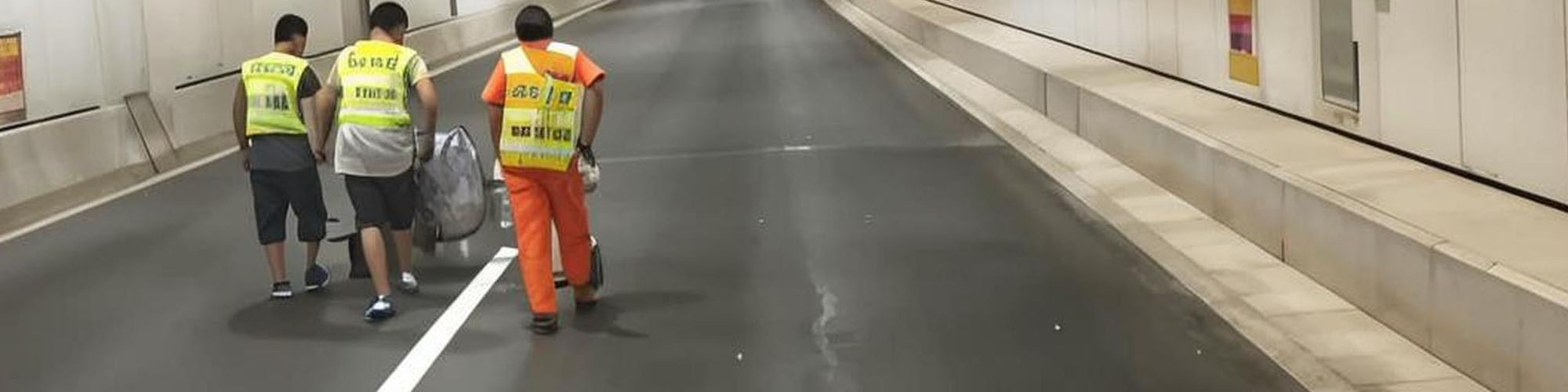
White thermoplastic road marking paint turning yellow is not a single-cause defect. It results from the combined effects of material formulation weaknesses, thermal abuse during application, and environmental aging in service. For contractors and asset owners alike, diagnosing the specific mechanism is the first step toward corrective action and preventing recurrence in future projects.
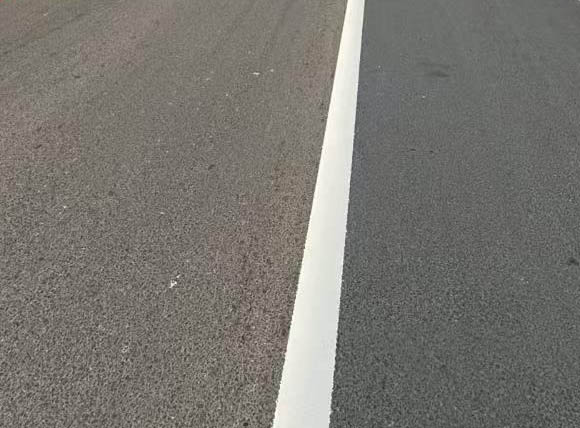
1. Thermal Oxidative Degradation During Application
The most immediate and controllable cause of yellowing occurs before the material ever reaches the pavement. Thermoplastic road marking paint is applied in a molten state, typically between 180°C and 220°C, depending on formulation. When the material is overheated in the melting kettle or held at temperature for excessive periods, the petroleum-based binder resins undergo thermal oxidation and molecular chain scission. This produces chromophoric oxidation products that absorb short-wavelength visible light, shifting the appearance from white toward yellow or greenish-yellow.
Research quantifying the factors contributing to thermoplastic yellowing found that temperature alone accounts for approximately 52.94% of the explained variance in yellowing behavior under accelerated aging conditions, with the regression coefficient indicating strong temperature sensitivity. The Texas Department of Transportation specifies that most thermoplastic materials must be heated to approximately 410–430°F (210–220°C) , and explicitly warns that material will scorch if kettle temperatures are too high. A scorched material typically presents as greenish-yellow or dingy-dull white upon application.
Reheating material multiple times compounds this problem. Each additional heating cycle exposes the resin to further oxidative stress, and Virginia DOT troubleshooting guidance lists “material overheated or reheated too many times” as a direct cause of discolored, beige, or dull white lines, with the remedy being to discard the affected material.
2. Resin Degradation and UV Aging in Service
Even when applied correctly, white thermoplastic road marking paint remains vulnerable to photochemical degradation throughout its service life. Thermoplastic binders are typically physically blended resin systems with relatively loose molecular arrangements, making them more susceptible to ultraviolet radiation and thermal stress than chemically crosslinked alternatives such as two-component MMA markings.
Under combined UV and thermal exposure, the resin matrix undergoes photo-oxidation: UV photons disrupt polymer chains, initiate free-radical reactions, and generate oxidation products that absorb visible light. Accelerated aging studies demonstrate that thermoplastic markings exhibit consistently more severe yellowing than two-component markings across all tested UV irradiance and temperature conditions, with yellowing index (YI) increasing nonlinearly over time. The practical implication is that formulation strategies for thermoplastic road marking paint should prioritize the incorporation of effective thermal stabilizers and ultraviolet absorbers with strong attenuation capability in the photochemically active UV range around 340 nm.
3. Insufficient Titanium Dioxide Opacity and Pigment Quality
Whiteness in thermoplastic road marking paint depends heavily on the concentration and dispersion quality of titanium dioxide (TiO₂) , the primary white pigment used in these formulations. When TiO₂ loading is insufficient, the hiding power of the marking film is compromised, allowing the dark asphalt substrate to show through and impart a yellowish or dingy cast to the line.
Beyond quantity, TiO₂ grade matters. The pigment can exhibit photocatalytic activity under UV exposure that may actually accelerate binder degradation and discoloration if not properly surface-treated. Formulators should specify rutile-grade TiO₂ with appropriate surface encapsulation for road marking applications, and ensure adequate pigment volume concentration to achieve opacity without compromising mechanical properties.
4. Asphalt Bleeding and Substrate Interaction
Asphalt bleeding is a substrate-driven discoloration mechanism that is sometimes confused with intrinsic paint yellowing. Asphalt contains soluble organic fractions that can migrate into the marking film, particularly when the pavement is freshly laid or when the thermoplastic is applied over an asphalt surface that has not adequately cured. The Texas DOT Pavement Marking Handbook notes that asphalt is soluble in organic solvents used in marking paints, and these can deteriorate asphalt surfaces; while thermoplastic is solvent-free, the thermal gradient during application can still mobilize low-molecular-weight asphalt components.
Proper surface preparation and ensuring adequate pavement curing before application are essential preventive measures. For thermoplastic road marking paint applied over asphalt, the combination of heat and the weight of the road marking machine can create conditions that promote migration if the substrate is not properly prepared.
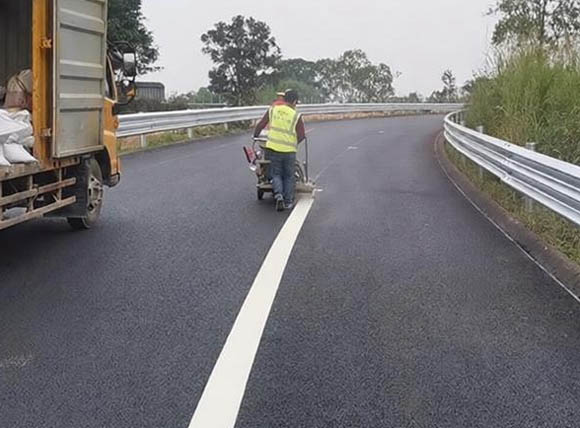
5. Cross-Color Contamination in the Road Marking Machine and Kettle
Operational contamination is a frequently overlooked but highly preventable cause of yellowing. When switching between yellow and white thermoplastic materials, residual yellow pigment in the melting kettle, road marking machine delivery lines, hoses, and extrusion components can tint the subsequent white batch. The Texas DOT explicitly identifies “melting kettle not completely cleaned out when changing material colors” as a common discoloration problem, and Virginia DOT troubleshooting guidance lists inadequate cleaning of application pots alongside overheating as a cause of discolored lines.
Establishing a documented cleaning protocol for all material-contact surfaces—kettles, agitation systems, pumps, hoses, and the marking shoe or extrusion die—is a basic quality control requirement for any operation running multiple colors through the same road marking machine.
6. Preventive Measures and Corrective Actions
| Yellowing Mechanism | Preventive Action | Corrective Action |
|---|---|---|
| Thermal oxidation / scorching | Maintain kettle temperature within manufacturer specification (typically 180–220°C); avoid prolonged hold times; do not reheat material excessively | Discard scorched material immediately; recalibrate temperature controls |
| UV / photo-oxidative aging | Specify thermoplastic road marking paint formulated with UV absorbers and thermal stabilizers | Select a higher-durability product for high-UV environments |
| Insufficient TiO₂ opacity | Verify TiO₂ content and grade in incoming material; specify minimum pigment loading | Reject non-compliant batches |
| Asphalt bleeding | Ensure pavement curing before application; proper surface preparation | Allow adequate curing time; consider a primer or sealer where appropriate |
| Cross-color contamination | Implement documented cleaning procedures for kettles, hoses, and road marking machine components when changing colors | Flush and clean all material-contact surfaces; purge lines before white production |
7. Why This Matters Beyond Aesthetics
Yellowing is not merely a cosmetic issue. White pavement markings are specified with minimum retroreflectivity and chromaticity requirements because driver safety depends on consistent visibility, particularly at night and in wet conditions. A yellowed white line can be confused with a yellow line in certain lighting conditions, creating lane discipline hazards. For asset owners managing large marking programs, specifying high-quality thermoplastic road marking paint and maintaining disciplined road marking machine hygiene are among the most cost-effective interventions for preserving marking performance and avoiding premature replacement.
Need a reliable thermoplastic road marking solution?
Huayuan supplies high-performance thermoplastic road marking paint formulated for whiteness retention and durability, along with technical guidance on application parameters and equipment maintenance. Contact us to discuss your project requirements and request a quotation.